Reviewed · COMMUNIST HISTORY TOURS
Footprints of Bucharest: History, Communism & Urban Tales
Bucharest can feel like it is wearing two faces at once, and this Footprints walk is built for that exact tension. You start with classical power buildings, swing through the 1989 revolution setting, and end in the Old Town glow of bookshops, cafés, and passageways. It is a compact route that helps you see the city’s layers fast.
I love how the tour keeps things practical, it is a true 2 to 3 hour walking format with a small group, so you actually get time to ask questions and take photos. I also love that you do not just get dates, you hear personal details from guide stories, like Toni’s memory of green bananas at Christmas under the communist regime.
One drawback to plan around: this is a good-weather experience. If Bucharest weather turns, the tour can be moved or refunded, so you will want a flexible evening.
Key Highlights You Can Count On
- Small group attention with a maximum of 8 travelers, which makes questions and photos easier.
- English-led night route that shows Bucharest after dark, when major façades look extra dramatic.
- Revolution context at Piaka Revolukiei, with visual presentations about 1989 rather than a dry lecture.
- A story-led “Palace of the Parliament” stop, focused on the exterior and the scale behind the politics.
- Old Town stops that mix culture and browsing, including a renovated bookshop and a covered glass-roof passage.
A Night Walk Through Bucharest’s Power, Revolution, and Old Town
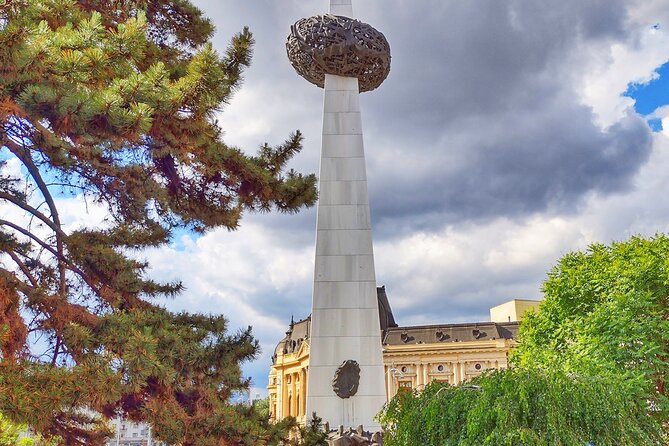
What makes this tour work so well is the flow. Bucharest has a habit of layering eras on the same street, and this route keeps that idea simple: classical monuments first, then the revolution’s main stage, then the everyday energy of Old Town. Even if you only have a couple of evenings, you will come away with a clearer mental map and stronger sense of why people built what they built.
The night timing matters. When you see the city lit up, the marble-like surfaces, grand boulevards, and ornate buildings stop looking like postcards and start looking like places where real decisions were made. You will likely notice that the same street can feel imperial, political, and casual, just by how the light hits it.
More tours covering the communist period in Bucharest:
- The Real tour of Communism
★ 5.0 · 666 reviews - Life under Communism
★ 5.0 · 358 reviews - 3-Hour Guided Tour of Communist Bucharest
★ 4.9 · 303 reviews
Price and Time, What $72.25 Buys You
At $72.25 per person for a 2 to 3 hour group experience, you are paying for three things: a certified guide, a focused route that covers a lot of Bucharest in limited time, and the small-group setup that keeps it from feeling rushed.
Most stops are listed with admission ticket free, which helps the value feel fair. That said, two museum and library entrances are explicitly marked as not included, so you should treat this as a tour of sights and stories, with a couple of optional add-ons depending on your interests.
A practical note on timing: this tour is booked in advance fairly often, with an average lead time of 31 days. If your travel dates are fixed, I would not wait until the last week to grab a slot.
How the Route Moves, From Strada Benjamin Franklin to Piața Unirii
You meet at Strada Benjamin Franklin 2, București, and you finish at Piața Unirii, close to the Old Town area. That end point is useful because it drops you near one of the best zones to keep exploring on your own after the tour.
This is also designed for a group walk, not a public-transit scavenger hunt. The tour runs with a moderate fitness expectation, so wear shoes you trust. You will be on your feet enough that comfortable soles will feel like good money spent.
The tour is offered in English, and you will get printed materials to follow along. You will also get a mobile ticket, which makes it easier to check in without hunting for paper.
Stop by Stop, What You’ll See and Why It Matters
Below is the route as you will experience it, with the “why” behind each place, and a few smart expectations so you can move efficiently and actually enjoy the walk.
Other Bucharest tours to compare
- Bucharest: 3-Hour Dark History Tour with a Local
★ 4.9 · 301 reviews - Bucharest: Small Group History, Art & Secrets Tour
★ 4.7 · 152 reviews - Guided Walking Tour of Historical Bucharest
★ 5.0 · 84 reviews - Bucharest Jewish Heritage | Holocaust Memorial | Private Car Tour
★ 5.0 · 38 reviews
Ateneul Roman: A Greek Temple Shape in the Middle of Bucharest
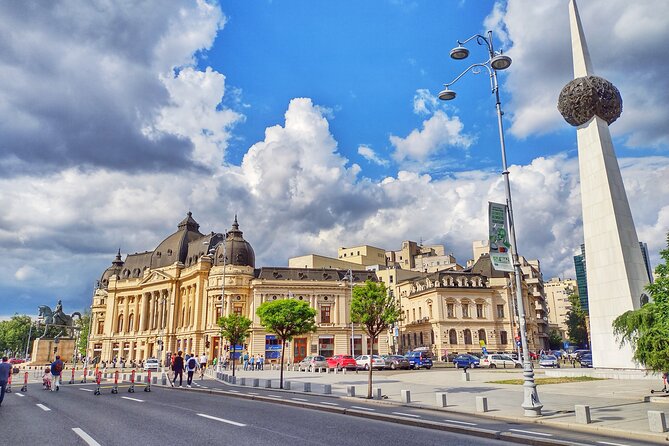
Your first stop is Ateneul Roman, one of Bucharest’s most emblematic buildings, famous for a look that resembles an ancient Greek temple. At night, the stone and columns tend to read even sharper, because shadows help you see the structure more clearly.
Even if you do not go inside, this is a strong orientation point. It tells you that Bucharest wanted to present itself as cultured and European, long before the revolution era took over the headlines.
Since it is marked as admission ticket free, you can focus on photos and quick context rather than spending time figuring out ticketing.
Piaka Revolukiei: The 1989 Revolution Stage, With Visual Reminders
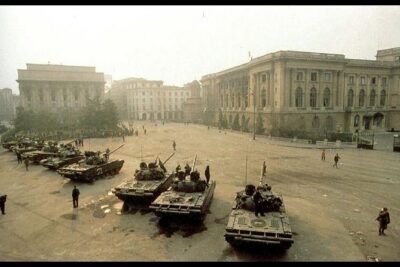
Next comes Piaka Revolukiei, the square connected to Ceausescu’s last speech in 1989. The tour includes visual presentations with pictures and video material from the revolution days.
This is one of the most important stops on the itinerary because it anchors the whole “communism and urban tales” theme. You will leave it with a stronger sense that streets and buildings were not just scenery, they were part of the power system.
You get about 45 minutes here, which is long enough for the guide to connect the square to what came next. If you like history told through specific moments, this is where the tour clicks.
The Elegant Avenue Segment: Power Address Energy
Then you move along the city’s most elegant avenue, described as a boulevard lined with major buildings and monuments. The exact focus here is the feeling of grandeur, and the way Bucharest’s center expresses authority through architecture.
I like this stretch because it is a breather between heavier topics. You can walk it, look up at façades, and let the guide point out details you might otherwise miss.
Biblioteca Centrala Universitara: French Eclecticism and Carol I’s Legacy
At Biblioteca Centrala Universitara, you will see an eclectic-style library built with French architect Paul Gottereau and the sponsorship of King Carol I. In front of the library, you can also see Carol I’s equestrian statue.
What I find useful here is how the guide can link culture to politics without turning it into a textbook. A royal patron in a city like this is never just about books, it is about image.
This stop is short, around 10 minutes, so treat it as a “look and learn” stop: photos, a few key explanations, then move on.
Palatul Regal, Royal Palace: A Winter Residence Built Under Queen Maria
Palatul Regal is the winter Royal Residence of Romanian kings, dated 1937. The guide explains it was built under the supervision of Queen Maria and her son, King Carol II.
This part of the tour gives you a sense of how monarchy shaped the city’s built identity. You get the feeling of controlled display, even if you are mostly viewing from outside on a walking route.
Again, it is listed as admission ticket free, so you will likely focus on exterior character and quick background rather than a full interior visit.
Old Town: Cafes, Pubs, and 19th-Century Architecture on One Route
You then shift into Old Town, a central area known for cafes, pubs, restaurants, and a stack of 19th-century architecture. This is your “people and place” moment, when Bucharest stops feeling like a museum of power and starts feeling like a city you could actually live in.
Because this part is about atmosphere, I would slow down just a bit. Look at street-front details, doorways, and how buildings relate to the sidewalk. The guide’s explanations can make the streets feel more legible.
Stavropoleos Monastery: A Quiet Historical Pause in the Old Town Flow
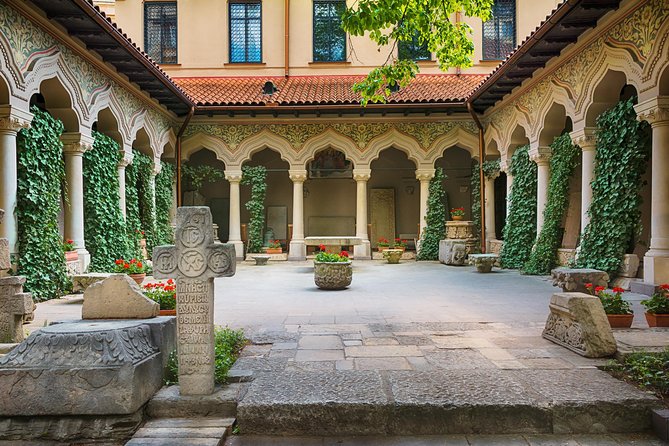
In Old Town, you visit Stavropoleos Monastery, a church dating to 1724 and described as one of the oldest in Bucharest. The key point is that it is easy to miss if you are only scanning for the biggest monuments.
This stop works as a palate cleanser. After revolution and palaces, you get something smaller, older, and more human scale.
It is short, about 10 minutes, so you’ll want to use it for close looking and a calm reset.
The Palace of the Parliament Exterior: The “Pharaonic” Scale Moment
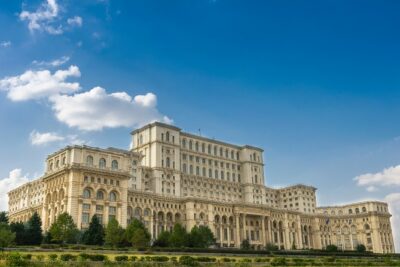
Then you reach the most famous construction linked to the communist era: the Palace of the Parliament. Construction began in 1984, and the story is all about mass and dominance.
You will hear big numbers and comparisons: it is described as the heaviest building in the world, the world’s third-largest administrative building, and it exceeds by 2% the volume of the Great Pyramid of Giza. The tour describes it as a “pharaonic” construction.
You will admire the exterior and hear the story, which is the smartest way to experience this on a 2 to 3 hour walk. The exterior alone can be overwhelming, and it is a lot to process in limited time.
Macca Villacrosse Passage: Glass Roof Street Life and Hookah Cafés
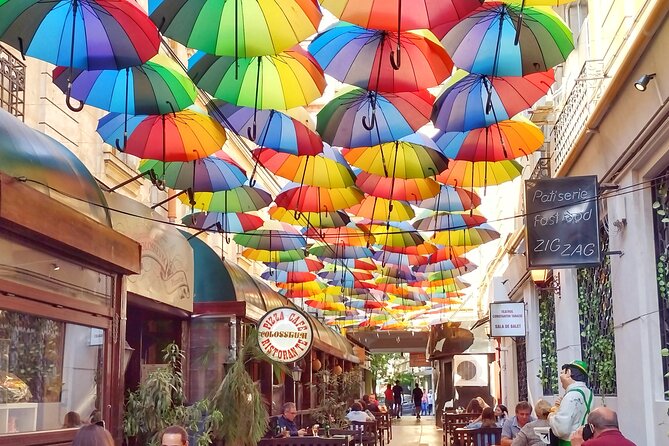
Next is Macca Villacrosse Passage, covered with a glass roof and full of hookah cafés. This is Bucharest turned inward, a covered walkway where the city feels contained.
For me, it is one of those stops that makes the tour feel current. Revolution and royal power explain why the city changed, and this passage shows how people spend evenings and downtime.
Lipscani and Cărturești Carusel: Old Street Stroll to a Renovated Bookshop
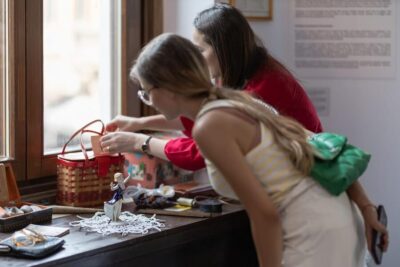
You continue with a stroll along Lipscani, a historic old street. Then you visit Cărturești Carusel, a renovated bookstore known for Romanian souvenirs and gifts.
These two stops are less about monuments and more about how Bucharest shops and social life blend with its historic center. If you like practical browsing, this is where you will find items that feel more local than standard tourist shops.
Cărturești also tends to be one of those places where you might spend an extra minute just looking at what is on display, so keep your phone ready.
Palatul CEC: 19th-Century Architecture with Statues
At Palatul CEC, you see a 19th-century building filled with statues. This is another exterior-focused moment, but it helps connect the tour’s theme: the city used symbolism in public spaces, not only inside palaces.
It is brief, about 5 minutes, so use it like a photo stop and move.
Muzeul Național de Artă al României: The Former Royal Palace Feeling
You also visit Muzeul Național de Arta al României, described as the former Royal Palace. Even if you do not go inside, the exterior context helps you understand why the arts got tied to royal power and representation.
This is short, around 5 minutes, so the guide’s explanation is what makes it worthwhile.
Muzeul Național de Istorie a României and Biblioteca Națională a României: Optional Entrances
Two stops are listed with entrance not included:
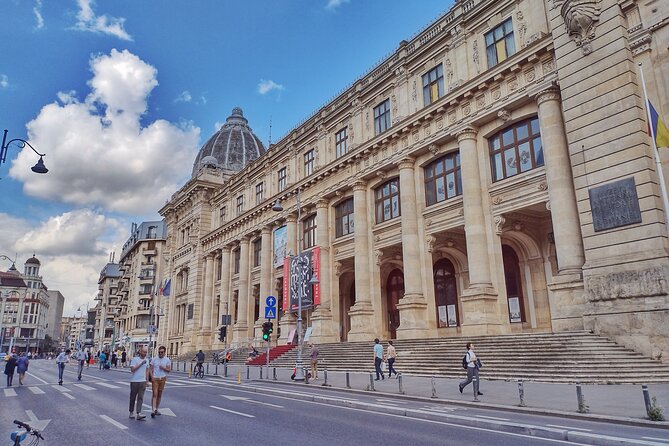
- Muzeul National de Istorie a Romaniei, described as the former Post Office Palace from the 19th century
- Biblioteca Nationala a Romaniei, described as an iconic palace in the Old Town area
These are good options for you if you want to extend the evening on your own. If your goal is strictly the walking story tour, you can keep moving without feeling you missed something big.
What Makes the Stories Feel Real: Guide Style and Local Details
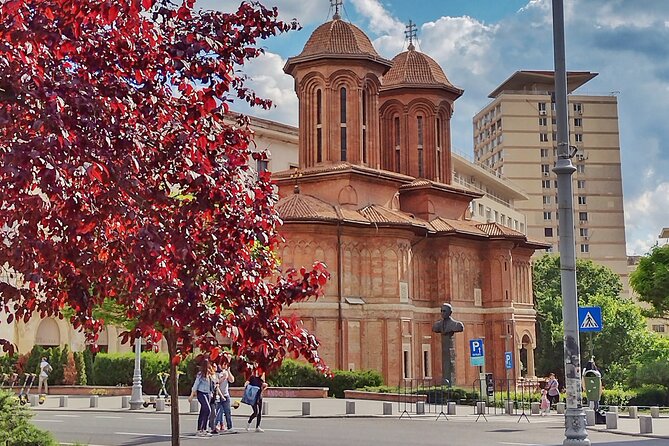
One of the most praised parts of this tour is the guide personality, and you can actually feel it in the way the stories are chosen.
Toni, for example, is remembered for connecting communist-era life to small everyday memories. The standout detail was his childhood story about how green bananas were a special Christmas treat under the regime. That kind of personal specificity is what makes the period stick.
Manuela is another guide name tied to memorable local touches, including sharing a favorite snack during the walk and being flexible with questions. Marius also earned strong marks for friendliness, history context, and helping people see the city through a local lens, with tea, coffee, and street food mentioned as part of the experience.
The reviews also highlight that guides are patient with photos and allow time to take pictures, which matters if you travel with friends or you are the type who stops often to frame a shot.
Where You’ll Eat and Drink After the Tour
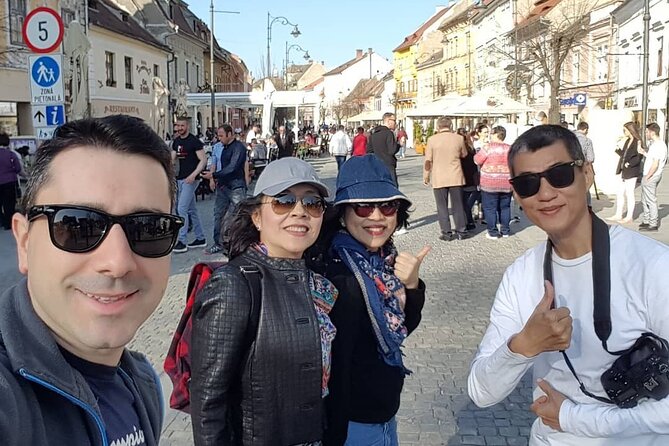
Even though food is not included, the tour explicitly includes tips on where to eat, drink, and explore. I love that approach because Old Town can be full of places that look good but do not always deliver.
Since you end in Piața Unirii near the Old Town zone, you can use your guide’s recommendations immediately. If you are planning a second evening meal, you are already in position to walk to something your guide described.
For a smoother night, I suggest you use your final stop points like bookmarks. If you see a passage or street that feels promising during the tour, that is a good place to start browsing after.
Weather, Shoes, and Pace: The Real-World Planning Stuff
This is a walking tour with moderate physical fitness requirements. You should expect pavement time and a steady, story-driven pace rather than lots of long breaks.
Because the tour requires good weather, I would plan a backup evening if your schedule is tight. If rain or heavy cold hits, the experience can be changed or refunded, so keep your timing flexible if possible.
Also, this is timed for night light, which means clothing matters. Bring something you are comfortable in for an evening walk, and keep your phone battery charged for all the stop-and-photo moments.
Should You Book This Tour?
Book it if you want a fast, guided way to understand Bucharest in layers, classical power, the 1989 revolution context, and an Old Town evening vibe. The small-group size and the standout guide storytelling make it feel more personal than a big bus-style overview.
Skip it or adjust expectations if you want a museum-only day. This tour focuses on sights, exterior stops, and context, and a couple of entries like specific museums and the national library are marked as not included.
If you have two to three hours and you want your first Bucharest evening to make sense, this is a solid choice. You will finish with your bearings, and with a few details that do not fade the next morning.
FAQ
How long is the tour?
It runs for about 2 to 3 hours.
What does the tour cost?
The price is $72.25 per person.
Where does the tour start and end?
It starts at Strada Benjamin Franklin 2, București, and ends at Piața Unirii, close to the Old Town area.
Is the tour offered in English?
Yes, the tour is offered in English.
Are entrance fees included?
Most stops are listed as admission ticket free, but some entrances are not included, including Muzeul National de Istorie a Romaniei and Biblioteca Nationala a Romaniei.
What happens if the weather is bad?
The experience requires good weather. If it is canceled due to poor weather, you will be offered a different date or a full refund.
Recently added around Bucharest
- Bucharest: Dealu Mare Winery Private Trip with Wine Tasting★ 4.9 · 6 reviews
- Winery touring & private wine tasting – one day private tour★ 5.0 · 3 reviews
- Traditions in Bucharest: Village Museum and Wine Tasting★ 5.0 · 8 reviews
- Village Museum Bucharest Guided Tour★ 5.0 · 6 reviews
- Your rendez-vous with Europe’s past: time-travel to Maramures, Transylvania★ 5.0 · 6 reviews
- Walking Tour of Bucharest City Center – Private Tour★ 5.0 · 4 reviews
- Wine tasting in Bucharest Old town – bonus cheese platter★ 4.5 · 6 reviews
- Private Wine Tasting at Bucharest’s First Wine Bar★ 5.0 · 3 reviews
Communist History Tours, compared.
Bucharest Essential Tour: Old Town, Calea Victoriei & Communism
Read our review →
Communism in Bucharest – Landmarks, Museum & Communist Appetizers
Read our review →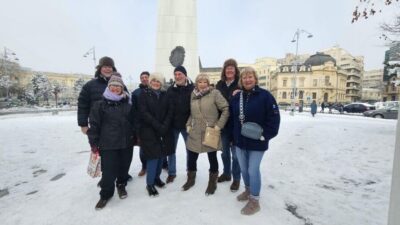
Browse the lists this tour appears in