Reviewed · COMMUNIST HISTORY TOURS
Life under Communism
Life under Communism in Bucharest is interesting because the city becomes a timeline, from the early shock of Communist rule to the bloody end in 1989. You’ll connect Ceaușescu’s rise and fall to real buildings you can stand in front of today, not just dates on a page.
I like the way this tour pairs big, hard history with daily-life details you can actually picture. I also like the English clarity and the personal storytelling style, with guides such as Cristina, Stefan, and Victor leading the conversation.
One drawback to plan for, it is a walk in central Bucharest and it lasts about 3 hours. If you need lots of sitting breaks, tell your guide early so they can pace the group.
Key highlights to look for
- Ceaușescu’s story in the places he shaped: the tour connects power to architecture and street-level reality.
- A small group (max 20): enough time to ask questions without feeling rushed.
- Church, parliament, monastery, and revolution sites: you get different angles on the same system.
- Religion under Communism, not just politics: you see how belief survived pressure.
- Revolution Square as a finale: the collapse of the regime lands with weight and clarity.
- Professional guides with clear English: Cristina is repeatedly praised for speaking clearly and answering follow-ups.
Turning Bucharest into a real timeline of Communism
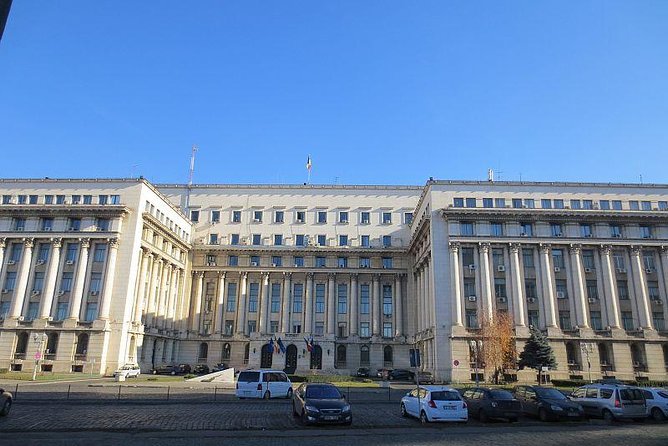
If you only look at Bucharest as a pretty city, the past stays vague. This tour makes it concrete. You start with the way Communist rule began, then move through the landmarks that show how the regime acted, built, and controlled.
I like that you get nuance here. This is not a simple good guys versus bad guys lesson. The approach tries to explain what happened and why, including the mixed experience people had under the system.
The other thing I like is the human scale. You’ll hear stories that make the era feel less like a chapter in a textbook and more like lived time. That matters, because Communism in Romania was not one single mood, it was years of routine, fear, compromise, and eventual rupture.
More tours covering the communist period in Bucharest:
- The Real tour of Communism
★ 5.0 · 666 reviews - 3-Hour Guided Tour of Communist Bucharest
★ 4.9 · 303 reviews - Bucharest Essential Tour: Old Town, Calea Victoriei & Communism
★ 5.0 · 142 reviews
The rhythm: 3 hours, mostly walking, and lots of standing still to look
This is a short, focused tour, about 3 hours. It runs in all weather conditions, so bring layers and a rain plan. I also suggest comfortable shoes, because you’ll be moving between central Bucharest stops and pausing often to take in details.
You should know the group size is capped at 20. That’s a sweet spot. You get structure, but you can still ask questions and get answers in plain language.
There is no hotel pickup or drop-off, so you’ll need to get yourself to the start point. The meeting address is Aleea Dealul Mitropoliei 19, București 030167. The tour ends at Revolution Square, Piața Revoluției.
Stop 1: Catedrala Patriarhala and the shock of early Communist rule
You begin at Catedrala Patriarhala, a fitting start because it highlights how Communist authority ran into older institutions with deep roots. The guide sets the tone by discussing the violent beginning of Communism in Romania, which is not a small detail. It explains why later propaganda and fear work so well.
What I like about starting here is that the architecture isn’t just scenery. It helps you feel the contrast between power and tradition, between what the regime wanted people to accept and what people already had.
If you’re someone who dislikes heavy opening scenes, don’t worry. The guide frames things clearly, so you understand the timeline without being overwhelmed at the first stop.
Stop 2: Palace of Parliament, Ceaușescu’s machine and its cost
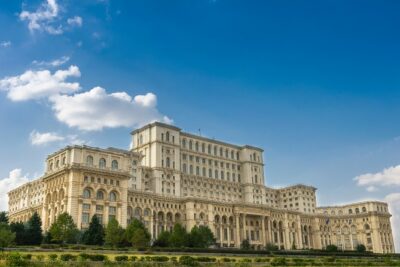
Next comes the Palace of Parliament, the huge symbol most people associate with Ceaușescu. Even if you mostly remember it from photos, standing near it changes your sense of scale. This building was not subtle, and the tour treats it as a clue to how the regime worked.
The entry ticket is not included for this stop. Plan on paying if you want to go inside and see more than the exterior. Either way, the guide’s job here is to connect the story of the building to the real story behind the power behind it.
I find this stop valuable because it forces you to think about propaganda as physical form. When a leader spends a fortune on one monument, it says something about priorities, control, and what the population was asked to endure.
A different kind of day out:
- Bucharest: Dracula’s Castle, Peles Castle, & Brasov Old Town
★ 4.5 · 17,858 reviews - Bucharest: Dracula Castle, Peles Castle & Brasov Old Town
★ 4.6 · 10,891 reviews - Bucharest: Dracula’s Castle, Peleș Castle & Brașov Day Trip
★ 4.5 · 5,919 reviews - Bucharest: Palace of Parliament Tickets and Guide
★ 4.3 · 3,182 reviews
Stop 3: Manastirea Antim and what Communism did to religion
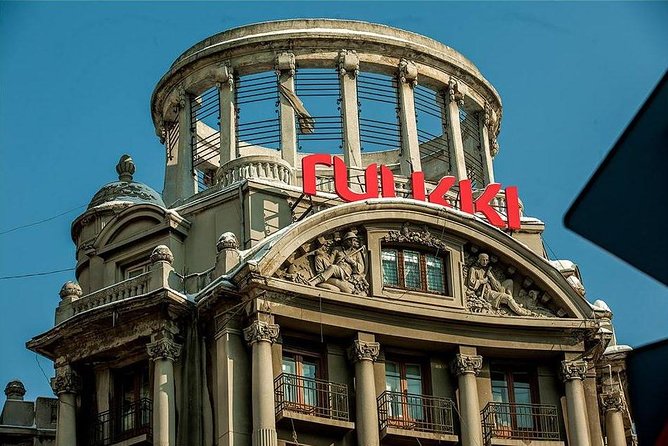
Then you head to Manastirea Antim, a picturesque medieval monastery. The setting gives you a calm visual break from the massive Communist-era statements, but the topic stays serious.
Religion under Communism wasn’t only about banning things. It was also about pressure, surveillance, and limiting public influence. This stop helps you see how faith and public life had to adjust in order to survive.
I like the balance here. You’re not just learning who ruled. You’re learning how rule changed daily behavior and community identity, including the way people practiced belief in a system that wanted obedience.
Admission is free at this stop, so you’re not forced to manage extra costs just to keep the story moving.
Stop 4: Old Town and Caru’ cu bere, politics over dinner tables
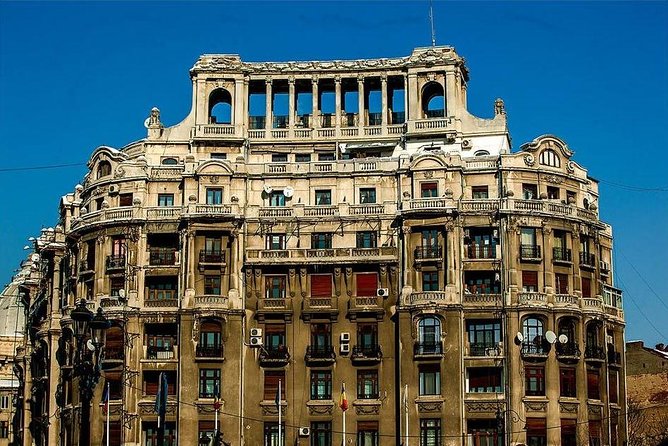
In the Old Town area, the tour shifts from government and institutions to something more human and, frankly, more surprising. You’ll visit the Caru’ cu bere area and hear about its role for foreign policy under Communism.
This is one of those moments where the city feels like it still remembers. The guide explains how social spaces could function like stage sets for diplomacy, influence, and controlled conversation.
I like this stop because it shows how Communism worked in the spaces people actually used. Power wasn’t only delivered through speeches and buildings. It also operated through meeting points, invitations, and who was allowed to talk freely.
Also, this is one of the stops where you get time to reorient yourself in the center of Bucharest. It’s useful if you’re trying to decide where to wander after the tour.
Stop 5: Revolution Square, the violent collapse you can feel
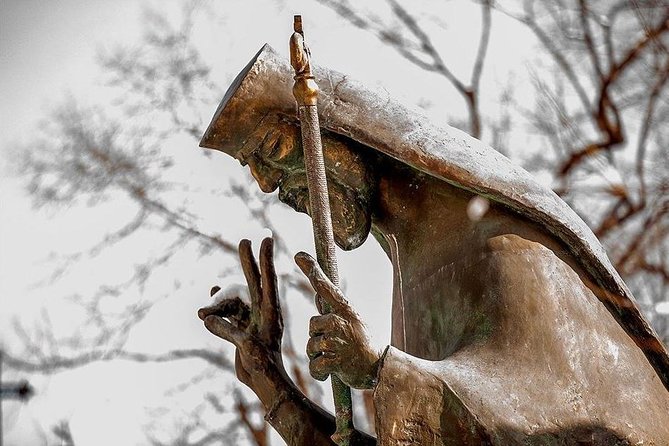
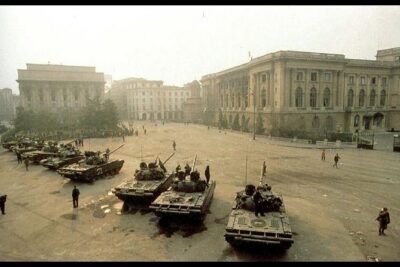
You finish at Piaka Revolukiei, which is Revolution Square, and the tour focuses on the violent collapse of Communism and Ceaușescu’s downfall. By the time you reach this point, you’ve already seen how power was built and enforced. So the ending lands with clearer meaning.
This stop is free, and it’s where memorial energy does something facts alone can’t do. You understand not just that 1989 happened, but what it meant for a population and why the regime’s control could not last forever.
I also appreciate that the guide ties this end point back to the earlier stops. That keeps the story from feeling like separate sightseeing clips. It becomes one line.
What makes the guides here earn top marks
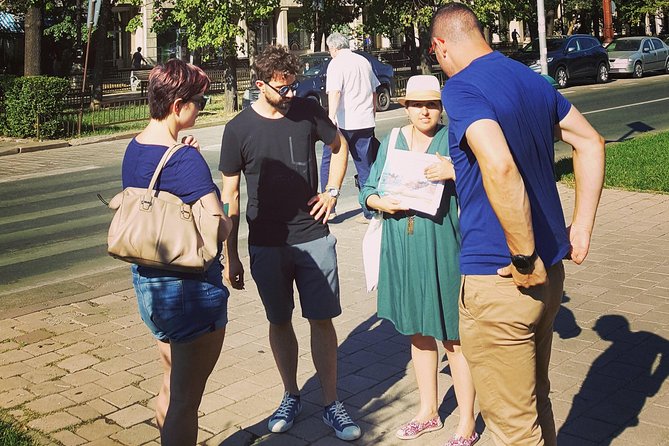
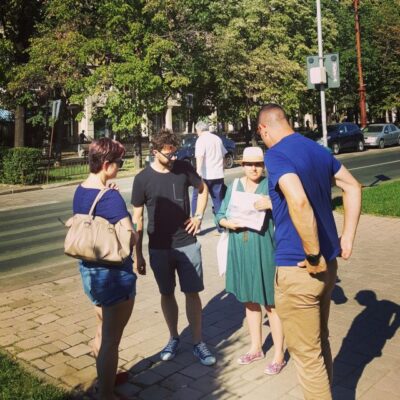
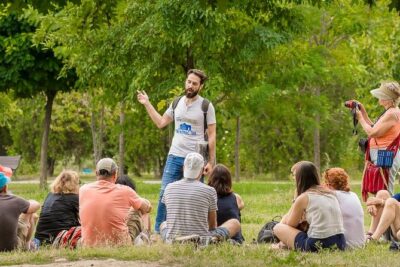
The biggest repeated praise is the guide experience itself, not just the monuments. Guides such as Cristina are repeatedly singled out for speaking English clearly and for being able to explain hard ideas in simple terms. If you’re hard of hearing, this matters a lot, because hearing the details is part of the value.
I also love the way some guides adapt to real bodies in the group. I’ve seen mention of pausing at points where someone could sit or lean, and adjusting pace for family members who move slower. That kind of flexibility turns a history tour into an actually enjoyable one.
Another major theme in the feedback is storytelling that includes first-hand family impact. You’ll hear personal perspectives alongside facts, so you get both the macro view and the micro consequence.
Finally, guides are praised for staying balanced. One repeat note is that the tour aims for nuance, not blind hatred or blind praise. That kind of approach makes the information easier to trust, especially if you come with Western assumptions about what Communism was.
Price and value: what you get for about $42
At around $42.33 per person for about 3 hours, this tour is priced like a solid half-day city experience, not like a museum-only add-on. You’re getting a professional guide, multiple central landmarks, and a story that connects architecture to political control and everyday life.
The Palace of Parliament is the one place where admission is explicitly not included. Everything else listed is free at the stop level. So your biggest potential extra cost is likely entry for that building, if you choose to go inside.
If you’re thinking about value, consider what you spend energy on during a self-guided day. In a city like Bucharest, it’s easy to see impressive buildings and still miss the why. This tour gives you the why fast.
One more value note, the tour typically books well ahead, about 25 days. If your dates are fixed, book earlier so you can match your schedule and avoid last-minute disappointment.
Practical tips so your tour feels smooth
A few things will make your experience better right away.
Wear comfortable shoes. This is a walking route through central Bucharest with multiple pauses. Bring a light rain layer just in case, since the tour operates in all weather conditions and you’ll still be outside.
Bring curiosity. The guides handle follow-up questions well, especially if you ask about how people worked, shopped, or lived. You’ll get more out of it if you treat it like a conversation.
And if you have mobility needs or hearing challenges, consider telling the provider ahead of time. The feedback shows guides can be accommodating with pacing and clear explanations.
Should you book Life under Communism in Bucharest?
Book it if you want a short, organized way to understand Romanian Communism through the city itself, especially Ceaușescu and the 1989 revolution. It’s also a great fit if you like guided storytelling and clear English, with guides who can answer questions without rushing you.
Skip it if you want purely visual sightseeing with minimal talk. This tour uses the places as anchors for discussion, so if you dislike walking and explanation, you may prefer a more light-touch tour style.
FAQ
How long is the tour?
The tour is approximately 3 hours.
How much does it cost?
The listed price is $42.33 per person.
What is included in the price?
A professional guide is included.
What is not included?
Food and drinks are not included unless specified, and hotel pickup and drop-off are not included. Admission ticket for the Palace of Parliament is not included.
What language is the tour offered in?
The tour is offered in English.
Where do I meet, and where does it end?
You start at Aleea Dealul Mitropoliei 19, București 030167, Romania. The tour ends at Revolution Square, Piața Revoluției, București, Romania.
Is the tour suitable for people with limited mobility?
Most travelers can participate, and the tour is designed as a group walking experience. Service animals are allowed.
Will it run in bad weather?
It operates in all weather conditions, but if it is canceled due to poor weather, you will be offered a different date or a full refund.
How large is the group?
The maximum number of travelers is 20.
What is the cancellation policy?
Free cancellation is available. You can cancel up to 24 hours in advance for a full refund. If you cancel less than 24 hours before the start time, the amount paid will not be refunded.
Recently added around Bucharest
- Bucharest: Dealu Mare Winery Private Trip with Wine Tasting★ 4.9 · 6 reviews
- Winery touring & private wine tasting – one day private tour★ 5.0 · 3 reviews
- Traditions in Bucharest: Village Museum and Wine Tasting★ 5.0 · 8 reviews
- Village Museum Bucharest Guided Tour★ 5.0 · 6 reviews
- Your rendez-vous with Europe’s past: time-travel to Maramures, Transylvania★ 5.0 · 6 reviews
- Walking Tour of Bucharest City Center – Private Tour★ 5.0 · 4 reviews
- Wine tasting in Bucharest Old town – bonus cheese platter★ 4.5 · 6 reviews
- Private Wine Tasting at Bucharest’s First Wine Bar★ 5.0 · 3 reviews
Communist History Tours, compared.
Bucharest Essential Tour: Old Town, Calea Victoriei & Communism
Read our review →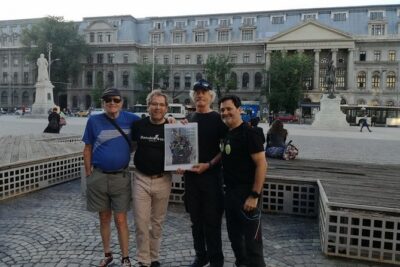
Communism in Bucharest – Landmarks, Museum & Communist Appetizers
Read our review →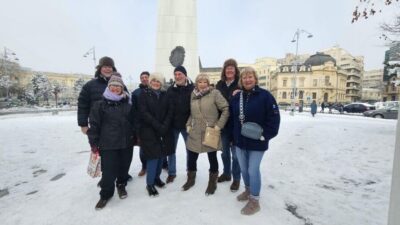
Museum of Communism Ticket with Communist Coffee
Read our review →Browse the lists this tour appears in