Reviewed · COMMUNIST HISTORY TOURS
Communist Era Bucharest Tour
This tour is interesting because it takes you beyond big monuments and shows you how communist power shaped everyday Bucharest, down to boulevards, banks, universities, and squares. I especially like the focus on Revolution Square and the way your guide connects buildings to daily life in the Eastern Bloc. I also like that it is a private tour, so you can ask questions and steer the pace a bit. One possible drawback: it is a walking tour, so you need solid comfort on your feet for about 3 hours.
You also get a real choice in timing, since it runs in a morning or afternoon slot. If you prefer context over yelling slogans, this kind of tour usually hits the sweet spot. Just keep in mind that Bucharest communist history can be interpreted in different tones, depending on the guide and the angle they use.
Key points worth planning around
- Private group for a more personal pace and Q&A time
- Unirii Square and fountains that show how the city was redesigned
- Casa Poporului area framed as a power symbol, not just a photo stop
- Revolution Square highlights including Ceaușescu’s balcony viewpoint
- Memorial of Rebirth with strong visuals and clear 1989 context
- Guide-led walking that aims to connect architecture to ordinary life
Why Communist-Era Bucharest Feels Like a Time Machine
Communist Bucharest can look like ordinary city streets at first glance. Then your eyes start to catch the pattern: planned boulevards, formal squares, monumental buildings, and institutions that broadcast who held power.
What I like about this kind of tour is that it treats architecture like evidence. You are not just seeing big sights, you are learning why they were built and what they were meant to do.
You will walk past the outward face of the system and also the softer stuff tied to daily routines. That combo is what makes the city feel like a living lesson rather than a museum loop.
More tours covering the communist period in Bucharest:
- The Real tour of Communism
★ 5.0 · 666 reviews - Life under Communism
★ 5.0 · 358 reviews - 3-Hour Guided Tour of Communist Bucharest
★ 4.9 · 303 reviews
Starting Point at Manuc’s Inn, and How the Tour Actually Moves
The tour starts and ends at Hanul lui Manuc, Manuc’s Inn, right in the Old Centre. The meeting point is outside the main entrance on Strada Franceză 62. Pickup can be arranged to meet your group at a centrally located hotel, or you can go straight to the Inn, depending on what you booked.
Because it is private, the guide can slow down for questions or speed up if your group is chatty and curious. Expect a steady walking rhythm through central Bucharest, with multiple stops where you stand, look around, and connect details to the communist story.
Comfort matters here. Comfortable walking shoes are a must, and the tour is best if you have moderate fitness for city walking.
Piaka Unirii: Where Planning Became a Modern City Core
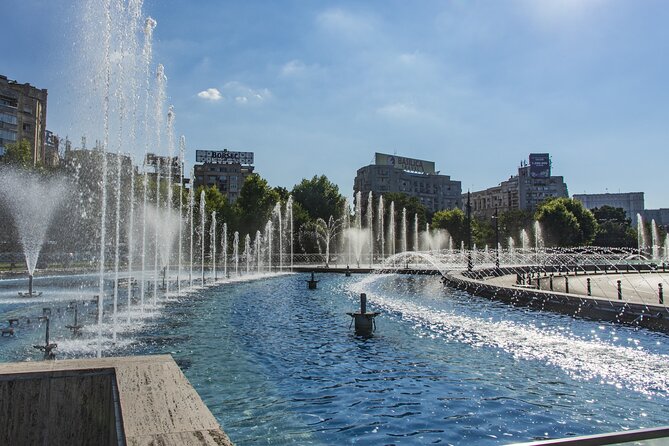
Your first major stop is Piața Unirii, often treated as the heart of Bucharest. This area was shaped as part of communist-era planned modernization, and today it is clearly in a regeneration phase.
Look closely at the newly restored Unirii fountains. They are not just pretty waterworks. They reflect how the city reclaims and repurposes spaces that were designed with state messaging in mind.
The best moment here is the mix of past and present. You get the big plaza scale, then you see how it functions now as a busy meeting point. And because the stop is listed as free for admission, you can spend as much time as you want without hunting for ticket rules.
Practical tip: Bring your camera, but also take 2 minutes just to watch the plaza flow. It helps the communist planning story “click” faster when you see people using the space now.
Bulevardul Unirii: Socialist Victory Meets the 4-Season Fountain Show
Next you head along Bulevardul Unirii, a stretch with a very specific name history. It was once the boulevard of socialist victory, and it is described as the Champs-Élysées of Bucharest.
Here the story becomes more playful. You will see 17 artesian fountains decorated to represent the four seasons. That detail matters because it shows how even public “glamour” could be used to project optimism and order.
This stop is short, but it is visual. You will get a feel for the way communist city design used rhythm and repetition to make large-scale systems feel normal.
Quick caution: Because this is a moving stretch of road, you will need to keep your head up for where you are stepping and where the group is crossing. Use the time to learn the guide’s framing, not to try to wander off.
A different kind of day out:
- Bucharest: Dracula’s Castle, Peles Castle, & Brasov Old Town
★ 4.5 · 17,858 reviews - Bucharest: Dracula Castle, Peles Castle & Brasov Old Town
★ 4.6 · 10,891 reviews - Bucharest: Dracula’s Castle, Peleș Castle & Brașov Day Trip
★ 4.5 · 5,919 reviews - Bucharest: Palace of Parliament Tickets and Guide
★ 4.3 · 3,182 reviews
Victoria Avenue and the Banking Buildings That Worked Like Propaganda
As the walk continues, you move through the central corridor where communist planning and elite institutions sit side by side. You will take a walk along Victoria Avenue, lined with shops, and learn what life felt like along a street designed under the communist era’s priorities.
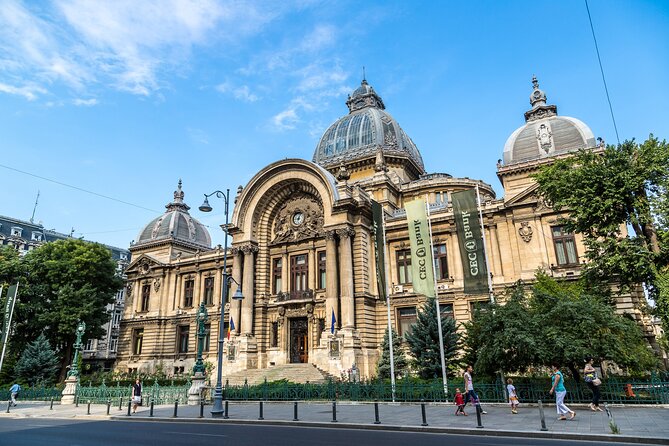
Then you stop at the CEC Bank, described as the bank of the people during the communist years. Even if you do not go inside, the point is clear: institutions mattered. They were part of the system’s public face.
From there, you will also see the Romania’s National Bank building and hear its history. This is one of those “looks important because it is important” stops, where the architecture supports the story the guide is telling.
This part of the tour is valuable if you like understanding how power works through everyday structures. Banks, theaters, and universities tell you who the state wanted to look respectable, stable, and permanent.
University Square and the Intercontinental Hotel Opened in 1971
At University Square, you see the oldest and largest university in Bucharest. The stop is designed to connect education and public identity, so you are not just admiring a campus corner.
You will also hear about the Intercontinental Hotel Bucharest, completed and opened in 1971. That date is a useful anchor. It helps you picture how later communist decades built international-facing landmarks, even as the system restricted ordinary freedoms.
If you enjoy architecture with dates attached, this stop is a good one. It turns the city into a timeline you can walk through.
One thing to watch: because this is central and active, it can be loud. The guide will do the talking, so step into the group’s listening position rather than trying to read everything at once.
Passing the National Theatre: Constant Changes, Same City
You also pass by the National Theatre of Bucharest, an iconic building with a short history that included multiple design changes. This is another spot where you learn to notice that the city kept changing its mind, even while the system tried to project certainty.
The theatre connects to the bigger theme of culture under communism: what gets funded, what gets staged, and how public culture is shaped by the political climate.
If you care about the human side of history, theatre and institutions are often more telling than grand statues. They show what the state chose to highlight, and what it tried to control.
Casa Poporului and the Power Axis Over Revolution-Era Bucharest
The walk includes Nicolae Ceaușescu’s massive parliament building, often called Casa Poporului. Your guide frames it as a heaviest-building-in-the-world kind of monument, and you hear the historical angle behind its scale.
Even if you do not get inside, you get the effect. This is where the story turns heavy. The building looms over the center, and once you see that mass in person, the communist obsession with authority and permanence becomes more real.
A practical note: this stop is mostly about viewing and context, not a long deep dive. Still, it is one of the most memorable sights on the route, simply because of the sheer presence.
Revolution Square: The 1989 Starting Area and the Balcony Moment
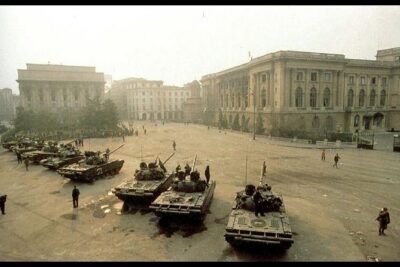
Then comes Piața Revoluției, one of the tour’s top payoff moments. You see the area where the famous 1989 revolution started and visit memorials that mark the life-changing events.
The highlight is the focus on the balcony where Nicolae Ceaușescu made his final speech. The guide helps you understand why this location matters, not just where it is. You also learn about the former headquarters of the Communist party, plus the Monument of National Rebirth.
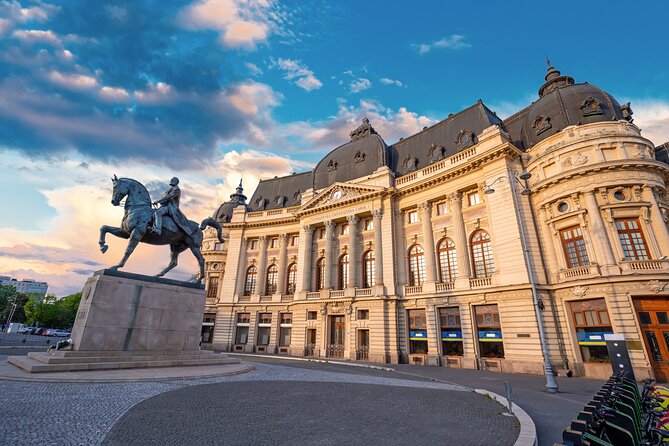
Other named points around this stop include King Carol the First’s equestrian statue and the University library, and the overall area is set up for excellent photo opportunities.
This is a stop where your best move is to look first, then listen. The scale and layout make more sense when you pair what you see with what you hear.
If you are sensitive to heavy topics, this is still one of the most important places to visit in Bucharest. It is also usually the most visually satisfying part of the tour.
Iuliu Maniu Statue and the Memorial of Rebirth at Street Level
After Revolution Square, the tour shifts to more focused memorial storytelling.
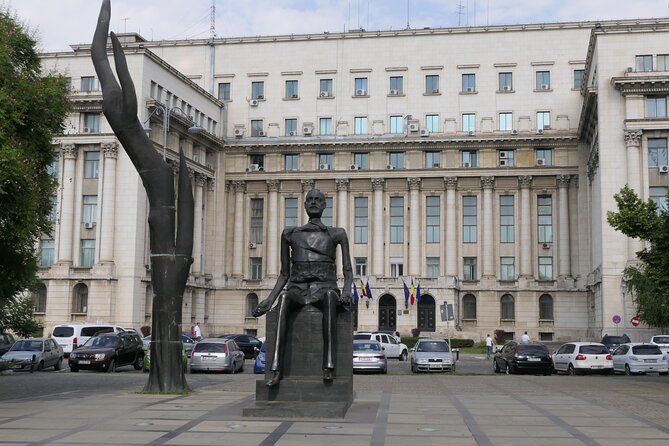
You will see the Iuliu Maniu statue, tied to the struggle in the early years of communism. The guide also connects him to his role as a three-time prime minister, which helps you understand why his name belongs in the same conversation as the system that replaced him.
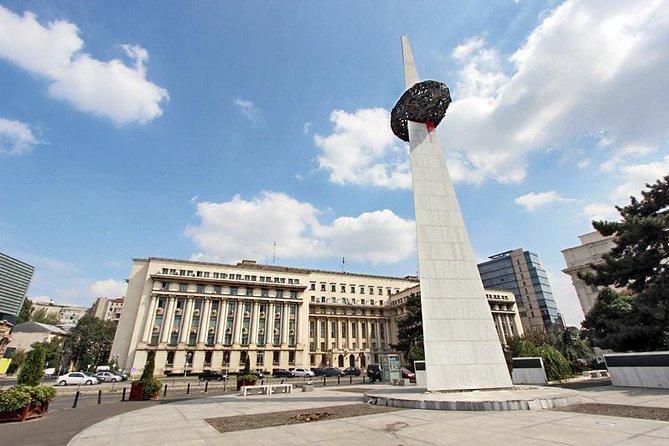
Then you visit the Memorial of Rebirth, a 25 meter high memorial tied to the struggles and victims of the Romanian Revolution of Christmas 1989. The height is worth noticing. When something is built this big, it is meant to last, and it is meant to be seen from a distance.
One more final stop in the central area wraps this phase up with a historic building and gardens. It is described as built for the people of Bucharest by the people of Bucharest over 100 years ago, with stunning visual photo potential. This contrast helps your brain reset after the heavy themes.
What You Learn Depends on the Guide, and That Is the Point
The strongest part of this experience is how your guide tells the story. In past tours with this company, guides such as Alina and Clare are praised for connecting personal perspective with historical context.
The big theme that shows up again and again is balance. You will hear not only about the dark side, but also about how ordinary people experienced life, including the good and the bad pieces, and how daily choices were shaped by the regime. That balanced framing tends to make the story feel more grounded.
There is also room for dialogue. Several people note that the guide encouraged questions, including personal ones, and adjusted the flow based on what interested the group.
Now, a fair caution: one person reported that they had trouble understanding the guide, and another felt the political tone was not as negative as they expected. So if you strongly prefer a particular style of historical interpretation, your best bet is to ask your guide early on about the angle they are taking, and what they emphasize most.
Price and Value: What $30.72 Buys You in 3 Hours
At $30.72 per person for about 3 hours, you are paying for a guided walking experience with a private format. That is often good value in a capital city, where self-guided sightseeing can turn into “spot it and guess” fast.
Here the value is not in the number of monuments. It is in the interpretation. When you walk through places like Unirii, the banking institutions, and the Revolution Square memorials, you can either read signs for 5 minutes or you can have a person explain why those spots matter.
And because pickup can be offered and the tour is private, you are not stuck blending into a larger group that moves on a fixed timetable. That matters if you like asking follow-up questions.
One more timing detail: the tour is typically booked about 35 days in advance on average. If you can, book ahead to pick the morning or afternoon slot that best fits your day.
Who This Tour Is Best For
This is a great match if you want to understand communist Bucharest in a realistic, street-level way. It suits travelers who like history that connects to how people lived, not history that stays trapped in dates and names.
It is also a strong option if you already know some big facts about 1989 but want the city layout to make sense. Revolution Square and the surrounding memorials become much clearer when you get the local context in place.
On the flip side, if you want a low-effort, mostly seated experience, this may not be your best day. You are walking, stopping, and listening, and you will do best if you show up ready for a moderate amount of city walking.
Should You Book This Communist Bucharest Tour?
If you are visiting Bucharest for the first time and you want a fast way to understand how the communist era shaped the city, I would book this. It hits the core locations: Unirii’s planned modernization vibe, the power-symbol scale near Casa Poporului, and Revolution Square with the balcony and memorial focus.
Book it especially if you like guided interpretation and you enjoy asking questions. The private format makes that easy.
If you are very sensitive to heavy political topics, be ready for Revolution Square and the 1989 memorial stops. If you have specific expectations about how the communist period should be judged, ask your guide early about the tone they use.
FAQ
How long is the Communist Era Bucharest Tour?
It runs for about 3 hours.
What is the price per person?
The price is $30.72 per person.
Is this tour private?
Yes. It is a private tour, so only your group participates.
Do they offer pickup?
Pickup is offered, with the meeting point at Manuc’s Inn or with pickup arranged to meet your centrally located hotel.
Where does the tour start and end?
It starts and ends back at Manuc’s Inn (Hanul lui Manuc), outside the main entrance at Strada Franceză 62.
What language is the tour offered in?
The tour is offered in English.
What landmarks are included?
You will see places including Piaka Unirii, Bulevardul Unirii, the Casa Poporului area (Parliament Palace), Victoria Avenue, CEC Bank, the National Bank, University Square, the National Theatre area, and Piaka Revolukiei (Revolution Square), plus memorials like the Memorial of Rebirth and the Iuliu Maniu Statue.
Is admission required for the main stops?
The tour lists admission ticket free for key stops like Unirii Square and Revolution Square, and the memorial stops shown in the route also indicate ticket free.
How much walking is involved?
It is a walking tour, so comfortable walking shoes are recommended, and a moderate physical fitness level is suggested.
Can service animals join?
Yes, service animals are allowed.
What is the cancellation window?
You can cancel up to 24 hours in advance for a full refund.
Recently added around Bucharest
- Bucharest: Dealu Mare Winery Private Trip with Wine Tasting★ 4.9 · 6 reviews
- Winery touring & private wine tasting – one day private tour★ 5.0 · 3 reviews
- Traditions in Bucharest: Village Museum and Wine Tasting★ 5.0 · 8 reviews
- Village Museum Bucharest Guided Tour★ 5.0 · 6 reviews
- Your rendez-vous with Europe’s past: time-travel to Maramures, Transylvania★ 5.0 · 6 reviews
- Walking Tour of Bucharest City Center – Private Tour★ 5.0 · 4 reviews
- Wine tasting in Bucharest Old town – bonus cheese platter★ 4.5 · 6 reviews
- Private Wine Tasting at Bucharest’s First Wine Bar★ 5.0 · 3 reviews
Communist History Tours, compared.
Bucharest Essential Tour: Old Town, Calea Victoriei & Communism
Read our review →
Communism in Bucharest – Landmarks, Museum & Communist Appetizers
Read our review →

Browse the lists this tour appears in