Reviewed · COMMUNIST HISTORY TOURS
Communism Walking Tour from Lenin to Ceausescu in Bucharest
If you want to understand Romania under communism without drowning in dates, this walking tour is a smart way to connect the big landmarks to real people and real decisions. I love how the route links Palace of Parliament scale with street-level sites like Revolution Square, so the ideology feels physical. I also like that the guide storytelling can be strong and personal, with names like Alex and Lucia showing up in real groups. The one drawback to plan for is language, since it runs in English, and not everyone will be equally comfortable even with translation help.
You’ll cover about 2 hours 30 minutes on foot, moving between major squares and historic buildings, mostly from the outside. It is a compact way to see how Bucharest’s architecture got reshaped into propaganda, then how the city turned the page.
At $24 per person, it is also a value play, especially because the tour details say admission tickets are free for the listed stops. Still, because food and drinks are not included, you will want to time it with a snack stop of your own.
Key Highlights You Should Not Miss

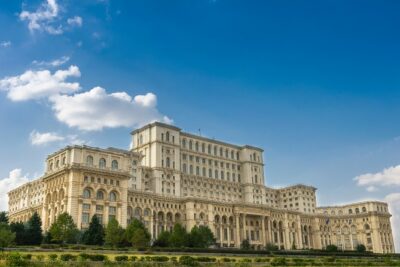
- Palace of Parliament, seen at the start of Bucharest’s biggest communist statement
- Manastirea Antim and the clash between old Bucharest and Socialist Victory Boulevard
- Piaka Unirii’s 1980s-era boulevard plan, plus the dancing fountains effect
- University’s Square and the grim reminder of the 1989 revolution
- Royal Palace turning into the Palace of the Republic during early communism
- Revolution Square, tied to Ceausescu’s final major public moment
Bucharest’s Communism Walk From Lenin to Ceausescu: What the 2.5 Hours Actually Feels Like
This tour works because it treats communist history like something you can walk through, not just something you read about. Bucharest can be confusing if you are only looking at buildings, because different eras stack on top of each other. Here, you get a guided thread that helps you see why each block and square matters.
It also has a practical pace. You are out for about 2 hours 30 minutes, with short stops, usually around 5 to 25 minutes each, so you are not stuck in one place listening for the whole day. The group size stays modest, with a maximum of 25 travelers, which usually keeps questions from turning into a lost-cause exercise.
The timing is easy to plan around. You meet at 10:30 am at Bulevardul Unirii 5 and finish at Revolution Square. Since you end near a major central landmark, you can wrap up with lunch or continue exploring without needing a complicated return plan.
More tours covering the communist period in Bucharest:
- The Real tour of Communism
★ 5.0 · 666 reviews - Life under Communism
★ 5.0 · 358 reviews - 3-Hour Guided Tour of Communist Bucharest
★ 4.9 · 303 reviews
Price and value
$24 per person sounds like a “quick overview” price, and it basically is. But what makes it feel like a good deal is the mix of scale and access: the route hits major political and cultural sights, and the stops are listed with free admission tickets. In other words, you are paying mostly for the local guide and the way the guide connects the dots, not for entry fees.
If you hate paying for touristy add-ons just to get a basic view, this suits that mindset. If you expect deep museum time inside multiple buildings, you might feel you need more than a walking tour. But for getting oriented fast and understanding the city’s communist transformation, it is a solid value.
Starting at Bulevardul Unirii 5 and the Palace of Parliament’s Strange Power
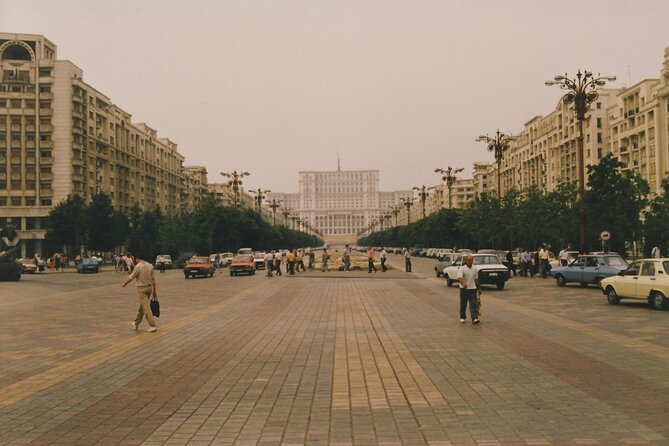
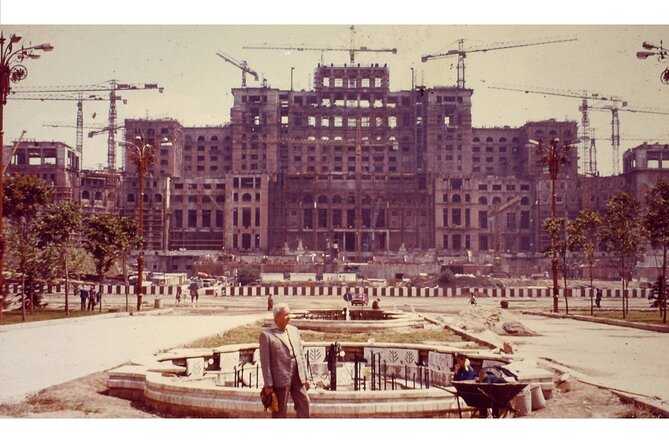
Your walk begins at Bulevardul Unirii 5, then you head straight to the Palace of Parliament area. Even before you hear details, this is one of those places that makes you stop and look up. The Palace of Parliament is described as part of the last megalomaniac communist project, and you can feel that through sheer mass. It is hard to stay emotionally neutral in front of a structure that big, because it is literally designed to overpower your sense of scale.
One thing I really like about this opening is that it sets expectations. You are not starting with a small church tucked away from power. You are starting with state power turned into architecture. The guide perspective matters here, because you are seeing a building that was meant to project authority, then you are about to see how the rest of Bucharest was rearranged to fit that kind of power.
A consideration: since the stop is about 20 minutes with free admission listed, you should not expect to spend time inside. Plan on observing and absorbing the guide’s context rather than doing a full interior visit.
Manastirea Antim and Socialist Victory Boulevard: When Old Bucharest Almost Lost
Next comes Manastirea Antim, a stop that feels like a sudden change of atmosphere. This is tied to the old city, and the key point is that it was almost demolished to make space for the new Socialist Victory Boulevard.
That contrast is the whole lesson. Communist planning was not only about building new landmarks, it was also about deciding what to remove. Standing around this kind of site, you start to grasp that the regime’s control was not only political. It was also visual, spatial, and physical.
The stop is short, about 15 minutes, so it is more of a focus moment than a long slow wander. Still, it is a memorable pivot because it shows how the same plot of land can carry multiple stories depending on who is in charge.
More walking tours in Bucharest:
- Bucharest: City Highlights Guided Walking Tour
★ 4.9 · 1,482 reviews - Bucharest Highlights Walking Tour
★ 5.0 · 469 reviews - Bucharest: Ghost Stories & Romanian Mythology Walking Tour
★ 4.9 · 287 reviews - Bucharest: Guided Walking Tour with Romanian Snack
★ 4.9 · 228 reviews
Palatul Patriarhiei: An Opera-Style Building With a Political Double Life
Then you reach Palatul Patriarhiei. This one has a mix of culture and politics built into the architecture itself. The building is said to be inspired by Garnier Opera from Paris, which gives it a sense of grandeur and theatrical design.
But the guide angle is what keeps it from becoming just an architectural detour. The stop is tied to both the start of democracy in Romania and the start of the communist movement. That means you are looking at a place where history does not move in a straight line. It changes directions, and political shifts can happen in the same streetscape, under the same rooflines, depending on who controls the building.
This stop runs about 20 minutes, and it is a good one if you like your history connected to real places rather than isolated facts. The drawback is mainly timing: if you are the type who wants to linger and read every plaque, you may wish it lasted longer. But the tour keeps moving for a reason, it is building a storyline.
Piaka Unirii and the 1980s Boulevard Plan, Including the Dancing Fountains

Piaka Unirii (often linked with the Socialist Victory Boulevard concept) is where Bucharest’s 1980s planning becomes obvious. This stop takes about 20 minutes, and it is designed to show you a boulevard-era landmark that now feels almost theatrical, thanks to the dancing fountains.
Here is why it matters for understanding communism. Regimes used public spaces for more than transportation. They used them for spectacle and for controlled joy, meaning the environment told you how to feel. The fountains are a modern experience, but the location and surrounding planning reflect the older push for monumental, planned public life.
A practical note: this is a place where you may want to bring attention back to the guide’s framing. If you only treat it like a photo stop, you miss the larger point about how public space was engineered and reused. Stay with the story for those 20 minutes and it will click.
Old Town and University’s Square: From the Symbol of the Old Regime to the Square of Violence
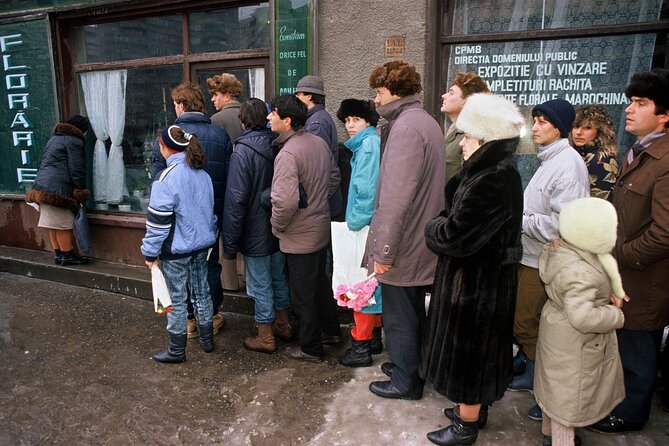
After that, the tour shifts into sharper emotional territory.
First you visit the Old Town, described as the symbol of the old regime. The guide framing here is that it became abandoned during the communist era. That is a tough idea, because abandonment sounds passive, but in a political context it often means neglect as policy. When you see older urban fabric fade or hollow out, it is a visible sign of what power is choosing to value.
Then you move to University’s Square, where the story becomes about the 1989 revolution. The key detail tied to this square is that many victims were shot there. That is not a moment for jokes or light listening. You will want to let the guide explain what happened and why this specific location became so central to the turning point.
This part is short, about 15 minutes at each stop, but those 30 minutes can hit hard. The route is telling you that the communist system did not only fall through policy changes. It fell through conflict that left marks on streets you can still stand in.
If you are sensitive to violent history, this is your heads-up. The tour does cover it, and you should know what kind of emotional weight is part of the deal.
The Royal Palace Turned Palace of the Republic, Now the National Art Museum
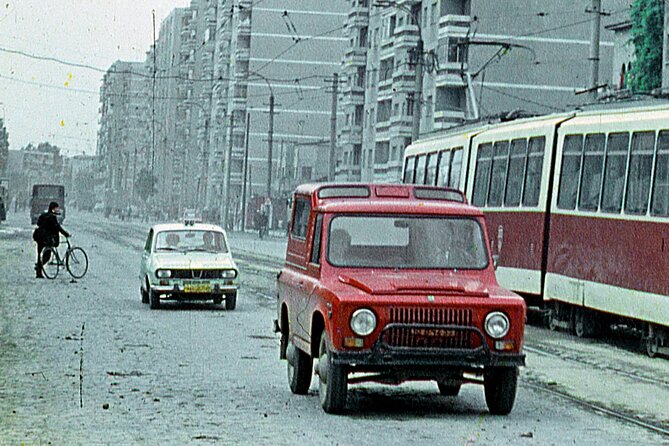
The tour then heads to the area of the Palatul Regal (Royal Palace). Today it houses the National Art Museum, but the key point is how its identity changed. In earlier days, it functioned as the winter residence of Romania’s royal family. During the first years of communism, it became the Palace of the Republic and a protocol building.
This is one of my favorite turns on the route because it shows how communist authority often worked symbolically. Instead of building everything from scratch every time, it could repurpose existing prestige. A royal residence becomes a republic palace. That is a political message carved into daily routine.
Also, the building is described as a winter residence and a protocol building, which helps you imagine what people did there, beyond just admiring architecture. It is the difference between seeing a facade and understanding the choreography of power.
This stop is about 15 minutes, and because it is tied to the museum function now, you might see it differently if you like art and cultural institutions. Even if you do not go inside, the guide framing gives you a sense of why the building still matters.
Ateneul Roman and the 5 Lei Connection: Culture Used as Identity
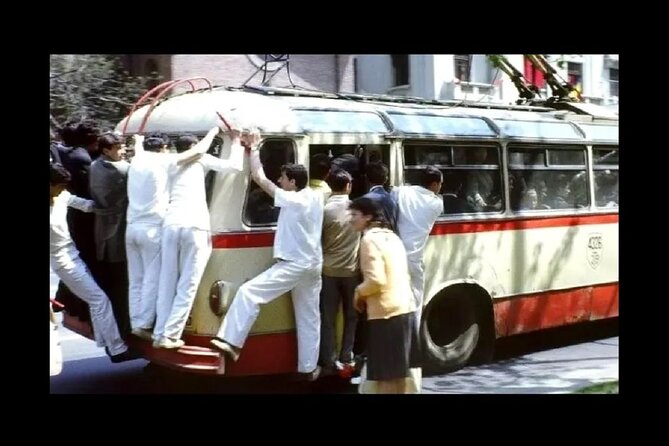
Next comes Ateneul Roman, one of Bucharest’s representative buildings. The tour highlights that it was printed on the 5 lei bill, and that fact is more than trivia. It is a reminder that the city used cultural symbols to build identity that people could recognize, literally in their pockets.
This stop is short, about 5 minutes, so it is more of a quick cultural anchor than a full lecture. But I like it because it gives you a balanced view. Even in a period shaped by strict control, people still carried cultural touchstones that represented the city and its traditions.
If you only focus on communist propaganda buildings, this kind of stop is your correction. It helps you see the city as more than a political stage.
Revolution Square and Ceausescu’s Last Speech, Where the Story Lands
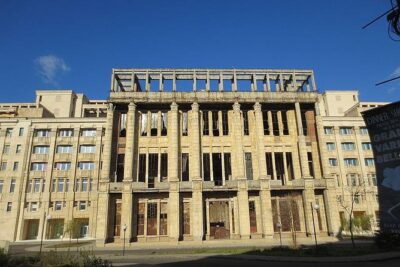
The final major stop is Piaka Revolukiei or Revolution Square, depending on how the name is rendered. The guide ties the central building in this square to the Communist Party Central Committee, from which Nicolae Ceausescu held his last speech in front of the Romanian people.
This is the emotional payoff of the route. You started at the huge statement of power and planning. You walked past reminders of old Bucharest under pressure. You saw public space used for controlled spectacle. Then you end at the place that is linked to the regime’s last major public moment.
The stop is about 25 minutes, giving you more time to process than some of the earlier points. It also helps that you finish here rather than somewhere obscure. You are set up to keep exploring independently after the tour, because Revolution Square is a natural hub.
If you do one thing differently, do this: slow down your pace at the end. Let the guide finish the story, then look around yourself. The point is to connect what you heard to what you see.
What to Expect From the Guide and the Group
Because the tour is offered in English, your experience will depend partly on your comfort level. The best strategy is simple: come with a few questions in mind. Something like how everyday life changed, or what the regime wanted people to believe. Guides tend to adapt when you engage, and real groups have highlighted strong guiding styles, humor, and the ability to connect ideas.
You might meet guides such as Alex or Lucia, and the overall pattern is that the guide explains history in a way that feels connected, not like a textbook read out loud. One key advantage of a smaller group, up to 25 people, is that it stays conversational enough to ask follow-ups.
The route also keeps you moving. That is good for energy, but it means you will not have long quiet breaks. If you need frequent pauses, plan a quick bathroom stop before you start and keep your expectations realistic.
Who This Tour Is For, and Who Might Want to Skip It
This walking tour is a great fit if you want:
- A practical, guided overview of communism in Bucharest tied to actual places
- A route that connects big power buildings with smaller, more personal historical moments
- A half-day style activity that still feels structured and meaningful
It is less ideal if you want mostly museum interiors, because the tour timing suggests mostly exterior viewing and short guided stops.
Also, if you are traveling with limited interest in political history, you might find the emotional moments in University’s Square heavy. But if you are curious and respectful, that heaviness is also part of why the tour lands.
What to bring
Wear comfortable shoes. The route is in central areas and you are walking between squares. Bring water if you get thirsty easily, since food and drinks are not included. If your English is not strong, still come, but plan to use a translation tool and ask clarifying questions when you can.
Should You Book This Communism Walking Tour From Lenin to Ceausescu?
I think this is an easy yes for most first-time visitors who want to understand Bucharest beyond a photo list. The price is reasonable for a guided experience, the route covers major sites tied to key communist-era themes, and the free admission note means you are not paying extra to participate.
Book it if you want a clear narrative arc, from massive propaganda architecture to the places tied to revolution. Consider skipping or pairing it with something else if you need more museum time or if English is a real barrier for you.
If you like walking tours that teach you how to see a city, not just where to stand for a picture, this one is worth your morning.
FAQ
How long is the Bucharest communism walking tour?
It lasts about 2 hours 30 minutes.
How much does the tour cost?
The price is $24.00 per person.
What time does the tour start, and where do I meet?
The start time is 10:30 am. The meeting point is Bulevardul Unirii 5, București 040101, Romania.
Where does the tour end?
The tour ends at Revolution Square (Piața Revoluției), București, Romania.
Is the tour offered in English?
Yes, it is offered in English.
What is included in the price?
A local guide is included.
Are food and drinks included?
No, food and drinks are not included.
Do I need to buy admission tickets for the stops?
Admission tickets are listed as free for the stops included in the tour details.
Do I get a mobile ticket?
Yes, the tour includes a mobile ticket.
Can I get a full refund if I cancel?
Yes. You can cancel up to 24 hours in advance of the experience for a full refund.
Recently added around Bucharest
- Bucharest: Dealu Mare Winery Private Trip with Wine Tasting★ 4.9 · 6 reviews
- Winery touring & private wine tasting – one day private tour★ 5.0 · 3 reviews
- Traditions in Bucharest: Village Museum and Wine Tasting★ 5.0 · 8 reviews
- Village Museum Bucharest Guided Tour★ 5.0 · 6 reviews
- Your rendez-vous with Europe’s past: time-travel to Maramures, Transylvania★ 5.0 · 6 reviews
- Private Wine Tasting at Bucharest’s First Wine Bar★ 5.0 · 3 reviews
- Walking Tour of Bucharest City Center – Private Tour★ 5.0 · 4 reviews
- Wine tasting in Bucharest Old town – bonus cheese platter★ 4.5 · 6 reviews
Communist History Tours, compared.
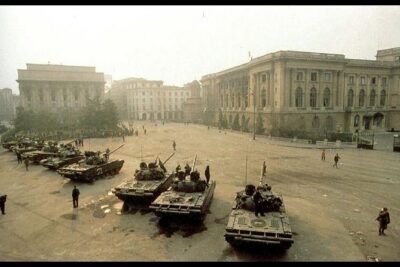

Bucharest Essential Tour: Old Town, Calea Victoriei & Communism
Read our review →
Communism in Bucharest – Landmarks, Museum & Communist Appetizers
Read our review →

Browse the lists this tour appears in