Reviewed · COMMUNIST HISTORY TOURS
Bucharest: Communism, Revolution & City Highlights Tour
Bucharest can feel like three cities stacked on top of each other: ornate 1800s elegance, Soviet-style bluntness, and the shock of the 1989 Revolution. This half-day walk through that layered past is interesting because it turns landmarks into a story you can actually see, not just read.
I like the contrast built into the route, from restored Old Town streets to the former Communist Civic Center’s cold, oversized planning. I also like that the guide keeps you focused on the cause-and-effect of Romanian communism, using places like Revolution Square to explain what changed history.
One possible drawback is also part of the point: it is a walking tour that stays mostly outside buildings, so you will see major sites like the Palace of Parliament from the outside rather than going in.
Key highlights worth showing up for
- Revolution Square on foot: you stand where Ceaușescu delivered his final speech, then connect that moment to what came before and after.
- Belle Époque meets brutalist design: you compare elegant facades with stark communist-era planning in the same day.
- A low-mile, slow-paced route: less than 2 miles total, with frequent stops so you can rest and take photos without rushing.
- Old Town charm, then the “social scar”: you get the pretty first, then the uncomfortable displacement story near the Civic Center.
- Palace of Parliament, seen the right way: no inside visit required to grasp its scale and why it mattered.
- Private guide, real Q&A: the pace can be adjusted, and the route is explained in clear English, sometimes with a guide like Mihai, who is known for making the communist era easy to follow.
Why this Bucharest communist-to-revolution route works
The best way to understand communism in Romania is to see it in context, right next to what it replaced. This tour does that by steering you through two neighborhoods that feel like different planets, Old Town’s restored character on one side, and the former Communist Civic Center planning on the other. You do not just learn dates, you start recognizing patterns in architecture, street width, and how public space was designed to control daily life.
And because it is a private walking tour, the story stays anchored to what you are looking at. If you want more detail about surveillance, rationing, propaganda, or the student protests, your guide can tailor the pace and emphasis. If you prefer a lighter touch, you still get the full narrative thread, just with the volume turned to your comfort level.
A practical note I like: the walking total is kept light, under 2 miles, and the pace is slow with photo stops and short breaks. That matters in Bucharest, where some areas are wide, windy, or simply tiring if you are trying to self-tour while learning the backstory.
More tours covering the communist period in Bucharest:
- The Real tour of Communism
★ 5.0 · 666 reviews - Life under Communism
★ 5.0 · 358 reviews - 3-Hour Guided Tour of Communist Bucharest
★ 4.9 · 303 reviews
The neighborhood arc: from classical grandeur to communist power
This route gives you a clean before-and-after feeling. You start near major historic landmarks, then you move through squares tied to public life, and finally you end at the Civic Center edge where the revolution and the regime’s ambitions collide.
The tour is built around a few “story anchors” you keep returning to:
- Central landmarks that help you orient yourself fast
- Squares and avenues where crowds, speeches, and protests shaped events
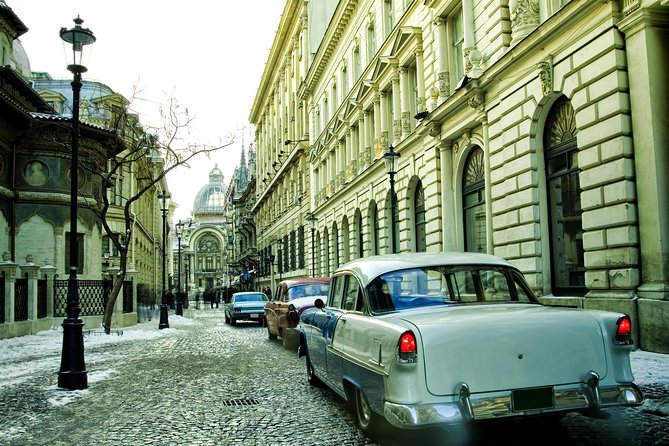
- Old Town streets that show what Bucharest looked like before reshaping
- The Parliament area where scale and displacement are part of the message
By the time you reach the biggest sight, the Palace of Parliament, you are not staring at a strange building with no context. You understand it as a political statement, and you understand why so many neighborhoods were wiped out to build it.
Revolution Square and the moment that changed everything
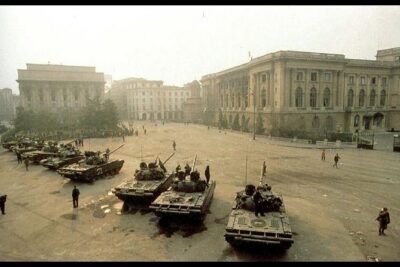
Revolution Square is where the tour becomes sharply real. You stop for photos and time on the ground, and your guide connects what you see nearby with Romania’s 1989 Revolution and the role of Nicolae Ceaușescu.
The key takeaway here is the connection between power and performance. Ceaușescu’s final speech was not just a speech, it was a public act tied to legitimacy, fear, and control. Standing there, you get why dictators cling to visibility, and why losing public control can flip a country quickly.
This is also one of the best photo moments of the day, because you can frame the square and monuments in a way that makes the geography click. If you like history that you can point to on the street, this stop is the center of the experience.
Classical Bucharest stops: Romanian Athenaeum, Royal Palace, Memorial of Rebirth
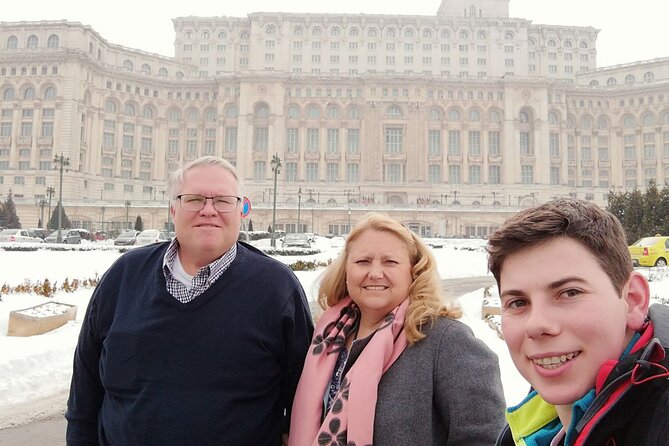
Before you reach the heavier Civic Center planning, the tour threads through symbolic Bucharest landmarks.
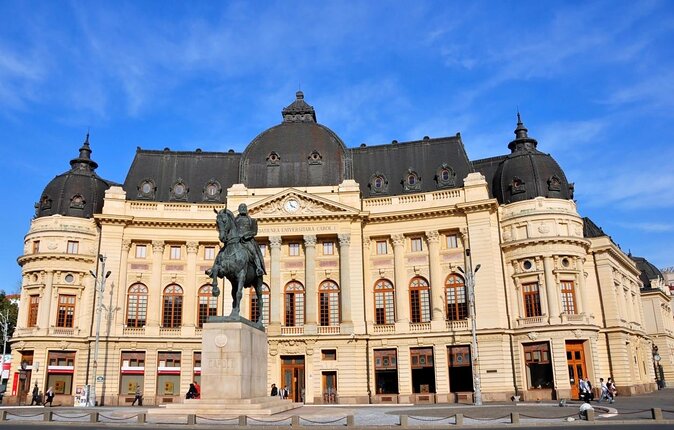
You start with a photo stop and short walk by the Romanian Athenaeum, a grand cultural marker that helps you remember this city had its own sense of pride and public identity long before communist design took over. Next, you have a similar stop at the Royal Palace of Bucharest, another reminder of the earlier political and social order.
Then the Memorial of Rebirth gives the day a moral hinge. It signals change, and it helps you connect the end of an era to the way Bucharest tried to move forward afterward. Even without going inside, standing in the right spot helps your brain create the timeline: what was removed, what replaced it, and what survived.
These stops are short by design. You are not stuck in one place for long stretches. You are building momentum so the big story lands when you reach Revolution Square and the Civic Center area.
Other Bucharest tours to compare
- Bucharest: City Highlights Guided Walking Tour
★ 4.9 · 1,482 reviews - Bucharest: 2-Hour City Highlights Bike Tour
★ 4.8 · 269 reviews - Bucharest Tuk Tuk city tour
★ 5.0 · 188 reviews - Bucharest Tuk Tuk City Tour
★ 4.9 · 167 reviews
University Square and the “why it fell” story
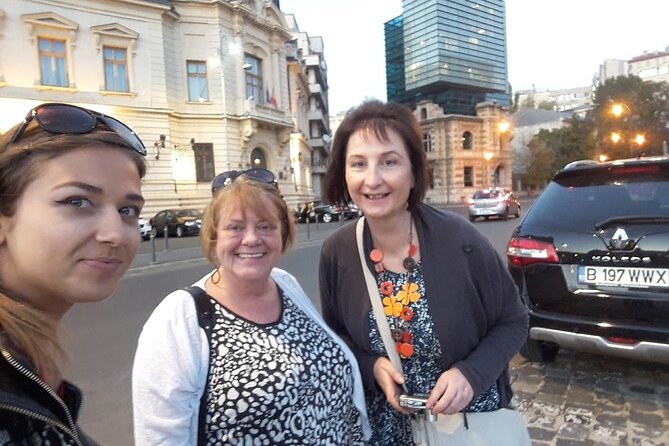
University Square is where the tour leans into the daily-life reality behind regime control. You get a stop that includes sightseeing and a longer time window, with time for the guide to explain student uprisings and how Cold War pressure shaped life under constant surveillance.
What I find useful about this part is how it connects individual action to state response. You get the sense that the revolution was not a sudden miracle, it was a buildup of resistance, fear, and frustration. When your guide ties those emotions to what students did, the city stops feeling like a museum and starts feeling like a place where people made decisions under pressure.
If you are the kind of person who wants the human side of history, this is a good section to ask questions. Keep it simple, ask how surveillance worked in practice or what changed right before 1989. Your guide can shift from architectural hints to personal consequences.
Old Town first, then the displacing scale of the Civic Center
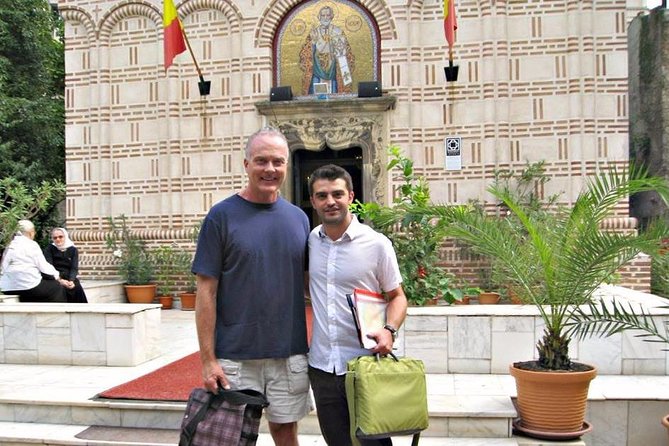
You get a break in Old Town and then a guided walk through its cobblestones and restored mansions. This is where Bucharest lets you breathe. It is also where you learn why “Little Paris” was not just a nickname.
The practical value: you get to experience the city as a city, not just as a political diagram. You can slow down, take photos, and notice the texture of the streets. And while you are admiring the restoration, your guide ties it back to Ceaușescu’s rule, explaining how early reforms and defiance of the Soviet Union gave way to austerity, control, and propaganda.
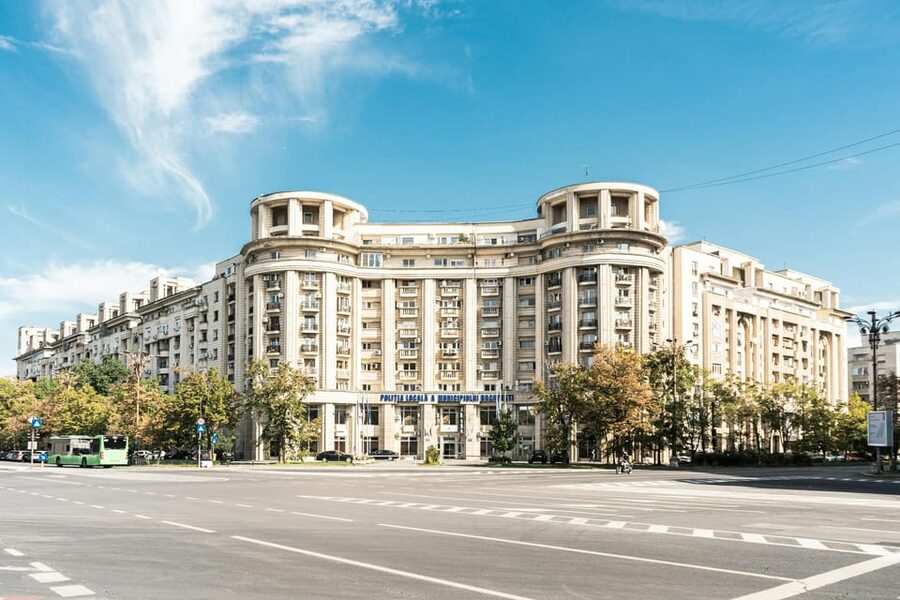
Then you shift tone. The tour moves you toward the former Communist Civic Center, a grand plan that was supposed to symbolize a socialist utopia. In practice, it meant displacement on a brutal scale, with about 40,000 residents removed and whole neighborhoods erased. Your guide frames this as a social scar, and you start seeing the “why” behind the feeling you get in the area.
This is one of the best “structure equals ideology” lessons you will get anywhere. Wide boulevards and massive plans are not neutral. They were built to project control, and they changed how people moved, lived, and gathered.
Walking toward the Palace of Parliament, the world’s heaviest building
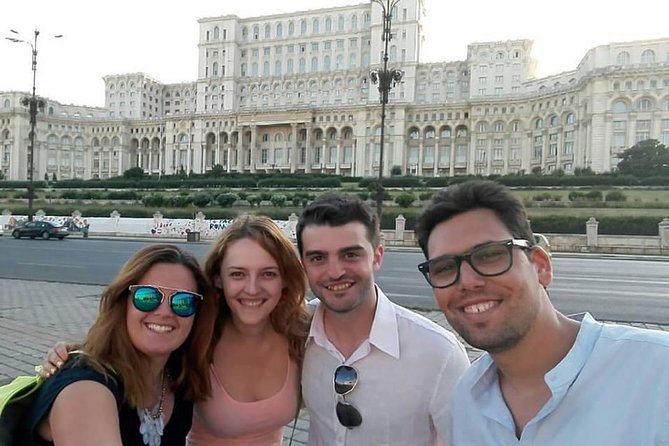
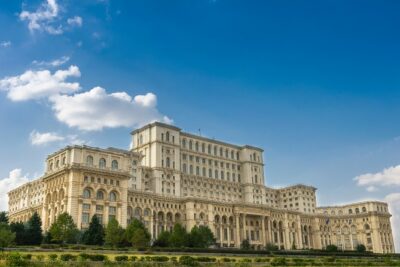
The final big visual is the Palace of Parliament, described in tour materials as the world’s heaviest building. Even if you have seen photos, seeing it in person hits differently, mainly because scale becomes physical.
Important detail, and I appreciate this clarity: the tour does not include entry into government buildings. So you will admire the Palace of Parliament exterior and learn the history behind it. If you want to go inside, you might find options via a reservation process that is handled ahead of time, and the guide can help with that planning when possible. But you should assume your visit will be exterior focused unless you arrange an inside access separately.
The learning angle is what makes this stop worth the time. Your guide explains why it was built, what it replaced, and why it became a symbol of communist ambition that Romania later had to reinterpret. When you connect the building to displacement, the massiveness stops being a curiosity and starts being a message.
Route pace, comfort, and what to wear

This is a walking tour, but it is not a marathon. The total is listed as under 2 miles (about 3 km), and it is slow-paced with photo stops and breaks. That makes a real difference if you have limited time, if you are traveling with someone who tires easily, or if you simply want to absorb the story without feeling rushed.
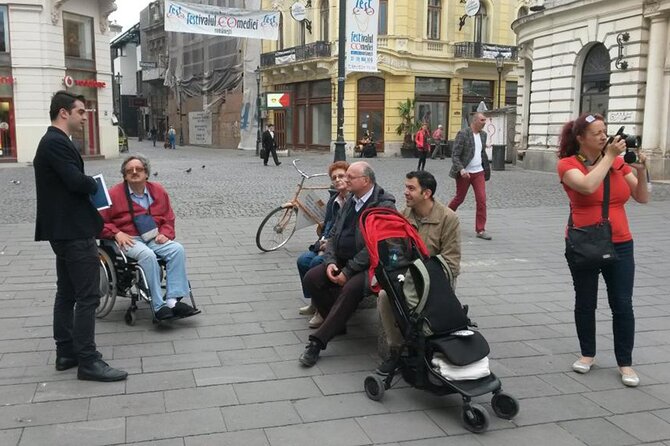
It is also described as wheelchair accessible, and because it is private, your guide can adjust the pace to your needs. If you prefer a slower rhythm for photos or questions, this setup is built for that.
What to wear is mostly common sense:
- Comfortable shoes, because you will be on city sidewalks and cobblestones
- A hat or sunglasses for photo stops, especially near open squares
- A light layer, since weather can turn a historic walk into a test of comfort fast
Price and value for a 4-hour private tour
At $90 per person for about 4 hours, this tour is priced like a serious guided experience, not a quick sightseeing add-on. The value comes from three things you cannot replicate easily on your own.
First, the route is purposeful. You are guided through the right places in the right order, so the story flows from “what Bucharest used to be” to “what communism did to the city plan” to “how the revolution ended it.” Second, you get a licensed English-speaking guide, which matters here because nuance is the whole point, not just facts. Third, you get free hotel pickup, which saves you time and reduces the stress of finding starting points in a dense city.
Is it worth it if you only want quick highlights? Probably not. This is best when you want context, and you are okay with a walking day that stays outside major interiors.
Who should book this tour, and who might skip it
Book this tour if you want a first structured look at Bucharest that explains the city’s contradictions. It is ideal for history-minded visitors, first-timers who want orientation, and travelers who prefer stories tied to real streets rather than heavy museum time.
It is also a strong match if you like architecture as evidence. You will compare Belle Époque elegance to stark communist planning, and you will learn what each design choice meant for people.
Consider skipping or pairing it with a different kind of activity if:
- You strongly prefer visiting interiors and museums
- You want a full-day program, not a focused half-day
- You already know the Romanian communist timeline and want something more niche
A quick guide to making the most of your photos
Because the stops include multiple photo breaks, you can turn this into a visual timeline. Try this simple approach:
- At each major square or landmark, take one wide shot showing the space
- Then take a second shot closer to details your guide points out, like architecture features or memorial elements
- Save your questions for the steps between stops, when you have a natural pause
If you want a little extra accuracy, bring a notes app and jot down the names your guide emphasizes, like Ceaușescu and the key public landmarks. It helps the story stick long after the walk ends.
Should you book the Bucharest Communism, Revolution and City Highlights Tour?
I think it is a smart booking if you want Bucharest with context, not just a checklist. The story anchors at Revolution Square, the contrast between Old Town and the Civic Center planning, and the exterior focus on the Palace of Parliament make it a focused, efficient way to understand why the city looks the way it does today.
If you want the best outcome, go in expecting a guided walking day that prioritizes explanation over interior access. Then you will leave with something more useful than photos: a clear mental map of Bucharest’s past and why it shaped the streets you walked.
FAQ
How long is the Bucharest Communism, Revolution and City Highlights tour?
The tour lasts 4 hours.
Is this a private tour?
Yes, it is a private tour.
What is the walking distance like?
It is described as moderate, with less than 2 miles (3 km) total, slow-paced, and with several photo stops and breaks.
Does the tour include hotel pickup?
Yes. There is free hotel pickup, and the guide waits in the hotel lobby next to reception. If there is no lobby, the guide waits downstairs in front of the building.
Which major sites do you see during the tour?
You see landmarks including the Romanian Athenaeum, the Royal Palace of Bucharest, the Memorial of Rebirth, Revolution Square, University Square, Old Town, and the exterior of the Palace of Parliament.
Does the tour include entering the Palace of Parliament?
No. The tour does not include access to the Palace of Parliament. You will admire its exterior, and you can learn about its history. If you want to visit inside, the guide can assist with making a reservation, where availability allows.
Are meals or snacks included?
No. Meals, snacks, and refreshments are not included.
How much does the tour cost?
The price is $90 per person.
What languages are offered?
The tour is offered in English and Romanian.
Is the tour wheelchair accessible?
Yes, it is described as wheelchair accessible.
Where does the tour start and where does it end?
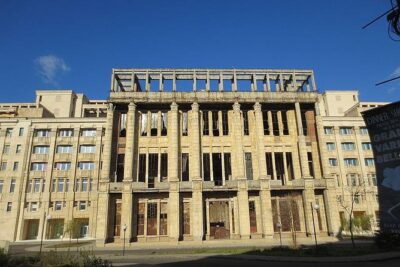
It starts with pickup in Bucharest and ends in the city center area, also known as Old Town, finishing at the Palace of the Deposits and Consignments.
What is the cancellation and pay-later policy?
Free cancellation is available up to 24 hours in advance for a full refund. There is also an option to reserve now and pay later.
Recently added around Bucharest
- Bucharest: Dealu Mare Winery Private Trip with Wine Tasting★ 4.9 · 6 reviews
- Winery touring & private wine tasting – one day private tour★ 5.0 · 3 reviews
- Traditions in Bucharest: Village Museum and Wine Tasting★ 5.0 · 8 reviews
- Village Museum Bucharest Guided Tour★ 5.0 · 6 reviews
- Your rendez-vous with Europe’s past: time-travel to Maramures, Transylvania★ 5.0 · 6 reviews
- Walking Tour of Bucharest City Center – Private Tour★ 5.0 · 4 reviews
- Wine tasting in Bucharest Old town – bonus cheese platter★ 4.5 · 6 reviews
- Private Wine Tasting at Bucharest’s First Wine Bar★ 5.0 · 3 reviews
Communist History Tours, compared.
Bucharest Essential Tour: Old Town, Calea Victoriei & Communism
Read our review →
Communism in Bucharest – Landmarks, Museum & Communist Appetizers
Read our review →

Browse the lists this tour appears in