
Reviewed · BUCHAREST WALKING TOURS
Bucharest: 3-Hour Walking Tour
Bucharest has a knack for turning politics, art, and street life into one nonstop story. I like this tour because it starts in the city’s Revolution Square power zone, then keeps moving until you feel how the past shapes what you see today. Guides on this route, including Mara, Andrea, and Elena, tend to keep the pace lively and the explanations clear.
Two things I especially like: you get a stop at Carturesti Carusel, one of the city’s most famous bookstores, and you also taste covrig, Romania’s go-to street snack (think soft pretzel). It’s a smart mix of big landmarks and small everyday details, which is where the city usually clicks.
One drawback to consider: the tour is only 3 hours, so the route is focused and you cannot linger everywhere. Add in summer sun and cobblestones, and you’ll want good shoes and a little stamina.
Key highlights you will care about
- Revolution Square start point at the Carol I horse statue, right in the political heart of Bucharest
- Victory Avenue connections to the 1877 War of Independence, plus palaces, museums, and key churches along the way
- Kretzulescu Church as a memorable religious landmark on the route
- Old Town medieval lanes, where Ottoman, Transylvanian, and Western influences rub shoulders
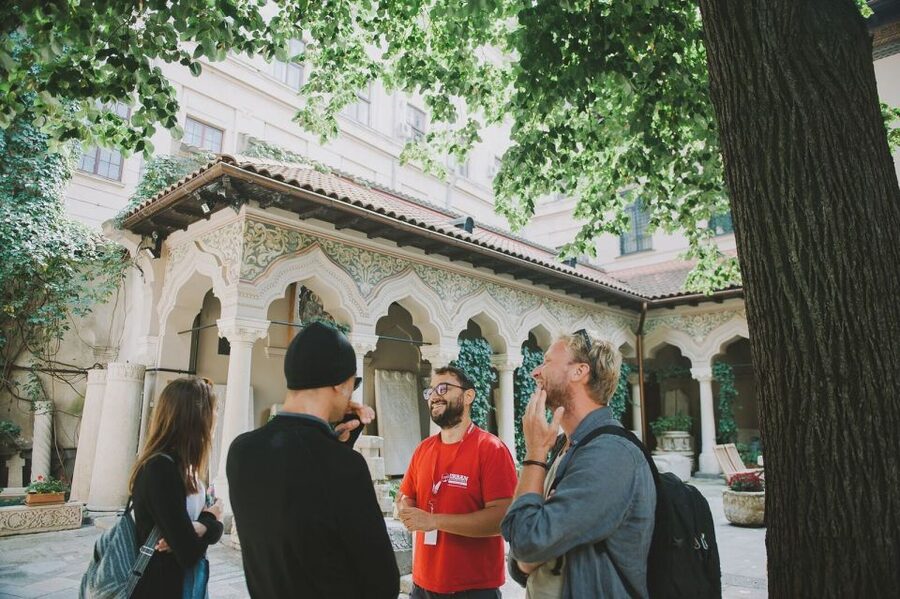
- Stavropoleos Monastery courtyard for a calm pause from the streets
- Old Princely Court ruins, the former residence tied to Vlad Tepes, aka Dracula
Revolution Square to the Athenaeum: where Bucharest’s big changes begin
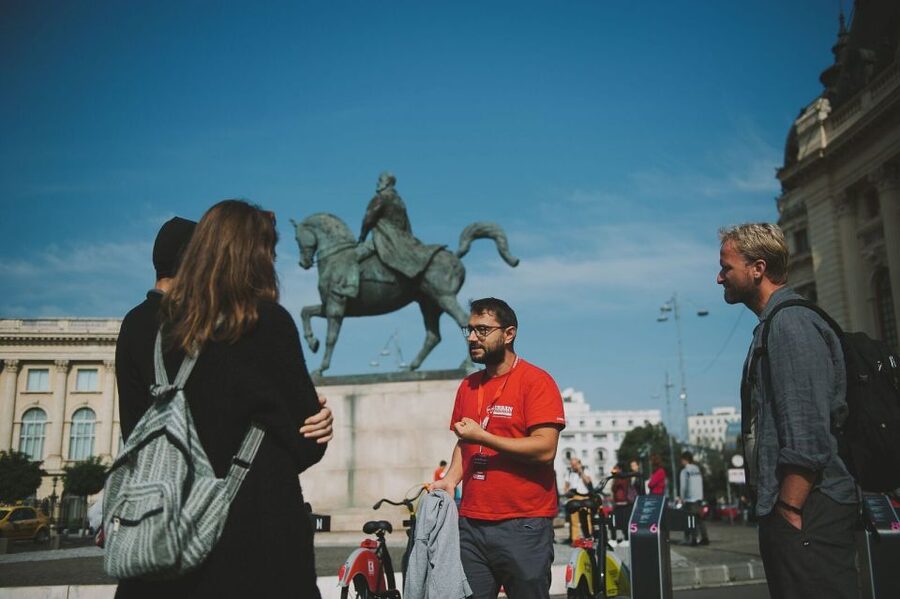
Your tour meets at Revolution Square, in front of the Carol I statue, the only horse statue in that square. That detail matters. In a city where streets can be slightly confusing at first, this is an easy anchor, and it drops you right into the thick of modern Romanian history.
Revolution Square is famous because it links the city’s center to the 1989 Romanian Revolution. This is where Nicolae Ceaușescu made a rallying speech, and the mood quickly flipped. Even if you only know Bucharest as a name on a map, standing here helps you understand why so many other places on the route feel political, symbolic, and fiercely important.
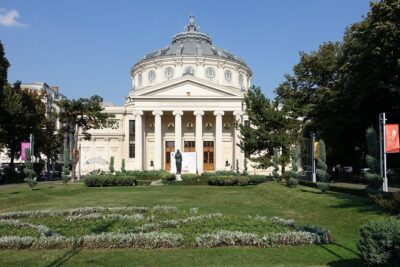
From there, you also pass or look at a cluster of landmarks that explain Bucharest’s “many faces” story. You will see the former Royal Palace area, the Romanian Athenaeum, and the Athenee Palace Hilton (built in 1914). The Hilton connection is not about luxury here, it is about the building’s earlier use as a favorite hangout for spies. That is a fun mental switch. You start to see architecture as a set, not just a backdrop.
If you like history that has angles, this opening delivers. You are not just reading dates. You are watching how power, culture, and intrigue lived in the same streets.
Practical tip: if you are visiting during strong sun, this is a square with open space. Bring sunscreen and plan for shade-light shifts as you move. The tour expects you to walk, so you do not want to be fighting your own energy.
More walking tours in Bucharest:
- Bucharest: City Highlights Guided Walking Tour
★ 4.9 · 1,482 reviews - Bucharest Highlights Walking Tour
★ 5.0 · 469 reviews - Bucharest: Ghost Stories & Romanian Mythology Walking Tour
★ 4.9 · 287 reviews
Victory Avenue and Kretzulescu Church: the city’s “official” showpiece streets
After the square, you head along Victory Avenue, named for Romania’s victory tied to the 1877 War of Independence. This is one of those streets that works like a timeline. Buildings along wide avenues tend to feel grand, and grand is exactly how states want to be remembered.
On this stretch, you also learn the stories behind palaces and museums you pass. Even if you do not step inside, the guide’s context helps you interpret what you are seeing. In Bucharest, a lot of the drama is built into the bones of the city. A plain façade can still signal political ambition, foreign influence, or the shift from one era to another.
One stop that makes the route feel less like a “drive-by” tour is Kretzulescu Church, one of the most famous churches in Bucharest. Churches on walking tours are often either too quick or too crowded. Here, it works because it gives you a different rhythm. You move from political symbolism to spiritual landmark energy, and the street feels more human again.
If you are the type who likes to take photos, this is a good zone for it. Church exteriors and the surrounding streets tend to show architectural details that you miss when you rush.
Small consideration: the tour keeps a steady pace. If you are the kind of person who wants to stop and study every detail for 20 minutes, you will need to do that on your own later, after this tour gives you the map of where to focus.
Old Town on cobblestones: where East meets West in everyday life
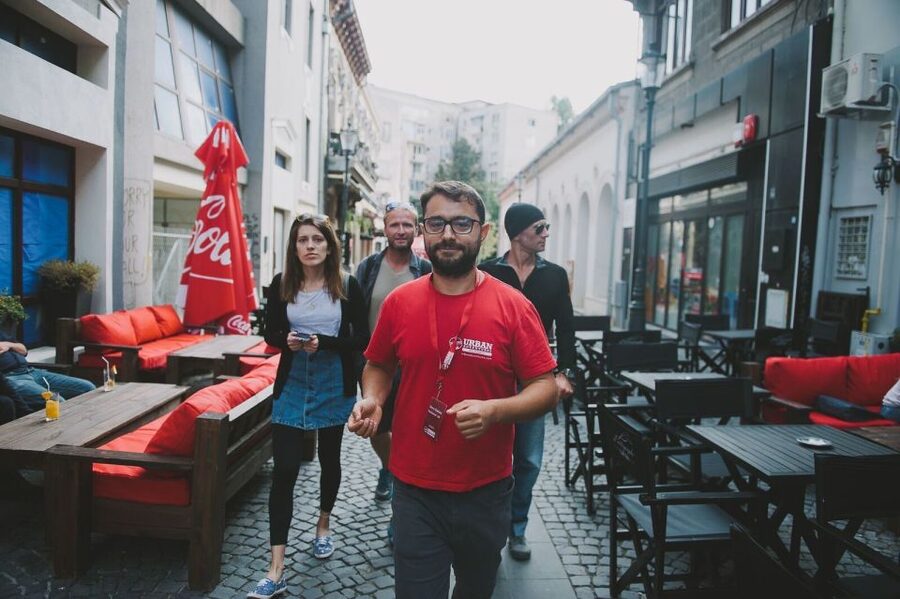
Next you enter the Old Town, Bucharest’s medieval heart. This is where the story turns from government and big buildings to street corners, cafés, and narrow passages. The Old Town is described as a literal crossroads between East and West, with Ottoman pashas and Transylvanian princes living in the same wider orbit. When you walk it, you start to see how that mix can still show up in the street plan and in the way neighborhoods feel.
The lanes are winding and cobbled, which means your pace will naturally slow. That is good. Bucharest can feel overwhelming if you start with the modern big sights only. Old Town is the correction. Here you see bars, cafés, shops, and restaurants loved by locals and visitors alike.
And then there is the other benefit: walking through Old Town gives you a “future planning” gift. You begin to recognize where you might want to return for an evening meal. You also learn which streets feel like they hold the city’s character, versus which ones feel like they exist mostly for passing through.
If you get tired, you do have options for a breath of calm. The tour builds that in later, but even now, the streets themselves have pockets of slower motion.
Stavropoleos Monastery courtyard: a quiet reset
When Bucharest gets too loud in your head, Stavropoleos Monastery offers a breather. The courtyard is described as calming, and that is exactly how it feels on a walking route. You step into a space that pulls you away from the bustle for a moment, and you can hear yourself think again.
This stop is valuable for a simple reason: it breaks the tour into chapters. After wide avenues and busy Old Town streets, a courtyard restores your ability to notice architectural style and small details. It also gives you time to regroup if you are traveling with kids or simply walking longer than you expected.
This is a great place to pause and look around before you move on. If you only take one “quiet” stop during the tour, make it this one.
Other Bucharest tours to compare
- 3-Hour Guided Tour of Communist Bucharest
★ 4.9 · 303 reviews - Bucharest: 3-Hour Dark History Tour with a Local
★ 4.9 · 301 reviews - Bucharest: Alternative Sightseeing 2.5-3h-Hour Guided Tour
★ 4.9 · 80 reviews - Bucharest: Relics of Communism 3-Hour Walking Tour
★ 4.9 · 77 reviews
Hanul Lui Manuc: the wooden inn that smells like another era
Another Old Town highlight is Hanul Lui Manuc, the great wooden inn. In a city known for grand architecture, this one hits differently. An inn is practical. It is where people came to trade, sleep, and eat. You experience the building as a social machine, not just a monument.
The tour frames it as a glimpse into earlier time, and that is the right way to think about it. You are not only looking at wood and structure. You are getting the sense that Bucharest was once a city where stopping was built into the rhythm. That makes the rest of the Old Town feel more believable.
If you are into architecture, it also teaches you a quick lesson: not every important building needs to be marble-and-statues. Some of the best stories are housed in simpler forms.
Carturesti Carusel: bookstore beauty you will want to photograph

Now for one of the tour’s most “yes, I get it” stops: Carturesti Carusel. This is one of the most beautiful bookstores in the world, and the nickname makes sense once you see it. The building and interior give you that wow feeling, the kind that makes you stop walking even if you are not a book person.
I like this stop because it is not just sightseeing. It gives you a sensory pause during the walking. Paper, shelves, and light make a break feel real, not forced. And if you travel with kids, this is usually the type of stop that keeps them interested without turning it into a classroom.
Plan your photos smart. If you try to capture everything at once, you will miss the best angles. Pick one or two shots that show the overall look, then use your time to look at the shelves around you. The details are part of the fun.
No pressure to buy anything. Souvenirs and personal shopping are not included, so treat this stop as a chance to enjoy the space.
Covrig street snack: the small bite that makes the tour real
After the bookstore, the tour includes a traditional snack: covrig, Romania’s most popular street food. It is basically a soft pretzel, which makes it instantly understandable. The value here is not just the taste. It is that moment where history gives way to everyday culture.
This is also an easy win for first-timers. When you taste something local, you understand a neighborhood more quickly than you do from photos alone. Covrig is portable, friendly, and perfect for a walking tour.
A practical note: your snack is included, but additional food and drinks are not. If you have an early dinner plan later, consider using this stop as your “mid-walk fuel” and then waiting for a proper meal.
Old Princely Court ruins: Vlad Tepes, aka Dracula, at the end of the line
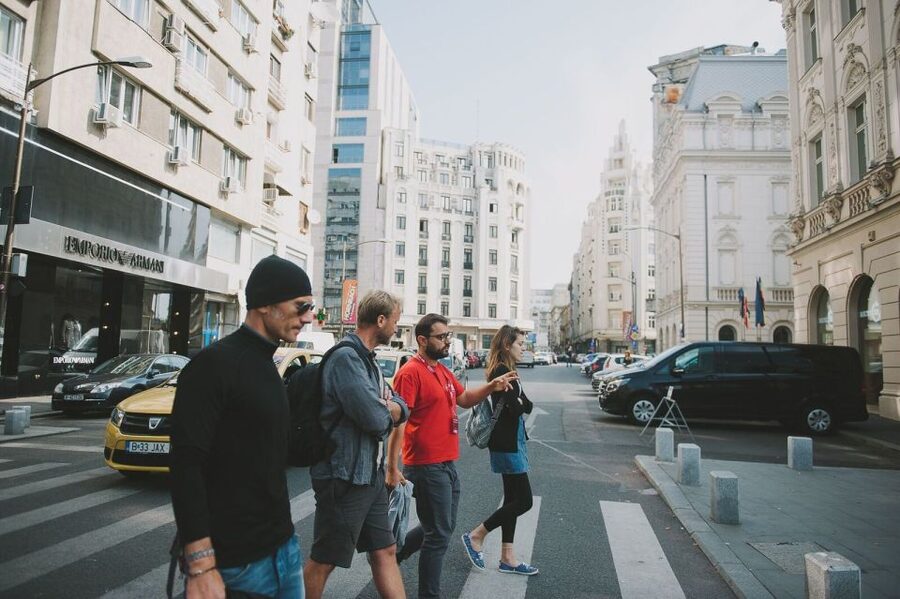
The tour finishes in front of the ruins of the Old Princely Court, dating back to the 15th century. The name alone sounds dramatic, and the story delivers. This was the former residence of Vlad Tepes, inspiration for Dracula.
Even if you know the Dracula story mostly through pop culture, this stop adds texture. You are looking at ruins tied to a real place and a real political world, not just a movie plot. The guide’s framing is what makes it click, because you learn how legend gets anchored to geography.
Ending here works well because it ties a spooky thread to the earlier parts of the tour. You started with modern political upheaval, moved through religious and cultural landmarks, and you finish with a figure whose name still echoes. The Old Princely Court ruins give the route a satisfying dramatic punctuation.
Tip: the ruins can be a good photo spot, but keep an eye on where you stand. Ruins often mean uneven surfaces and open angles to the sun.
Price, walking time, and the small-group feel that matters
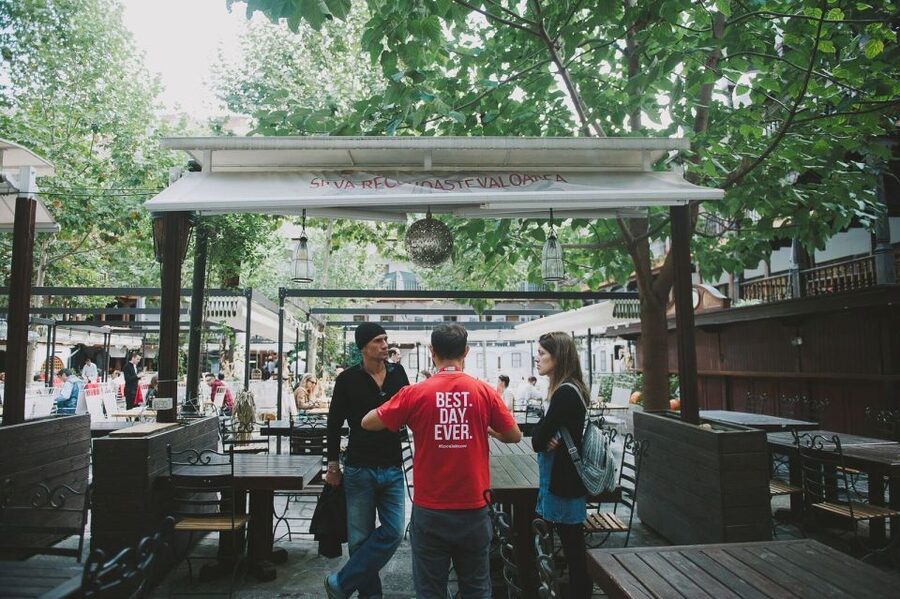
The tour costs $53 per person and runs for 3 hours. At this price, you are paying for a local English-speaking guide plus a traditional snack. What makes it good value is the structure: you get a focused arc through major areas, not a random grab bag.
Group size is capped at 12 people, which is important in Bucharest. With smaller groups, you can actually hear the guide without straining. It also makes it easier to ask questions. Based on guide experience on this route, the tours tend to be engaging and friendly, with guides who handle questions well, including people like Mara, Andrea, Alex, and Elena.
What you should bring affects your experience more than you think. The tour asks for comfortable shoes first. Also pack sunscreen and something to cover your head, because the sun can be intense in summer. Cobblestones and bright light can make a 3-hour walk feel longer if you are underprepared.
Also, this is a child-friendly tour. Children ages 6 to 11 are permitted at the listed rate, and children under 6 join free if you mention it at booking. If you are traveling with a family, the pace and the mix of stops, especially the bookstore and the snack, are the kind of things kids usually remember.
If you want to keep plans flexible, there is also a free cancellation window and a reserve now, pay later option. I like that approach because it reduces stress. You can lock in a slot and adjust if your schedule shifts.
Who this Bucharest walk is best for
This is a great pick if you are:
- In Bucharest for a short visit and want a fast, guided orientation
- Interested in how Romanian politics, architecture, and street life connect
- The type who learns best by walking and asking questions along the way
- Traveling with kids who can handle a 3-hour walk on cobblestones
You might consider skipping it or pairing it with extra time if you:
- Want a slow museum-style experience, because this tour is designed for walking and storytelling, not long indoor stops
- Plan to spend lots of time in Old Town after, since this gives you the highlights and the map rather than exhaustive coverage
One more note: a route can always feel a bit tight if you are there for the third or fourth day. If you already explored Old Town extensively, you may feel the itinerary could have more flexibility. But if you are doing your first real day in Bucharest, this is the route that helps everything else make sense.
Should you book this 3-hour Bucharest walking tour?
Yes, book it if you want a smart introduction to Bucharest that mixes landmark scale with street-level culture. The meeting point at Revolution Square makes navigation easy, the route covers the city’s major story beats, and the stops at Carturesti Carusel and the covrig snack give you “proof of life” moments, not just stone and dates.
If you are short on time, this tour gives you a strong framework for the rest of your trip. If you are the sort who likes to linger, plan extra solo time afterward, especially in Old Town, so you can slow down where you personally feel the pull.
FAQ
FAQ
Where does the tour meet?
It meets at Revolution Square, in front of the Carol I statue, the only horse statue in the square.
How long is the walking tour?
The tour lasts 3 hours.
How much does it cost?
The price is $53 per person.
Is the tour in English?
Yes, the tour is guided by a local English-speaking guide.
What is included in the price?
The tour includes the local English-speaking guide and a traditional snack.
What traditional snack will I get?
You will get covrig, a popular Romanian street snack (described as basically a soft pretzel).
Is the tour good for children?
Yes. Children 6 to 11 are permitted at the listed rate, and children under 6 can join free of charge if you inform the provider at booking.
What group size should I expect?
You will be in a small group of a maximum of 12 people.
What should I wear or bring?
Wear comfortable shoes. The tour also suggests sunscreen and something to cover your head because the sun can be intense in summer.
Is there free cancellation?
Yes, you can cancel up to 24 hours in advance for a full refund.
Is there a pay-later option?
Yes, you can reserve now and pay later.
Recently added around Bucharest
- Bucharest: Dealu Mare Winery Private Trip with Wine Tasting★ 4.9 · 6 reviews
- Winery touring & private wine tasting – one day private tour★ 5.0 · 3 reviews
- Traditions in Bucharest: Village Museum and Wine Tasting★ 5.0 · 8 reviews
- Village Museum Bucharest Guided Tour★ 5.0 · 6 reviews
- Your rendez-vous with Europe’s past: time-travel to Maramures, Transylvania★ 5.0 · 6 reviews
- Walking Tour of Bucharest City Center – Private Tour★ 5.0 · 4 reviews
- Wine tasting in Bucharest Old town – bonus cheese platter★ 4.5 · 6 reviews
- Private Wine Tasting at Bucharest’s First Wine Bar★ 5.0 · 3 reviews
Bucharest Walking Tours, compared.

Ghost Stories & Romanian Mythology Walking Tour
Read our review →
Walking Tour- Delightful Bucharest (Highlights, Stories, Sights)
Read our review →
4h Bucharest Private Tour (2h by Car and 2h Walking in Old Town)
Read our review →
Browse the lists this tour appears in