Reviewed · BUCHAREST
Troubled – Notorious Neighborhood – area known for social issues
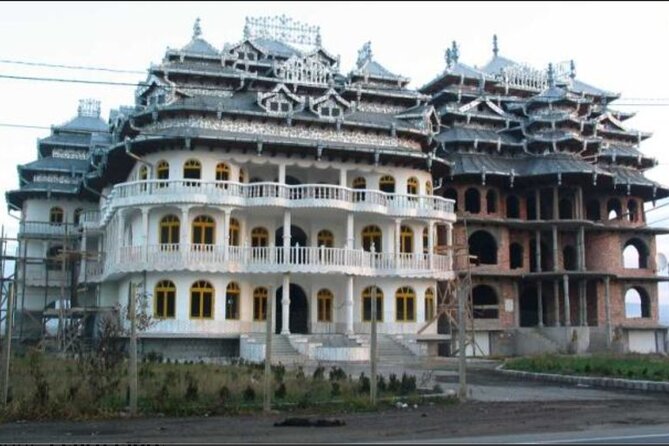
This experience is interesting because it takes you past Bucharest’s center and into the places most visitors skip. You’ll see the contrast inside one city, from neighborhoods tied to poverty and stigma to Sinești, where you can glimpse a very different reality within Roma life.
I especially like the story-first guidance I’ve heard guides deliver, including explanations of daily code of conduct and what respect looks like in these communities. I also like the mix of vehicle time and on-foot moments, so you’re not just driving past streets, you’re actually walking through local markets and neighborhood spaces.
One possible drawback is that this is not a casual photo walk. You’ll need to stay alert, follow the guide’s rules, and dress simply, because the setting can feel rough and the tour asks you to be considerate, not intrusive.
Key things you should know before you go
- A city with contrasts: you’ll move between Ferentari, Rahova, and Sinești to see different layers of Roma life in Bucharest
- Guides set expectations early: you’ll get clear guidance on what you can do, where you should stay, and how to behave
- Markets and daily errands: expect stops where locals shop and move through normal routines
- No paid attraction tickets: admission to the stops is free
- Respect and safety matter: dress simply and avoid flashy items, plus follow the guide’s camera and distance guidance
Entering Bucharest’s real side, from Ferentari to Sinești
If your Bucharest wish list is only palaces, boulevards, and cafes, this tour changes the angle. It’s built around real neighborhoods with real social problems, not a curated set of pretty streets. The point is not to sensationalize anyone’s struggle. The point is to show how the city looks when you stop looking only at what sells.
The route usually runs about 3.5 hours, which is long enough to get context, but short enough that you can keep your energy. You’ll cover around three main areas, with roughly an hour in each, plus travel time between them. It’s also a private tour, meaning it’s just your group, not a big crowd bouncing along with you.
What you gain is perspective. You start to understand that Bucharest is not one uniform story. Even within the Roma communities, there are very different worlds, and this tour tries to show that without turning it into a theme park.
Other tours around Bucharest:
- Bucharest: Dracula’s Castle, Peles Castle, & Brasov Old Town
★ 4.5 · 17,858 reviews - Bucharest: Dracula Castle, Peles Castle & Brasov Old Town
★ 4.6 · 10,891 reviews - Bucharest: Dracula’s Castle, Peleș Castle & Brașov Day Trip
★ 4.5 · 5,919 reviews
How the guide sets the tone: rules, respect, and being street-smart
This is a guide-led experience, and the guide matters. The tours I’ve seen described emphasize that the guide is not just telling facts, they’re actively managing the group’s behavior. You’ll get practical instructions up front, like how to handle cameras, how to walk through markets, and how to avoid being a spectacle.
Guides linked with this experience include people like Sebastian, Bogdan, Catalin, Valerică, and Matthew. In every case, the consistent theme is the same: you’re there as a visitor, not a collector. Expect clear boundaries and a calm, sometimes humorous, but firm approach.
If you’re the kind of traveler who asks questions, you’ll likely enjoy this part. The best moments often come from conversation, not just viewing. Just keep your questions respectful, and be ready for answers that are more honest than polished.
Stop 1: Ferentari, the difficult neighborhood that forces perspective
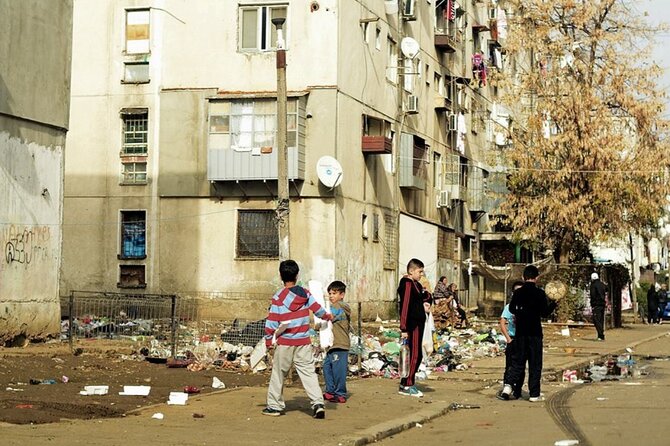
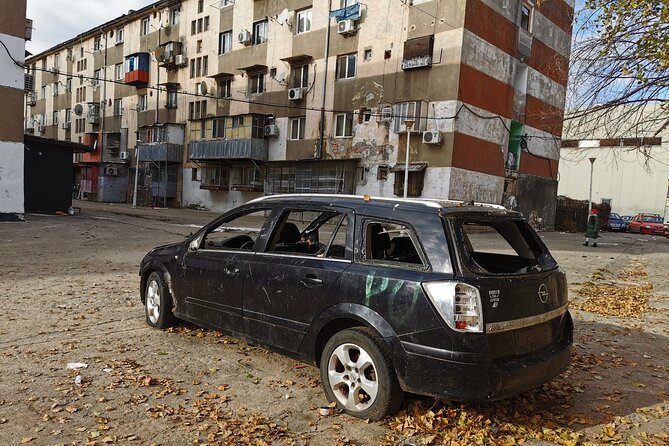
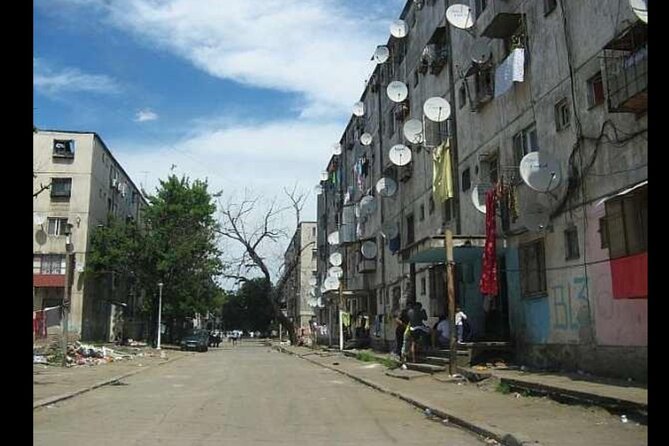
Ferentari is the kind of place that makes people lower their voice. It’s known for having a very low standard of living in Bucharest. That doesn’t mean it’s empty or meaningless. It means the everyday reality is harsher than what you’ll see in the tourist core.
During this segment, you can expect to spend about 1 hour and 10 minutes, and while some of the tour moves by vehicle, there’s usually walking involved too. One of the strongest highlights is the chance to see everyday life in motion, including local shopping and the flow of people through neighborhood spaces.
I like this stop because it has a purpose. It’s not about staring at hardship. It’s about understanding that hardship exists next to comfortable wealth, and that both are part of Bucharest.
A drawback to consider: this area can feel emotionally heavy. Even when the guide makes you feel safe, your comfort level may drop. If you’re sensitive to poverty imagery, you’ll want to mentally prepare for that.
Stop 2: Rahova and the penitentiary area, stigma and survival
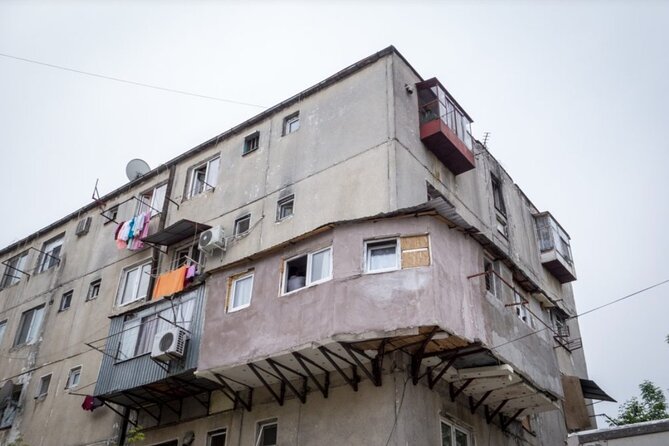
Rahova is another key stop, and it’s tied to Roma communities as well as a darker institutional history. It’s also described as a place where a feared penitentiary stands nearby, which adds an extra layer to the story the guide tells.
This stop is also about 1 hour and 10 minutes, and it often includes walking through parts of the neighborhood where daily life is visible. Some tours mention moments like moving through a flower market or other local market areas, plus brief stops where you can observe how people handle errands and buying groceries.
I appreciate Rahova for one reason: it shows that the story is not one note. Yes, there are social issues. But you also see routine. People still shop. People still move through their day. The guide’s job is to help you see that with respect, not pity.
You should keep your expectations realistic. You’re not going to leave Rahova thinking everything is solved or simplified. But you will come away with better context for how stigma, institutions, and geography can all shape people’s daily options.
A different kind of day out:
- Bucharest: Palace of Parliament Tickets and Guide
★ 4.3 · 3,182 reviews - Bucharest: Day Trip to Dracula Castle, Peles Castle & Brașov
★ 4.4 · 3,049 reviews - Bucharest to Dracula Castle, Peles Castle and Brasov Guided Tour
★ 4.5 · 2,933 reviews - Bucharest: Palace of Parliament Tickets and Guided Tour
★ 4.4 · 1,877 reviews
Stop 3: Sinești, a village view of Roma wealth and inequality
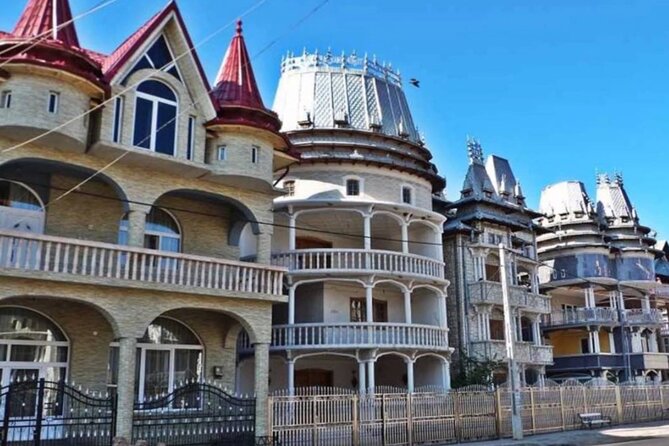
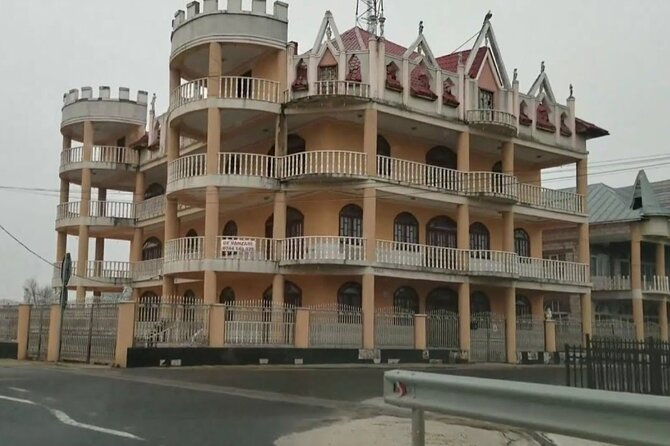
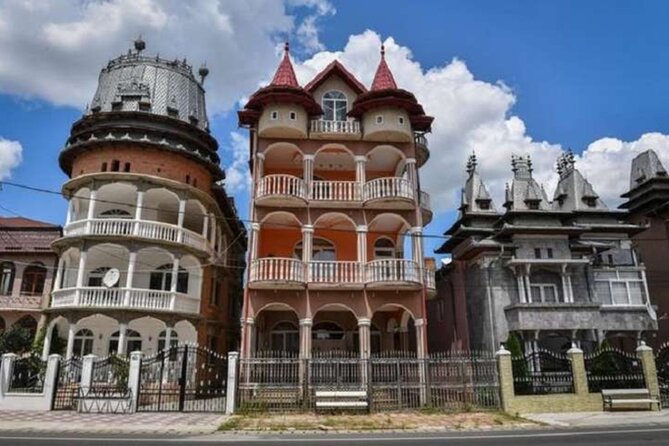
Then the tour shifts to Sinești, described as a village with Roma palaces. This is where the contrast hits hardest. In one part of the day, you’re in places associated with low living standards. In another, you’re seeing another side of Roma life in the region.
This stop is about 1 hour and 10 minutes, and it gives you a chance to see how inequality can exist even within the same broader community identity. It challenges the oversimplified idea that there is only one kind of Roma experience.
I like Sinești because it helps you think in systems, not stereotypes. When you only see one type of neighborhood, you start to flatten people into a single image. Seeing the other side forces a more accurate question: how do money, networks, and history shape who can live where?
One thing to remember: even here, respect is the rule. The “palace” label can attract curiosity, but your role stays the same. Observe, listen, and follow the guide’s lead about photos and access.
Walking, vehicle time, and what that means for your comfort
The tour is structured with a lot of vehicle travel, but it’s not all sitting in a van. Parts are done on foot in neighborhood and market areas. That mix matters because it affects what you notice, how long you’re exposed to street-level conditions, and how quickly you can move on if you’re feeling overwhelmed.
In practical terms, expect:
- vehicle segments to connect areas efficiently
- walking segments where you can see small details of daily life
- market time where normal purchasing and social flow are part of the view
I’d call this a “manage your energy” kind of tour. If you do well with walking around markets and moving through busy areas at a slower pace, you’ll likely be fine. If you dislike uncomfortable street situations, bring a calmer mindset, and keep your eyes open for what the guide is trying to show, not just what looks rough.
Price, 3.5 hours, and whether it’s good value
The price is $130.83 per person for about 3 hours 30 minutes. That sounds steep if you think of it like a standard city sightseeing tour. But the value comes from the fact that you’re not just driving around, you’re getting access to specific neighborhood context and guided explanations that take time.
This experience also includes a couple of features that make it easier to plan:
- pickup offered
- mobile ticket
- group discounts
- English language delivery
- private tour, so you’re not stuck with an uncontrolled group pace
Another value point is that the stops list free admission. You’re paying mainly for the guide time, route control, and the effort to bring you into places most visitors would avoid on their own.
My advice: treat this as a cultural and social education tour, not an attraction-hopping tour. If that matches your travel style, the price is easier to justify.
What to wear and how to behave, so the day stays respectful
The tour instructions are clear: dress as simply as possible, and avoid jewelry or expensive items. That’s not about fear-mongering. It’s about reducing unwanted attention and showing you understand you’re visiting spaces with different everyday realities.
Behavior matters too. Several guides associated with this experience emphasize respect in a practical way, like not filming or taking photos whenever you feel like it. If you want photos, ask when it’s appropriate. Keep distance. Don’t block entrances or paths. Stay close to your group.
Also, mentally prepare for a day that might feel intense. Some descriptions include raw, eye-opening moments, and even brief conversation when the moment allows. If you’re the type who can handle honest conversations without forcing a “content” mindset, you’ll get more out of this tour.
Practical logistics that help you actually enjoy it
You’re meeting within Bucharest and moving through specific streets and stops, including places like Strada Zăbrăuţului 5, Aleea Iacob Andrei 11, Aleea Livezilor, Strada Pucheni 1, and Strada Amurgului 4. The Rahova area includes Rahova Penitentiary, Strada Adrian 4, and Sinești includes Strada Principală Nr. 353A. You’ll also pass through additional local streets as the route connects the neighborhoods.
The tour runs in English, with confirmation received at booking. It’s near public transportation, which can be helpful if pickup is not convenient for you. It’s also designed so that most travelers can participate, but again, this depends on your comfort with the neighborhoods you’ll see and your willingness to follow guidance.
One more note: this is listed as private, meaning only your group participates. That often makes it easier to ask questions and keep a respectful pace.
Who should book this tour, and who should skip it
You should book if:
- you want a non-touristy Bucharest view
- you like learning through direct human context, not just buildings
- you’re comfortable following a guide’s rules and staying respectful
- you want to understand how poverty and wealth can coexist in the same city
You might skip it if:
- you need a day that is light and purely scenic
- you’re uncomfortable with topics like stigma and institutional history
- you hate strict camera and behavior guidance
This is also a good pick for travelers who enjoy conversation. Some of the best moments described involve talking with the guide, and in at least a few cases, having respectful contact with community members when it was appropriate.
Should you book this troubled-side Bucharest tour?
I think it’s a strong booking choice if you want Bucharest to feel real, not just postcard-perfect. The experience is built on contrast, guided context, and practical respect. The guides linked to this tour, like Sebastian, Bogdan, Catalin, Valerică, and Matthew, come across as the kind of people who prepare you for what you’ll see and then keep the group on track.
If you do book it, go in with the right mindset. Dress simply, listen carefully, and treat the tour like a conversation with the city, not a scavenger hunt.
If that sounds like your travel style, you’ll probably leave with a sharper, more honest picture of Bucharest.
FAQ
How long is the tour?
It lasts about 3 hours 30 minutes.
What is the price per person?
The price is $130.83 per person.
Is pickup available?
Yes, pickup is offered.
Is the tour conducted in English?
Yes, it is offered in English.
Do I need to pay admission tickets at the stops?
No. Admission tickets are listed as free for the stops.
Is this tour private?
Yes. It is a private tour or activity, and only your group participates.
Where does the tour take place in Bucharest?
It includes stops around Bucharest streets such as Strada Zăbrăuţului 5, Aleea Iacob Andrei 11, Aleea Livezilor, Strada Pucheni 1, Strada Amurgului 4, Rahova Penitentiary on Strada Adrian 4, and Sinești at Strada Principală Nr. 353A.
What should I wear?
Dress as simply as possible, and avoid jewelry and expensive items.
Can I cancel for free?
Yes. Free cancellation is available up to 24 hours in advance for a full refund.
Is the tour near public transportation?
Yes, it is near public transportation.
Recently added around Bucharest
- Bucharest: Dealu Mare Winery Private Trip with Wine Tasting★ 4.9 · 6 reviews
- Winery touring & private wine tasting – one day private tour★ 5.0 · 3 reviews
- Traditions in Bucharest: Village Museum and Wine Tasting★ 5.0 · 8 reviews
- Village Museum Bucharest Guided Tour★ 5.0 · 6 reviews
- Your rendez-vous with Europe’s past: time-travel to Maramures, Transylvania★ 5.0 · 6 reviews
- Walking Tour of Bucharest City Center – Private Tour★ 5.0 · 4 reviews
- Wine tasting in Bucharest Old town – bonus cheese platter★ 4.5 · 6 reviews
- Private Wine Tasting at Bucharest’s First Wine Bar★ 5.0 · 3 reviews