Reviewed · PRIVATE
Private: RedPatrol Bucharest Contrasts Tour in a Vintage Car
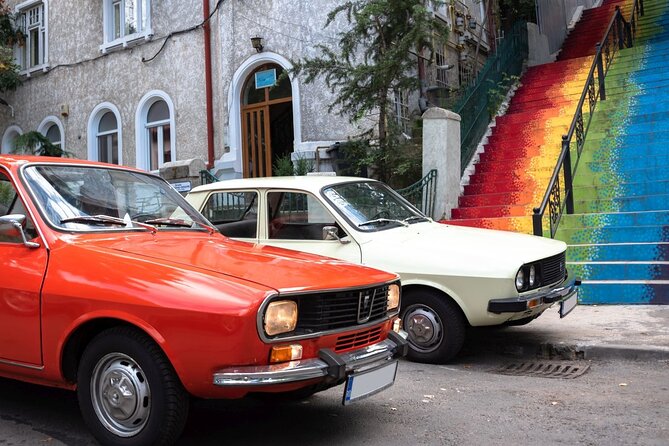
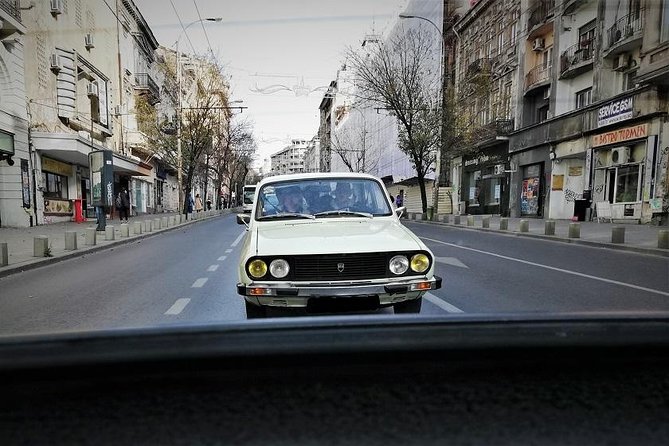
Bucharest is a city of sharp juxtapositions, and this private tour makes the contrasts feel physical by taking you around in a restored Dacia. I like that the route is built around real neighborhoods, not just photo stops, and I love the stop-by-stop storytelling that connects buildings to the eras that shaped them. One thing to consider: you are a passenger, not the driver, and the ride is in an older classic car with no modern comfort features like AC.
I also appreciate the private pickup from wherever you’re staying, plus water in the car. The main drawback is that a few key sights have tickets that are not included, so you may want to budget a bit extra depending on what you choose to enter.
Key highlights
- Restored Dacia classic car ride through Bucharest’s most contrasting districts
- Hotel pickup and drop-off from all Bucharest addresses, with only your group onboard
- Stop-by-stop contrasts from royal areas to communist blocks to post-social chaos
- Guides and drivers who focus on stories, with examples like Ivan Crinu and driver Mihai
- Two sights with admission included plus one free stop (Fântână)
Why This Bucharest Tour Works: Contrasts You Can See From the Road
This tour is interesting because it treats Bucharest like a living timeline. You go from grand royal-era references to communist-era planning, then into neighborhoods where the post-social years changed everything. The classic Dacia ride helps, because you feel the movement through the city instead of just stepping into a museum and out again.
The tour also has a smart pacing for a half-day. You get short stops to look, a bit of walking for photos and context, then you’re back in the car for the next chapter. That mix matters in a city like Bucharest, where the distance between eras can be just a few turns.
Finally, the tone stays human. The stories focus on why people ended up where they did, how buildings were used, and what those decisions left behind.
Other Bucharest tours to compare
- Castles of Transylvania: Private Day Trip from Bucharest
★ 4.5 · 248 reviews - Dracula’s Castle, Peles Castle and Brasov – Private Day Trip from Bucharest
★ 5.0 · 211 reviews - Best of Bucharest | Private Walking Tour
★ 5.0 · 199 reviews
Price and Timing: What $126.43 Buys You
At $126.43 per person for a 3 to 4 hour private tour, you’re paying for three main things: transport in a restored classic car, a professional local guide and driver, and a route designed for contrasts. You’re not just buying sightseeing, you’re buying someone to connect the dots.
This is also a tour that gets booked early. If you want a specific date, plan ahead because the average booking window is well over four months.
One practical note: because it is private and timeboxed, you’ll want to treat it like an intentional outing. If you show up with energy for neighborhoods, markets, and real urban texture, it clicks fast. If you only want a quick overview, you might feel a few stops are brief.
The Dacia Ride Setup: Pickup, Winter Heating, and What You Should Expect
You’ll get hotel pickup and drop-off from all addresses in Bucharest, which is a huge time saver. Once you’re in the car, you’ll have a guided circuit through the city, and water is included.
In wintertime, the cars are heated, which is a real comfort detail in Bucharest. The bigger thing to know is the vehicle is a classic Dacia 1300 or 1310 from the 70s to 80s. It does not include modern features like AC, ABS, GPS navigation, power steering support, or automatic driving.
Also, you will not drive the Dacia. If you’re picturing hands-on fun behind the wheel, this is more of a riding experience. The upside is that the cars are fully restored and meet traffic safety regulations, and that the company does not allow participation with pets or children under 10.
The Route: Academia Română and the Unrealized Demolition Story
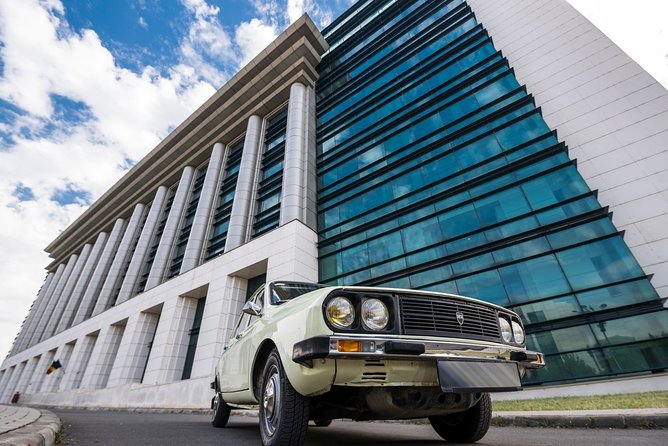
Your first stop is Academia Română, in the Uranus area. This is where you start to feel the political weight of the 1980s. The guide connects the area with the unimagined demolition plans that started under Ceaușescu and then were halted because the Romanian Revolution changed everything.
What makes this stop valuable is that it’s not just about a building. It’s about a city plan that never fully played out, and how political shifts can freeze construction in place like a snapshot. Even if you only take 20 minutes here, the story gives you a lens for what comes next.
Potential consideration: admission is not included at this stop, so you’ll want to confirm what you can see without paying extra.
A different kind of day out:
- Bucharest: Dracula’s Castle, Peles Castle, & Brasov Old Town
★ 4.5 · 17,858 reviews - Bucharest: Dracula Castle, Peles Castle & Brasov Old Town
★ 4.6 · 10,891 reviews - Bucharest: Dracula’s Castle, Peleș Castle & Brașov Day Trip
★ 4.5 · 5,919 reviews - Bucharest: Palace of Parliament Tickets and Guide
★ 4.3 · 3,182 reviews
Fântână: A “Royal Palace to Bourgeois Neighborhood” Connection That Feels Close
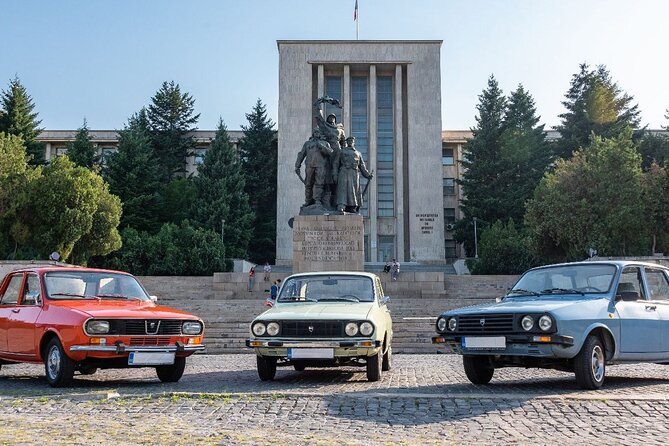
Next comes Fântână, introduced as the bourgeoisie neighborhood that began in the 19th century, linked to the first Royal Palace of Romania. This stop is shorter, about 15 minutes, and the tone stays explanatory: a brief presentation to set the social geography.
The value here is momentum. By the time you reach communist-era planning, you’ll already understand that Bucharest has long had zones tied to status and power. And because the admission is listed as free, you can keep this stop low-stress.
If you like architecture but you also like context, this is a good early reset.
Cotroceni Palace Gardens: Belle Époque Bucharest Without the Heavy Museum Feel
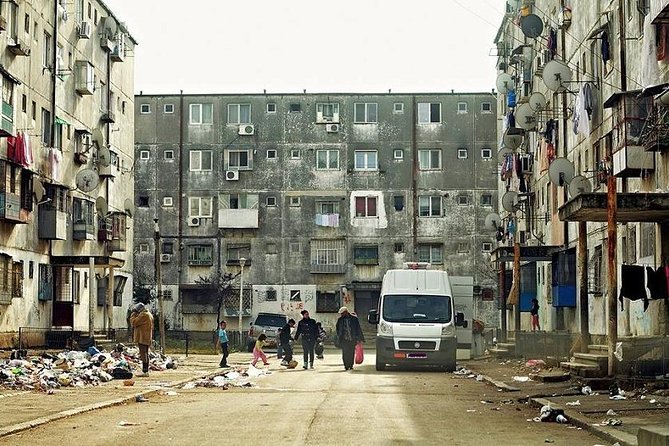
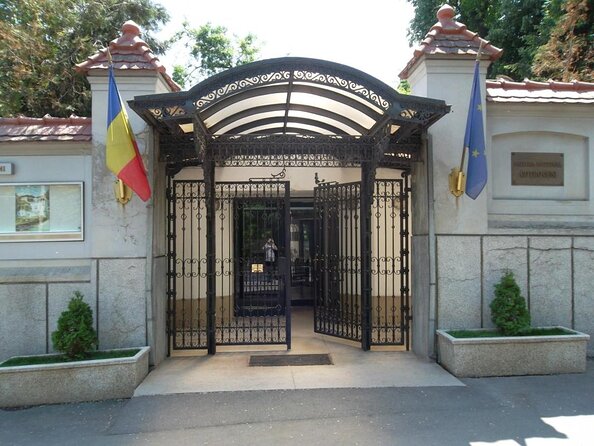
Then you head to Cotroceni Palace Gardens, tied to the first Royal Palace of Romania and described as part of the modern monarchy era and the belle Époque side of Bucharest. You get about 30 minutes here, long enough for a calm look and some slower listening.
This stop is a useful contrast anchor. It frames what “royal” looks like in space and mood, before you shift to working-class districts and the different logic of mass housing and industry.
Possible drawback: admission is not included. If you were hoping everything is covered, treat this as a stop where you might need extra time or extra money depending on what you decide to enter.
Drumul Taberei: Communist Apartment Blocks, Then a Mall on Old Ruins
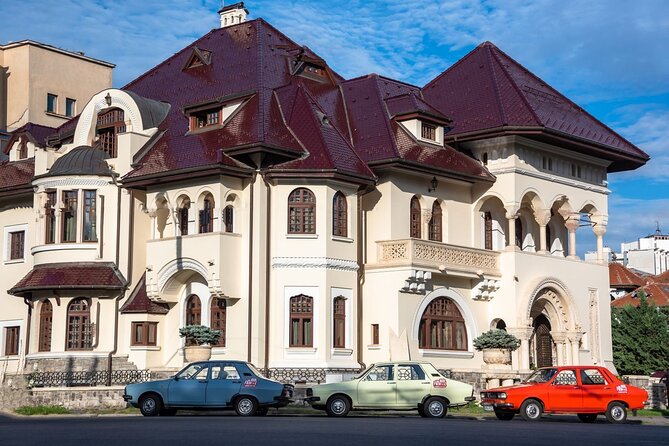
Your tour moves to Parcul Drumul Taberei (Park Camp Road). Here, you’re looking at a working-class communist blocks of flats area and hearing about the way later development repurposed land. The key story is that a shopping mall was built on the ruins of a communist canteen.
This is one of the stops that makes Bucharest feel like a time-lapse. You’re not only seeing apartment massing, you’re hearing what used to occupy the ground-level life of the neighborhood. Even the photo stops matter more here, because you can point the camera at what replaced daily routines.
The stop is about 20 minutes, and admission is not included. It’s a good one if you like understanding the city at street level rather than only grand facades.
Ferentari: The Fallen Industrial Belt Built in the 1970s
After Drumul Taberei, you shift into the Ferentari fallen industrial area, described as built by communists in the 1970s. This portion is a bit less clearly timed in the summary, but it’s meant to set up the next stop, Piața Rahova, as the living neighborhood layer atop earlier industrial planning.
What makes this part worth your attention is that it reframes Ferentari. It’s often reduced to a reputation, but the tour angle is more structured: you’re looking at how industrial zones, labor housing, and later post-social shifts all layered into what you see today.
If you prefer tours that focus on causes instead of just labels, this fits your style.
Piața Rahova: Peasant Market Energy and the Post-Social Turn
Your next main stop is Piața Rahova, where you explore the Ferentari blocks of flats area and the way the industrial district transformed after the 1990s. The story is blunt: it went from a workers area into a city ghetto, with visible economic struggles and a reputation for hardship. You also get a stop for a peasant market.
This is about 30 minutes. That’s a good length for market atmosphere, quick photos, and questions. You also get the social context behind why these neighborhoods look and function the way they do.
Admission is not included at this stop, so you’re not paying to access the street-level reality. That’s a plus.
One consideration: this district can be emotionally heavy. If you want only light sightseeing, you might find the talk more intense than expected. If you want to understand Bucharest honestly, this is one of the core reasons to do the tour.
Fosta Uzină Rocar: Ruins of Socialist Industry, and a Neighborhood That Changed After Factory Collapse
Then comes Fosta Uzină Rocar, the ruined area of socialist times factory life, left abandoned after the collapse of socialist factories. You get about 20 minutes, plus stories about the rise and fall of the neighborhood around the industry.
This is one of the tour stops where “contrasts” becomes physical. It’s a place where you can see what happens when a system changes and the built environment doesn’t automatically recover. The guide’s job here is to connect what you’re seeing to how people worked, lived, and adapted.
Good news: admission is included for this stop. That means less uncertainty, more time for looking instead of checking ticket rules.
Broscuțe Park: Colonel’s Quarter and Life in the Stalinist Days
You continue to Broscuțe Park, tied to the Colonel’s Quarter and described as the first Soviet occupation era neighborhood. The presentation focuses on how life worked in the Stalinist days in Bucharest, with about 20 minutes allocated.
This stop matters because it adds a layer beyond Romania-only narratives. Soviet influence is part of Bucharest’s architecture and social history, and this is one of the spots where that connection can feel clear.
Admission is also included for this stop, which keeps this part easy to plan.
Palace of Parliament: The World’s Biggest Civil Building, Rebuilt After Total Destruction
The tour ends at Palace of Parliament, described as the biggest civil building in the world. You hear how it sits in a neighborhood of 20 square kilometers that was completely rebuilt after complete demolition, and how the House of Parliament story connects to that massive transformation.
This is the grand finale, but it’s not just about size. The guide’s framing turns it into a lesson in power, forced change, and urban rewriting.
The stop is about 20 minutes, with admission not included. If you want to go inside, you’ll likely need to plan for separate entry costs or choose what you do while you’re there.
Value Check: Is a Private Classic Car Tour Worth It?
Here’s how I’d judge the value. You’re paying for private guiding plus classic car transport, not for a single monument entry fee. That means you get worth even when some sights have tickets not included.
You also get multiple layers:
- Hotel pickup and drop-off from anywhere in Bucharest
- Water in the car
- A route that spans different social eras, not just one theme
- Admission included at two stops, and one stop that’s free
At $126.43 per person, the price is easiest to justify if you want guided meaning, not just movement. If you prefer self-guided wandering and you already know the city’s history well, you might feel it’s too structured.
If you are a first-time visitor, or you want to understand why Bucharest looks the way it does, it’s strong value.
Who Should Book This Tour, and Who Might Want to Skip
This tour fits you if you like:
- History with street-level detail
- Real neighborhood contrasts, not just viewpoints
- Short, story-heavy stops where you learn how the city got its shape
It’s also a good fit if you enjoy classic cars. The Dacia ride is a big part of the fun, and drivers and guides like Mihai and Ivan Crinu have been highlighted for being professional and friendly.
You might want to skip or choose carefully if:
- You have issues with older vehicles or expect modern comforts. The Dacia does not include AC, ABS, or other modern safety systems mentioned in the tour info.
- You only want fully ticketed, all-inclusive entries. Several stops are listed as not included, so you may pay on top.
- You travel with children under 10 or pets. The tour does not allow them.
Should You Book This Bucharest Contrasts Tour?
Book it if you want your Bucharest experience to feel earned, not just consumed. The route connects royal references, communist planning, industrial collapse, market life, and Parliament-era power into one coherent walk of time. The classic Dacia ride gives you a real sense of eras passing outside your window.
Skip it if your priority is purely famous sights and indoor attractions, because some major entries are not included and the time at each stop is short by design. This tour works best when you’re comfortable learning in layers, and when you want the contrast to be the point.
If you’re choosing between doing Bucharest casually or with a guide who explains why each neighborhood matters, this is the more meaningful option.
FAQ
Is hotel pickup and drop-off included?
Yes. The tour includes pickup and drop-off from all addresses in Bucharest.
How long does the tour take?
It runs about 3 to 4 hours.
What language is the tour offered in?
The tour is offered in English.
Do I drive the Dacia?
No. You will not drive the Dacia car. You ride in it with the guide and driver.
Is water provided during the tour?
Yes. Water is included in the car.
Are admission tickets included for all stops?
No. Some stops list admission as not included, one stop is free (Fântână), and admission is included for Fosta Uzină Rocar and Broscuțe Park.
Are the cars heated in winter?
Yes. During wintertime the cars are heated.
Is this a private tour?
Yes. It is private, meaning only your group participates.
Is there an age limit or restrictions for participation?
Yes. Children under 10 years old are not allowed, and pets are not allowed either.
What is the cancellation policy?
Free cancellation is available. You can cancel up to 24 hours in advance for a full refund.
Is it a shared tour or can I expect just my group?
It is private, so you only share the experience with your group.
Recently added around Bucharest
- Winery touring & private wine tasting – one day private tour★ 5.0 · 3 reviews
- Bucharest: Dealu Mare Winery Private Trip with Wine Tasting★ 4.9 · 6 reviews
- Traditions in Bucharest: Village Museum and Wine Tasting★ 5.0 · 8 reviews
- Village Museum Bucharest Guided Tour★ 5.0 · 6 reviews
- Your rendez-vous with Europe’s past: time-travel to Maramures, Transylvania★ 5.0 · 6 reviews
- Walking Tour of Bucharest City Center – Private Tour★ 5.0 · 4 reviews
- Wine tasting in Bucharest Old town – bonus cheese platter★ 4.5 · 6 reviews
- Private Wine Tasting at Bucharest’s First Wine Bar★ 5.0 · 3 reviews
Private, compared.

Castles of Transylvania: Private Day Trip from Bucharest
Read our review →
Dracula’s Castle, Peles Castle and Brasov – Private Day Trip from Bucharest
Read our review →
Bucharest Panoramic Sightseeing – Private City Tour
Read our review →
THERME “Take It Easy” Pack: Full Spa Access + Private Transfers
Read our review →
4h Bucharest Private Tour (2h by Car and 2h Walking in Old Town)
Read our review →
Discover Bucharest: Private Highlights and Traditional Food Tour
Read our review →