Reviewed · BUCHAREST
Eastern Orthodox Church Art in Bucharest
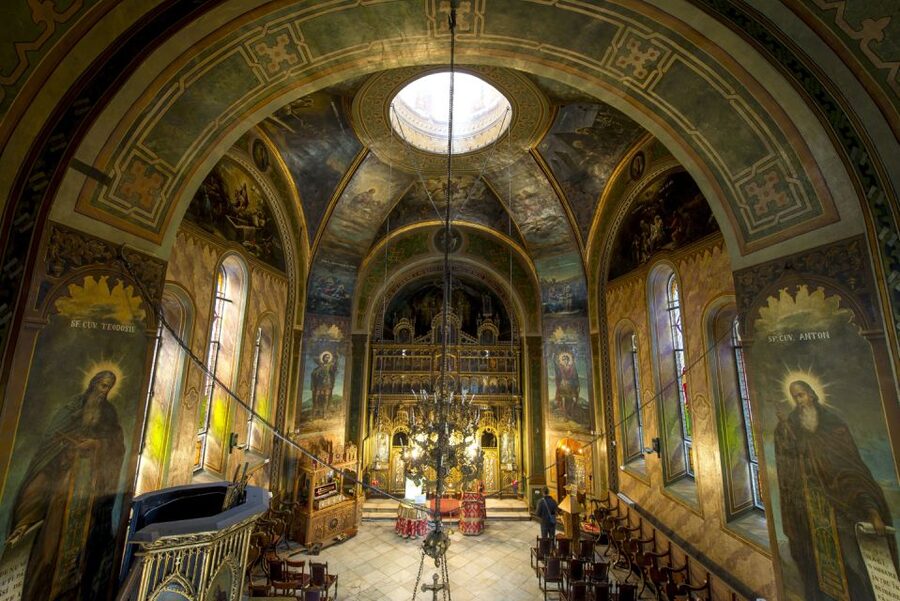
Eastern Orthodox church art in Bucharest is interesting because it turns the city into a living museum. I especially like how you see Byzantine-style painting up close, and how the route moves through Wallachian Middle Ages-era stories without feeling like a lecture. One thing to consider is that every stop is an active church, so you will need to follow dress and behavior rules, even if you are just there to look.
This is a 2.5-hour, small-group walk (limited to 10 people) led in English, Spanish, and Romanian. The guide, Helen, explains what you are seeing in plain language and keeps the pace manageable, including for visitors who need extra care with walking.
Key highlights you’ll feel fast
- Byzantine and Orthodox art explained through real churches, not textbook photos
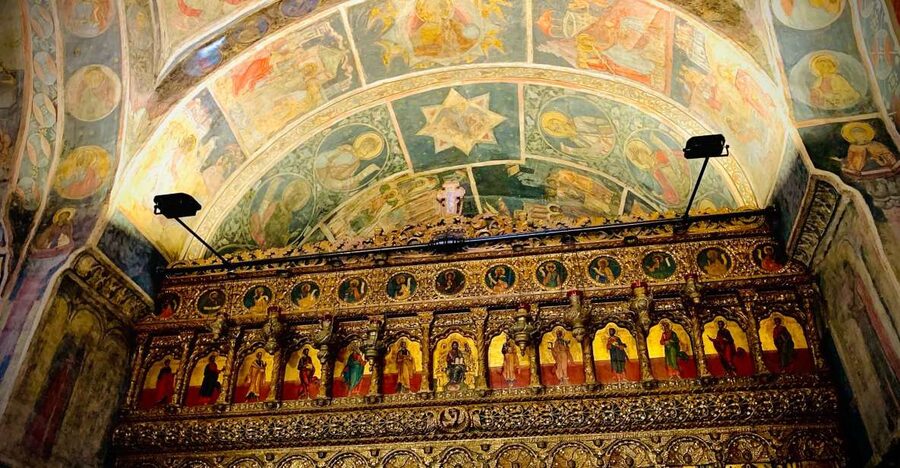
- Fresco spotting at multiple sites, including major wall painting moments on Lipscani Street
- Active religious spaces where the atmosphere is part of the experience
- Small-group flow with time for questions and slower looks
- Icon shop start at the Anton shop, where you can browse before you head out
- A route built around churches that are easier to miss on your own
Why Bucharest’s Orthodox art feels different (and better than you expect)
If you only know Eastern Orthodox art from icons on a shelf, you’re in for a surprise. In Bucharest, the best pieces are not in glass cases. They are painted on walls, layered across time, and tied to daily worship. That changes everything. The art is not just decoration, it is a visual language meant to guide attention.
I also love that this tour gives you the keys to reading what you see. The guide connects Orthodox church painting to the way Orthodox communities understand saints, Scripture, and prayer. You stop being a passive viewer and start noticing details like the logic of figures, the hierarchy of scenes, and how frescoes hold up when you view them from different angles inside the church.
There’s a practical side too. The route is compact enough for a focused morning or afternoon, but varied enough that you do not end up repeating the same thing in different buildings. You get the feel of Bucharest’s Orthodox tradition across different church styles, from older painted interiors to later architectural tastes.
Other tours around Bucharest:
- Bucharest: Dracula’s Castle, Peles Castle, & Brasov Old Town
★ 4.5 · 17,858 reviews - Bucharest: Dracula Castle, Peles Castle & Brasov Old Town
★ 4.6 · 10,891 reviews - Bucharest: Dracula’s Castle, Peleș Castle & Brașov Day Trip
★ 4.5 · 5,919 reviews
Meeting by the Anton icon shop: the start that sets your mindset
You meet in front of the Anton icon shop, which is a smart move. Before you even walk into the churches, you see how icon culture works in everyday Romania. It also warms you up for what you’ll notice later: the connection between small devotional objects and big wall paintings.
Because the group is limited to 10 participants, you’re not stuck in a noisy crowd. You can ask questions, lean in for close looks, and step back when the guide explains a detail you might otherwise miss. For me, that matters with frescoes, because the best “aha” moments often happen when you know what to watch for next.
Practical tip: start the tour with comfortable shoes. The itinerary is church to church, with time spent standing inside and looking upward. Even if the distances between stops are not long, your feet will do the work for you.
Saint Anton Church: stepping into a Wallachian story at the Old Princely Court area
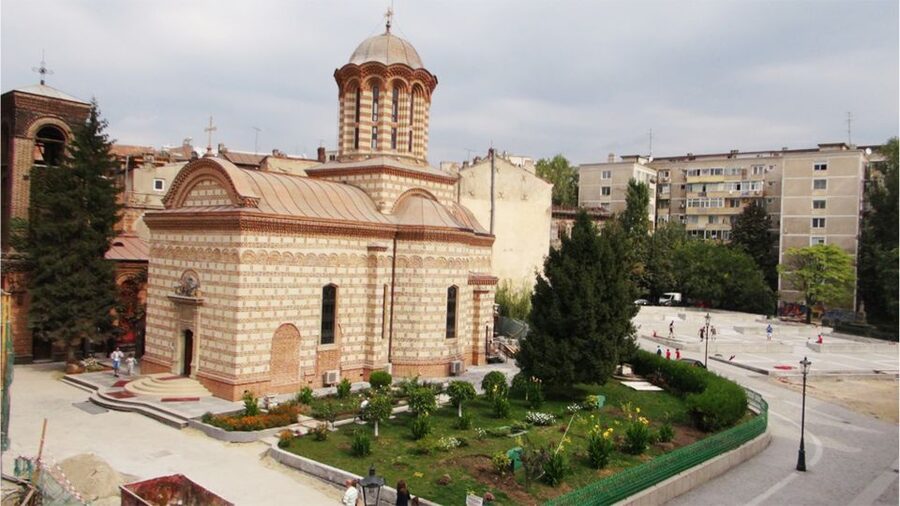
The tour begins near the Old Princely Court, and that context is more than scenery. This is where Bucharest’s older power centers shaped the city’s identity, including its religious life. When you reach Saint Anton Church, you’re not just entering another building. You’re entering a setting where Orthodox art helped people make sense of the world.
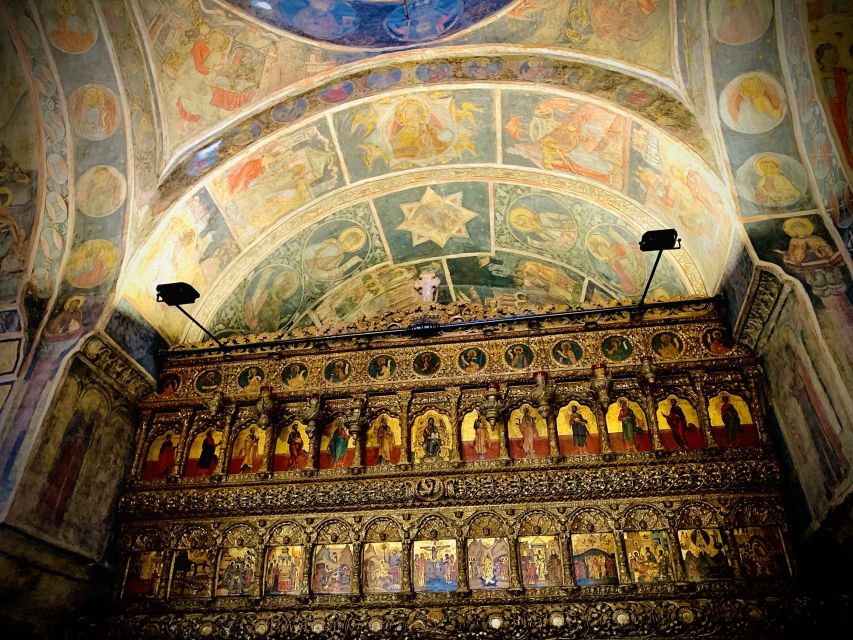
Inside, the focus is on the painted program. You’ll learn how Byzantine and Orthodox traditions influenced Romanian church art, and how frescoes are designed to be read as you move through space. The guide’s job here is to keep you from getting lost in colors and figures. You’ll practice a simple method: look for the main scene first, then track how smaller images support it.
What can be challenging: churches can feel dim, and you might want to take photos. Be ready to adjust. I treat church photography like a game of patience. If you keep your camera low and your attention high, you’ll see more than you capture.
Lipscani Street to Saint George Km0 Church: frescoes you can actually notice
After Saint Anton, you continue to Lipscani Street, heading for Saint George Km0 Church. This is a great transition because street energy gives way to church quiet. The route also helps you connect art to city geography. You are walking where people still move today, then stepping into a place that carries older visual traditions.
At Saint George Km0 Church, you’ll admire a fresco made by one of Romania’s greatest church painters. You may not be able to name the artist instantly, but you’ll understand what the painter is doing through technique and placement. Frescoes like this often reward you for looking in steps: first the overall composition, then faces and gestures, then the way color directs attention.
A practical caution: this stop can involve waiting for access or for the church to be respectful for ongoing worship. Since the churches are active and not just museum spaces, you’ll want to keep your voice calm and your body language modest. The payoff is worth it. When worshipers are present, the art feels less like history and more like something people still live with.
A different kind of day out:
- Bucharest: Palace of Parliament Tickets and Guide
★ 4.3 · 3,182 reviews - Bucharest: Day Trip to Dracula Castle, Peles Castle & Brașov
★ 4.4 · 3,049 reviews - Bucharest to Dracula Castle, Peles Castle and Brasov Guided Tour
★ 4.5 · 2,933 reviews - Bucharest: Palace of Parliament Tickets and Guided Tour
★ 4.4 · 1,877 reviews
Saint Elijah Orthodox Basilica: a stop that balances scale and meaning
Next comes Saint Elijah, described as an Orthodox Basilica and noted as one of two in the city. That detail matters. When a church is built to function like a basilica, the interior usually changes how frescoes land on your eyes. The scale can make the scenes feel more monumental, but it can also make you feel small in a good way.
This is one of the stops that you might find hard to locate on your own, even if you are comfortable navigating Bucharest. That’s where guided value shows up. A local guide not only gets you to the church, they help you interpret why the building matters for the art inside.
In practical terms, expect more time spent looking upward and around. The guide helps you connect architectural space to painting design, so you don’t just think, wow, there are lots of pictures. Instead, you start noticing how those pictures form a visual path.
Lady’s Church: the oldest preserved original frescoes in Bucharest
Then you reach the Lady’s Church, famous in this route for holding some of the oldest preserved original frescoes in Bucharest. This is where the tour becomes a time machine in the best way: you are not only looking at religious art, you are encountering survival.
Old frescoes create a different viewing experience. The paint can look more restrained or weathered than newer work, and the colors may shift depending on light and cleaning history. The guide will steer you toward the features that still read clearly, even when the surface has aged.
If you’re the kind of traveler who loves details, this stop will reward you. You can spend an extra minute on a face or a scene, then move on when the guide points out how the next section of the church painting system connects.
Best tip: slow down here. This is the stop where rushing steals the point.
Stavropoleos Monastery and the wrap-up near Saint Demetrios (plus Saint Cyprian)
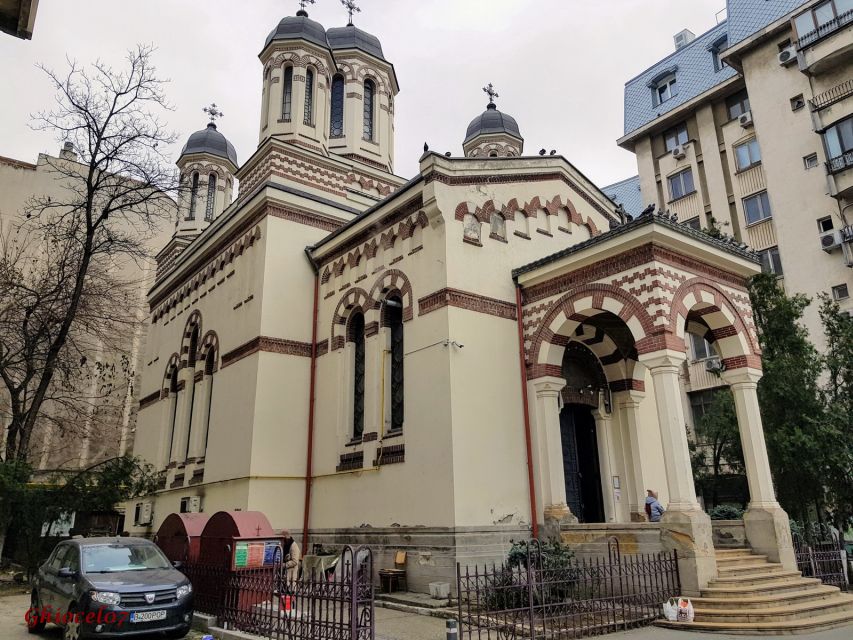
After the Lady’s Church, the route continues to Stavropoleos Monastery, and right next to it you finish at Saint Demetrios, described as a neo-baroque 19th-century church in this itinerary. Monastery spaces often feel different from parish churches. You tend to notice the boundaries of devotion, study, and community life.
At Stavropoleos, you’ll get more chances to frame what you’ve seen across the earlier stops. By now you have your mental checklist, and the guide can point out how style and emphasis shift between different periods and church aesthetics.
One practical note: the tour’s included list also names Saint Cyprian Church among the stops. Since the route details name Saint Demetrios as the final stop near Stavropoleos, I suggest checking the exact on-the-day route with the operator if you have your heart set on one specific church. That’s especially important if you are trying to align your visit with a particular time window.
Active churches: dress codes, behavior, and how to avoid awkward moments
Because these churches are active, you are not walking through quiet rooms where people only look. You are entering spaces where worship happens. The tour sets expectations clearly, and you should treat them as part of the experience, not a nuisance.
Here are the rules you should plan around:
- No short skirts, no sleeveless shirts
- Avoid tight clothing and ripped clothing
- Skip strong fragrances
- Leave pets at home
- Wear comfortable shoes
For behavior, the simplest advice is to act like you are visiting someone’s home of worship. Speak quietly, move with care, and give people space when ceremonies or regular prayer activity is underway.
Photo tip, plain and practical: take fewer photos but look longer. If you want the best shots, position yourself carefully, then give your attention to the guide’s explanation. You’ll usually end up with better pictures and a better memory.
Icon time and browsing: what “start at the shop” changes for you
Starting at the Anton icon shop is not just a meetup trick. It nudges you to think about icons as more than souvenirs. Icons are devotional objects, and they connect to the wall painting tradition you’ll see inside the churches.
If you want to shop, keep it simple:
- Bring a small amount of cash or confirm card payment options once you’re there
- Know what you want to look for, like saint portraits or small devotional pieces
- Ask questions if you are unsure what something is meant for
The guide can help you understand what you are seeing in the shop, and that makes buying feel less random. Even if you do not buy, browsing helps you learn faster once you return to frescoes and church interiors.
Price and value: why $57 can make sense for this kind of art
At $57 per person for 2.5 hours, you’re paying for access, interpretation, and efficient navigation. In this part of Bucharest, churches can be spread out and some are hard to find without local guidance. The guide reduces wasted time and turns random sightseeing into a focused art education.
You also get a small-group experience, capped at 10 participants, which matters for religious interiors where you need room to look and to move calmly. If you tried to piece this together alone, you might spend extra time locating entrances, reading what you’re looking at, and figuring out which places are worth your attention.
What you should weigh: no food or drinks are served. This is a pure art and church route. Plan on grabbing a coffee or snack afterward in one of the many nearby cafes, bars, or restaurants.
In other words, this is best value if you want a guided look at the best Eastern Orthodox church art stops in a short time window.
Who this tour suits best (and who may prefer a different plan)
This tour fits you if:
- You want Eastern Orthodox church art with real context
- You like frescoes, iconography, and Byzantine-style visual storytelling
- You enjoy active cultural spaces, even when rules require respectful behavior
- You want a manageable route in a small group without long transit
It may not fit you if:
- You want a strict museum-style itinerary with minimal rules
- You’re uncomfortable entering places of worship that are still used today
- You need a completely laid-back sightseeing plan with no attention to modest dress norms
One more practical note from real-world experience: if you have mobility limitations, tell the guide so they can adjust the pace and make sure you still enjoy the stops. The route involves walking and standing, and good guides can help you manage that smoothly.
Should you book Eastern Orthodox Church Art in Bucharest?
If you’re in Bucharest and you care about Orthodox art beyond a quick glance, I think this is a smart booking. You get a tight 2.5-hour format, a small group, and a guide who explains what you’re seeing in churches that are actually active. That combination is rare, and it’s why you’ll come away with a clearer picture of Romanian Orthodox visual culture.
Book it if you want the best chance of seeing multiple important churches in one go, including Saint Anton, Saint George Km0, Saint Elijah, the Lady’s Church, Stavropoleos Monastery, and the area finish near Saint Demetrios (with Saint Cyprian also listed as part of the experience). If any of those particular stops are your priority, confirm the final stop details with the operator so your time matches your expectations.
FAQ
How long is the Eastern Orthodox Church Art in Bucharest tour?
The tour lasts 2.5 hours.
What is the group size?
It is a small group, limited to 10 participants.
What languages is the tour offered in?
The live guide offers English, Spanish, and Romanian.
Where do we meet?
You meet in front of the Anton icon shop.
Is food or drinks included?
No. The tour does not serve food or drinks, but you can stop in nearby cafes, bars, or restaurants.
Are the churches museums?
No. All the churches are active. Modesty in dress and behaviour is required.
What should I wear or bring?
Bring comfortable shoes. Dress modestly, avoid short skirts, sleeveless shirts, tight clothing, ripped clothing, and strong fragrances.
Recently added around Bucharest
- Bucharest: Dealu Mare Winery Private Trip with Wine Tasting★ 4.9 · 6 reviews
- Winery touring & private wine tasting – one day private tour★ 5.0 · 3 reviews
- Traditions in Bucharest: Village Museum and Wine Tasting★ 5.0 · 8 reviews
- Village Museum Bucharest Guided Tour★ 5.0 · 6 reviews
- Your rendez-vous with Europe’s past: time-travel to Maramures, Transylvania★ 5.0 · 6 reviews
- Walking Tour of Bucharest City Center – Private Tour★ 5.0 · 4 reviews
- Wine tasting in Bucharest Old town – bonus cheese platter★ 4.5 · 6 reviews
- Private Wine Tasting at Bucharest’s First Wine Bar★ 5.0 · 3 reviews