Reviewed · TOURS
Darkside Tour of Bucharest – small group
Bucharest can feel like a postcard city, until you walk its darker corridors of memory. This Darkside Tour of Bucharest turns the clock back with stories that connect the Dark Ages through the Iron Curtain, then lands you at places tied to the 1989 Revolution.
I especially like how the route mixes history with on-foot detail, so you notice architecture, symbols, and the texture of neighborhoods instead of just hearing names and dates. I also love that the tour focuses on human stories, not just political slogans, which makes the grim parts hit harder in a sensible, guided way.
One possible drawback: this tour is heavier than most. You’ll spend time in a cemetery and hear about repression, shootings, and secret police, so it may not be the best fit if you want a light, casual outing.
Key things you’ll remember
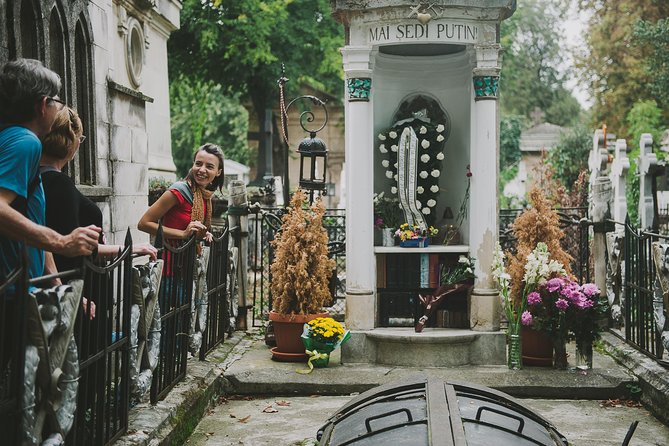
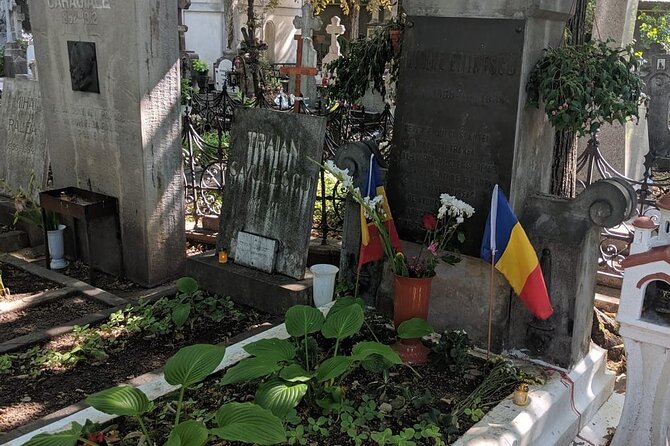
- Bellu Cemetery: a walk among crypts and tombstones with love stories, unusual architecture, and real atmosphere
- Revolution Square context: what happened around December 22, 1989, and why this spot feels emotional for Romanians
- A focused modern protest thread: University Square as a starting point for protests across recent decades
- Calea Victoriei in the early 1900s: scandalous pre-Communist life, including a famous figure like Zaraza
- English small-group storytelling: max 12 travelers, with guides such as Vlad, Elena, Alex, and Andra mentioned for their delivery and humor
Why Bucharest’s Darkside Tour feels different
This tour is interesting because it refuses to treat Bucharest like a museum you just pass through. Instead, it reads the city like a living document, with each stop showing how power, fear, and hope shaped everyday life.
I like that it stays practical while staying memorable. You’ll walk enough to learn the layout and catch details, but the tour also uses subway transportation so you do not waste time. The small-group format, capped at 12 people, helps questions land and keeps the pace from turning into a stampede.
If you prefer sanitized history or only want happy highlights, you may find the tone too intense. But if you want to understand Romania’s modern identity, this tour is one of the clearest ways to do it in a short time.
Other tours around Bucharest:
- Bucharest: Dracula’s Castle, Peles Castle, & Brasov Old Town
★ 4.5 · 17,858 reviews - Bucharest: Dracula Castle, Peles Castle & Brasov Old Town
★ 4.6 · 10,891 reviews - Bucharest: Dracula’s Castle, Peleș Castle & Brașov Day Trip
★ 4.5 · 5,919 reviews
The 3-hour flow: from the National Theatre to Revolution Square
The tour starts at 3:00 pm at the Ion Luca Caragiale National Theatre on Bulevardul Nicolae Bălcescu 2. You end at Revolution Square (Piața Revoluției), in front of the Ministry of Internal Affairs.
That start and finish matter. The beginning point puts you near a central, well-known landmark, then the route gradually moves you into neighborhoods tied to protest and governance, ending where the communist era is symbolically cut off.
The tour runs about 3 hours, and you should plan for a mix of walking and short stops. The Bellu Cemetery leg is about 1 hour, and you’ll also spend time in other key points, including a couple of shorter segments (around 20 to 40 minutes depending on the stop). The total pace is manageable for most people with moderate physical fitness, but it still means wearing shoes you can trust.
Bellu Cemetery: crypts, tombstones, and stories with a pulse
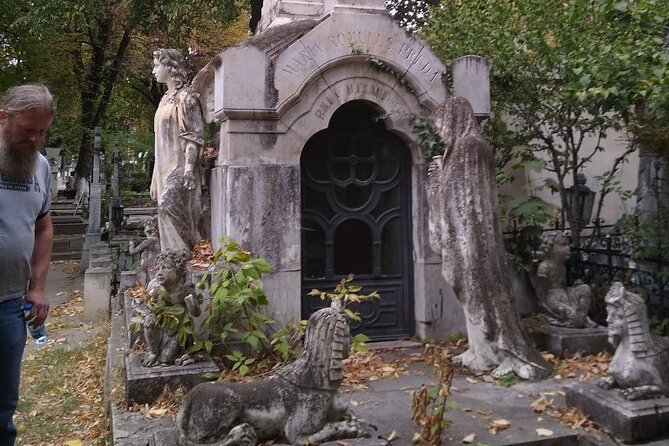
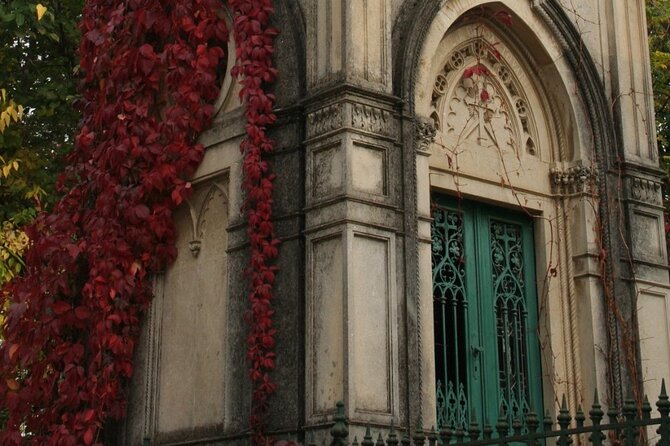
Bellu Cemetery (Cimitirul Serban Voda-Bellu) is the big emotional and atmospheric centerpiece. The tour spends about 1 hour here, and it is not just a quick walk past old stone. You get guided stories inside the cemetery, with attention to unique architecture, love stories, and even mysteries that invite your curiosity.
This stop works so well because cemeteries are where a city shows its personality without trying to impress you. Names, symbols, and memorial styles become a kind of handwriting, and the guide’s job is to help you read it. When the tone is story-driven, you start noticing details you would normally miss.
Practical note: it is still an outdoor site, with uneven surfaces and lots of walking. I recommend wearing shoes with grip, and if you are visiting in warmer months, plan for heat.
Good news: the cemetery admission is listed as ticket free for this experience, and you can focus on the tour without adding extra costs on the spot.
University Square: where modern protest starts
After Bellu Cemetery, you move to University Square. This stop is shorter, around 20 minutes, but it anchors the tour in recent history rather than only distant centuries.
Here you learn how this area acted as a starting point for major protests, including events tied to the Revolution of 1989. You also hear about victims who fought for an occidental future, plus later actions connected to miners in the 1990s and an anticorruption push in more recent times.
This stop is valuable because it helps you connect the city’s past to Romania’s present debates. You begin to see Bucharest not as a set of monuments, but as a place people keep returning to when the stakes feel national.
If you like your history with a cause-and-effect thread, this is one of the stops that gives you that.
A different kind of day out:
- Bucharest: Palace of Parliament Tickets and Guide
★ 4.3 · 3,182 reviews - Bucharest: Day Trip to Dracula Castle, Peles Castle & Brașov
★ 4.4 · 3,049 reviews - Bucharest to Dracula Castle, Peles Castle and Brasov Guided Tour
★ 4.5 · 2,933 reviews - Bucharest: Palace of Parliament Tickets and Guided Tour
★ 4.4 · 1,877 reviews
Calea Victoriei in the early 20th century: scandal before the Communist takeover
Next comes Calea Victoriei, a street that helps you travel back to the beginning of the 20th century. The tour spends about 40 minutes here, and the tone shifts from revolutionary memory to the messy, scandalous social life before the Communist regime took full power.
You’ll hear about the scale of sex work in 1927, when around 12,000 prostitutes and escorts reportedly worked in Romania. The guide also uses names and figures to make it feel specific, including references like Zaraza, described as a gypsy dancer.
This part is not there to shock you for entertainment. It adds realism. It shows that before the state tightened everything, city life had shadows, markets, and contradictions. Understanding that makes later political oppression feel even more dramatic, because you can see what was changed.
Potential drawback: if you strongly prefer not to hear about sexual exploitation, this stop might feel uncomfortable. In my view, though, the tour frames it historically, as part of how the city worked, not just for sensational detail.
Piata Revolukiei, the Romanian Gulag, and the emotional end of an era
The final major historical stop is Revolution Square (Piaka Revolukiei as written in the tour details). This is the emotional climax, and the tour spends about 20 minutes here.
This segment brings you through the consequences of communism: the Romanian gulag system, the role of dictator Nicolae Ceausescu, and what life in the 1980s was like for local people. You also learn about the events of December 22, 1989, including shootings and deaths connected to the Securitatea, the secret police.
If you’re expecting fireworks, you’ll not get them. What you get is context for why this place gives goosebumps to many Romanians, because it represents a symbolic end to the communist regime in Romania.
I find this stop especially useful because it explains the sequence of events in a way that connects the city’s physical geography to political history. That is what turns a square into a chapter.
Price and logistics: what $48.39 buys you
At $48.39 per person for about 3 hours, the value is in what is included, not just the storytelling.
You get:
- a local guide
- a street snack
- subway transportation
- a mobile ticket
- and each listed stop has free admission for the parts covered (including Bellu Cemetery)
What you do not get is food and drinks beyond the street snack, unless specified. You also do not get hotel pickup and drop-off.
To judge value, think about what it would cost you to separately pay for guided interpretation plus subway rides plus a snack. This tour packages those basics into one clean block, then uses the guide to make the history feel connected instead of random.
The group size cap at 12 travelers is another value point. It keeps the experience from turning into a lecture shouted across a crowd.
Guides, tone, and why the stories feel human
One reason this tour earns such high ratings is how the guides handle tone. The information is heavy, but the delivery often includes humor and anecdotes that keep it from becoming a grim list.
Guides named in feedback include Vlad, Elena, Alex, Andra, Bogdan, and Irina. Across these guides, the same pattern shows up: clear English, strong historical grounding, and a willingness to answer questions without making you feel rushed.
One practical, comfort-related detail also shows up in real-world feedback. In hot weather with a reported 38 C heat index, a guide made sure everyone had water and managed the pacing so the group would not overheat. You should still bring your own bottle if you can, but it’s reassuring that the team thinks about conditions.
If you care about respectful storytelling, this tour typically hits the right balance. It treats the suffering and the politics seriously, but it does not sand off personality.
What to bring, and how to prepare your brain for this route
Because this tour is partly about major political violence and partly about cemetery walking, you should prepare for both mental and physical demands.
Bring:
- comfortable shoes for uneven outdoor walking
- sun protection if the weather is warm
- a light layer if it cools down in the evening
- a bottle of water, especially in summer
Then prepare your expectations:
- You will hear about repression, shootings, and the secret police.
- You will visit a cemetery with crypts and tombstones, not just a photo spot.
Also, the tour is listed as requiring good weather. If it rains hard or conditions are rough, you may be rescheduled or offered a different date.
If you’re someone who likes to process quietly, arriving a bit early at the meeting point can help you get grounded before the stories start.
Who should book this Darkside Tour of Bucharest
I’d recommend this tour if:
- You want a short, focused way to understand Bucharest and Romania’s modern story
- You like history that explains the how and why, not only the what
- You enjoy walking tours where details matter
- You are comfortable with serious topics presented with guidance
I’d think twice if:
- You want a light sightseeing day
- You strongly prefer not to hear about prisons, repression, or death
- You are traveling with younger kids, because the tour is not recommended for children aged 15 and under
- You have low mobility needs, since the route includes walking and moderate fitness requirements
Language is listed as English, and the tour stays small at up to 12 travelers, which makes it easier for the guide to keep the experience personal.
Should you book the Darkside Tour of Bucharest?
Book it if you want Bucharest with context. The combination of Bellu Cemetery plus the political geography of University Square and Revolution Square makes this one of the clearest ways to understand how Romania got from past struggles to modern identity, in just a few hours.
Skip it if your trip style is mostly about quick photos and easy walking with upbeat themes. This is not that. It’s a story tour that uses dark history honestly, and it asks you to pay attention.
If you are planning your first evening or first full day in the city, the 3:00 pm start can be a smart choice. It gives you time to get oriented, then you close the loop with the emotional end point in Revolution Square, so your understanding of Bucharest feels anchored rather than scattered.
FAQ
How long is the Darkside Tour of Bucharest
It runs for about 3 hours.
Where does the tour start and end
It starts at the Ion Luca Caragiale National Theatre on Bulevardul Nicolae Bălcescu 2, and it ends at Revolution Square in front of the Ministry of Internal Affairs.
Is the tour in English and what group size should I expect
The tour is offered in English, and it has a maximum of 12 travelers.
What is included in the price
The price includes a local guide, a street snack, and subway transportation, and you receive a mobile ticket. Admission tickets for the listed stops are free as included for this experience.
Is food and drink included
A street snack is included, but food and drinks are not included unless specified.
Is there a fitness or age recommendation
The tour is listed for travelers with a moderate physical fitness level, and it is not recommended for child aged 15 and under.
What should I do if the weather is bad or if I need to cancel
The experience requires good weather. Cancellation is free, and you can cancel up to 24 hours in advance for a full refund.
Recently added around Bucharest
- Bucharest: Dealu Mare Winery Private Trip with Wine Tasting★ 4.9 · 6 reviews
- Winery touring & private wine tasting – one day private tour★ 5.0 · 3 reviews
- Village Museum Bucharest Guided Tour★ 5.0 · 6 reviews
- Traditions in Bucharest: Village Museum and Wine Tasting★ 5.0 · 8 reviews
- Your rendez-vous with Europe’s past: time-travel to Maramures, Transylvania★ 5.0 · 6 reviews
- Walking Tour of Bucharest City Center – Private Tour★ 5.0 · 4 reviews
- Wine tasting in Bucharest Old town – bonus cheese platter★ 4.5 · 6 reviews
- Private Wine Tasting at Bucharest’s First Wine Bar★ 5.0 · 3 reviews
Tours, compared.
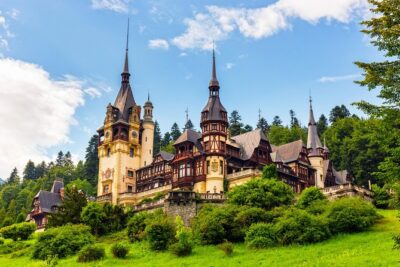
Bucharest to Dracula Castle, Peles Castle and Brasov Guided Tour
Read our review →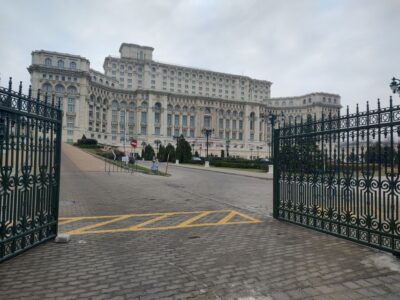
Transylvania and Dracula Castle Full Day Tour from Bucharest
Read our review →
Peles Castle, Bran Castle, & Brasov Old Town Tour
Read our review →
Peles Castle, Bran Castle, & Brasov Full-Day Tour
Read our review →