Reviewed · BUCHAREST
Bucharest: The Italian emigration in Romania
This tour is interesting because it treats Bucharest like a puzzle you solve on foot. You follow the traces of Italian immigration in the old part of town, then watch how those influences show up street by street.
Two things I like a lot are the sheer sense of place on Victory Road, and the way the walk links big civic buildings to the quieter story of migration and cultural imprint. You’ll be moving through real landmarks, not museum-only talking points.
One drawback to consider: the tour is in Italian, and the meeting spot can be tricky if you do not pay attention to the exact office address. One past booking even flagged difficulty finding the office with unclear signage.
Key highlights to look for on this walk
- Victory Road as the main storyline, with Italian influence you can see in the urban layout
- Palace of Justice by the Dambovita River, a strong starting visual anchor
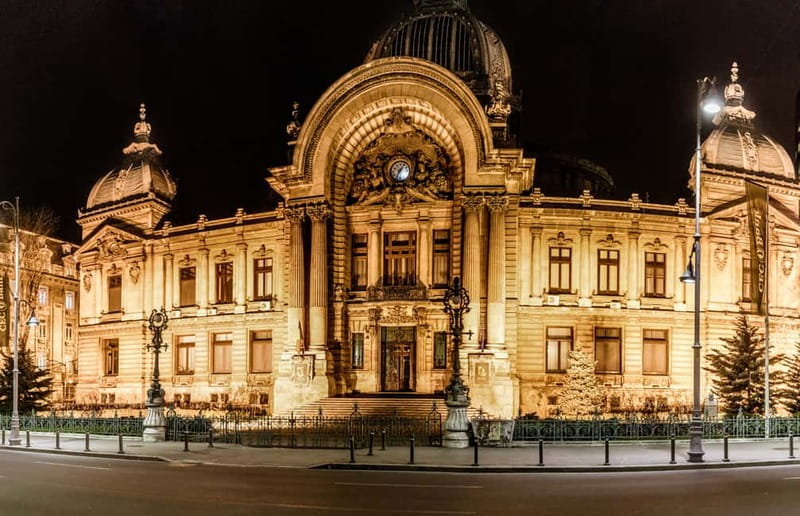
- CEC Palace and Revolution Square for major architecture and civic energy
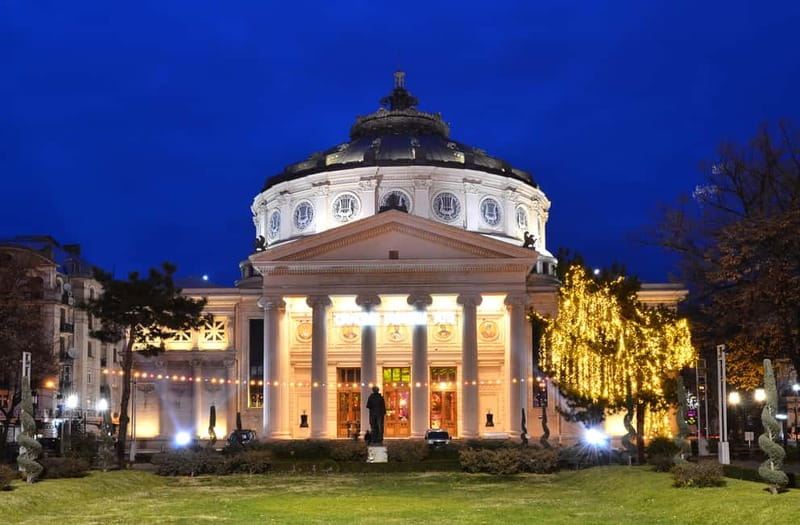
- Atheneum and the Italian Church for faith and culture tied to the Italian footprint
- A wrap-up in Bucharest’s old town that ties the route back to the migration story
Italian immigration on foot, where the city tells the story
I like tours that make history physical. This one does that by walking you through Bucharest’s best-known streetscape, then connecting it to the period when Italians arrived in the late 1700s and early 1800s. Instead of giving you a lecture, the guide points your attention at buildings and squares as evidence, then you carry that mental map with you as you keep walking.
If you are the type who enjoys noticing details, you’ll get more from this. You’re not hunting for hidden codes in plaques. You’re learning to read a city: where institutions sit, how streets connect, and how public architecture can reflect who influenced a place and when.
You also get a practical structure. The walk starts by the river, shifts into the dramatic linear feel of Victory Road, then finishes in the old town with a recap. That means you’re not left wondering what the whole route added up to.
Other tours around Bucharest Old Town:
- Bucharest Pub Crawl in the Old Town
★ 5.0 · 462 reviews - Bucharest Essential Tour: Old Town, Calea Victoriei & Communism
★ 5.0 · 142 reviews - 4h Bucharest Private Tour (2h by Car and 2h Walking in Old Town)
★ 5.0 · 90 reviews
Where you meet, how the route starts, and what to watch for
The tour begins at the Transylvanian Wonders office, on Bulevardul Natiunile Unite 4, Bloc 107/A. You should meet your guide at Piata Natiunile Unite, about 100 meters from the office.
That detail matters more than it sounds. I’d treat it like an actual navigation task. Give yourself a few extra minutes, and use your phone map rather than guessing based on landmarks alone. There is a real-life caution here, because one experience described the office as hard to find, with no signs, and stated that nobody was there when they arrived.
Once you start, the route crosses the Dambovita River and enters the area around Victory Road. This is a good setup for photos and for getting your bearings. Crossing the river acts like a switch from “getting to the sights” to “okay, now the story is the street.”
Practical tip: wear comfortable shoes. This is a walking tour for two hours, and the route includes major streets and landmarks. Also dress for weather. Bucharest can change quickly, and you’ll want clothing that lets you stay outside and moving.
Palace of Justice and the Dambovita River banks: the first big visual cue
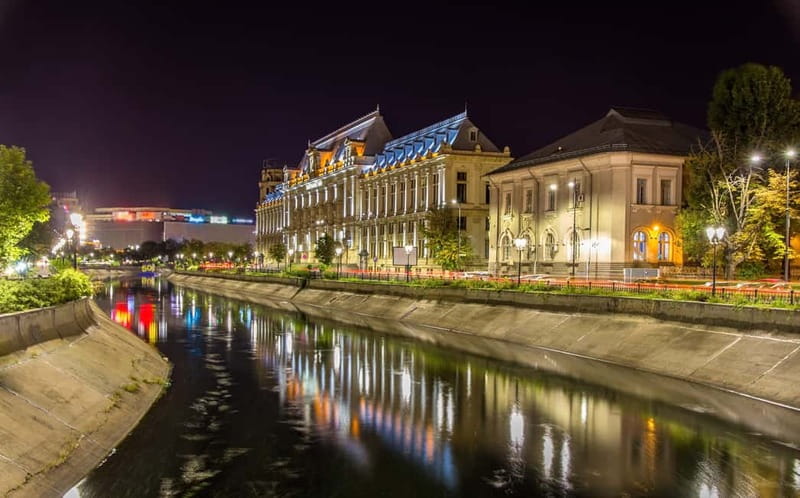
The tour’s opening highlight is the Palace of Justice on the banks of the Dambovita River. Even if you’re not an architecture fanatic, this is a strong way to start. It gives you scale. It also sets a tone, because it is the kind of civic building that signals how a capital organizes power and public life.
Starting by the river is smart. The Dambovita creates an obvious line in the city. As you walk, you keep noticing how the city turns toward and away from it. That helps the guide’s theme land, because migration stories often become visible through changes in where people build, govern, worship, and learn.
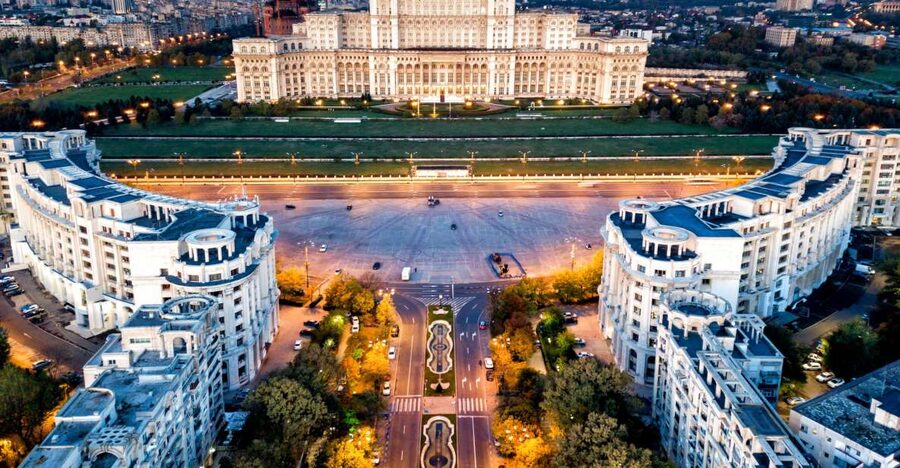
When the route shifts from the river area into Victory Road, you’ll feel the transition. The story gets more linear. You’re moving along the spine of one of Bucharest’s most famous streets, so the influences the guide mentions are tied to a corridor, not just scattered stops.
National History Museum and the civic-meets-cultural rhythm
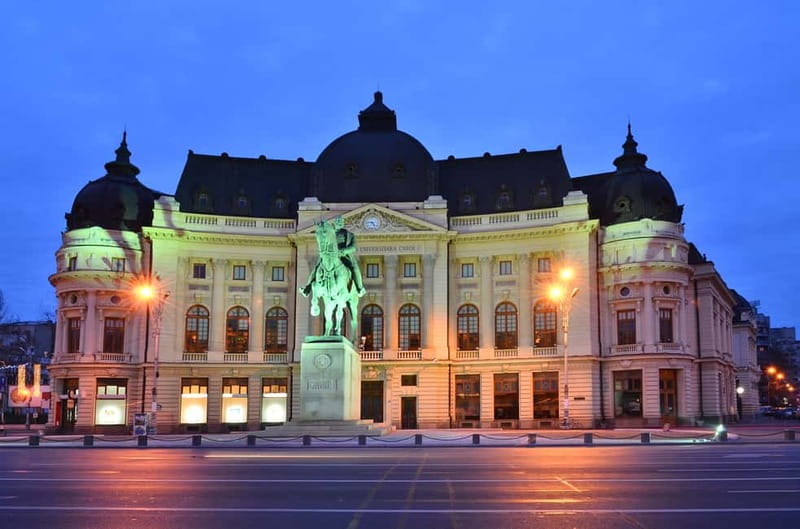
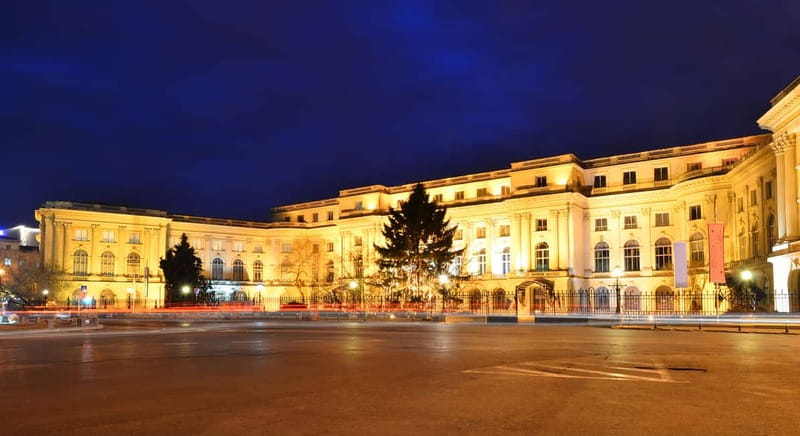
After the river and your entry into Victory Road, the walk passes the National History Museum. This stop is valuable for one simple reason: it anchors the tour in institutions that keep memory. Even when you do not go inside, the surrounding area helps you understand how a capital preserves identity.
From here, the walk keeps a steady rhythm: one landmark that represents public life, then another tied to culture, banking, or learning. That pattern matters because the Italian immigration story described on this tour is not limited to churches alone or to one neighborhood. The guide frames it as influences on the city’s development and history across multiple kinds of places.
If you like structured walking tours, you’re in luck. This route does not just throw you from one random photo spot to the next. It builds a chain of context. You start seeing the city as a connected system, not a pile of famous buildings.
A different kind of day out:
- Bucharest Old Town Treasure Hunt: Walking Tour & Game
★ 4.5 · 42 reviews - Discover Bucharest: Explore Hidden Old Town Walking Tour
★ 5.0 · 30 reviews - Bucharest Bachelors Stag or Hen Old Town Party Night Out
★ 5.0 · 26 reviews - The Fixers walking tour of the Old Town in Bucharest
★ 5.0 · 21 reviews
The CEC Palace, Revolution Square, and the Athens-shaped moments
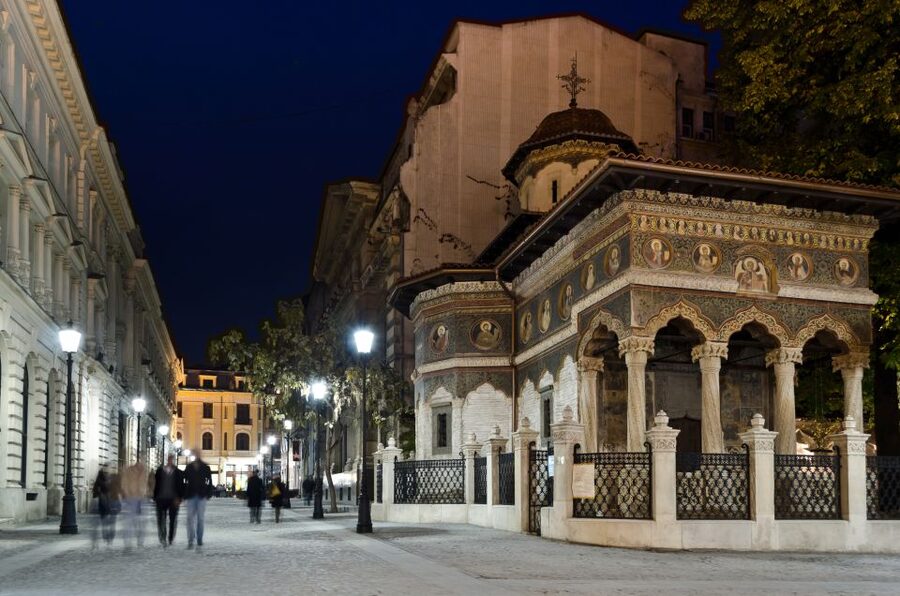
One of the highlights on this walk is the CEC bank building, also referred to as the CEC Palace. This is one of those stops where you can appreciate why bank buildings and public offices tend to be architectural statements. They show stability and ambition, and that makes them useful evidence when the guide talks about Italian influence during the late 1700s and early 1800s.
Next up is Revolution Square. Squares in cities are like stages. They concentrate movement and public attention. On a walking tour themed around migration influence, a square matters because it’s where a city visibly gathers people and symbols. Even if you’re mainly there to listen, standing in that kind of open space helps the guide make a point about how Bucharest functions as a capital.
Then you head past the Atheneum. The Atheneum stop is where the tour broadens from civic and financial architecture into cultural identity. You get that sense that the city’s image is built through multiple pillars: law, learning, money, public events, and faith.
One more good reason this is worth doing: you get a tight loop of landmarks you can recognize later. After this walk, you’ll have a mental catalog of major buildings tied to a single theme. That makes it easier to keep exploring Bucharest on your own.
Entering the street’s storyline: Victory Road as the main “text”
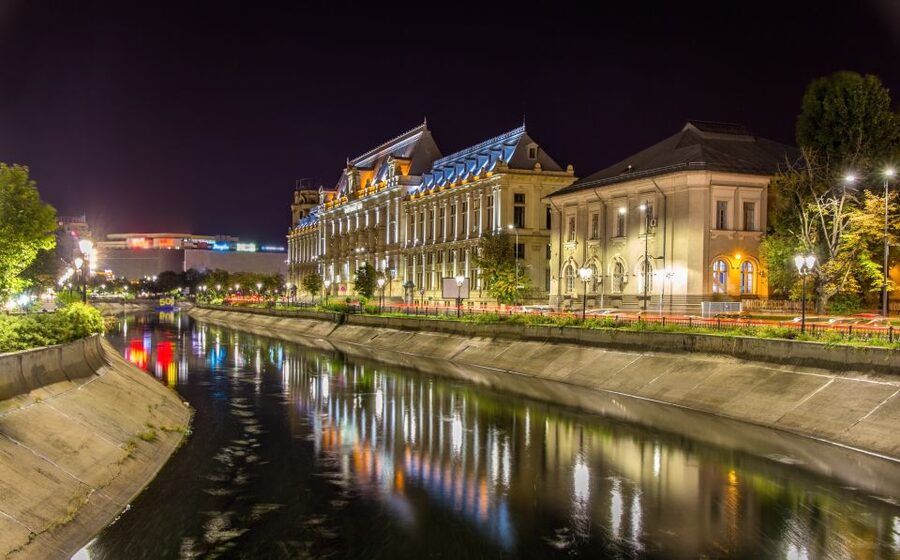
Victory Road is the headline. The tour calls it the most famous street in Bucharest, and you can see why the route centers on it. When a tour guide chooses one street as the thread, it means the street itself carries meaning beyond what any single building offers.
This is where the Italian immigration idea gets practical. You walk on the traces of that immigration and the influences Italians left on the city’s development and history. The guide also points out places along the avenue, such as the National History Museum, the CEC Palace, Revolution Square, the Atheneum, and the Italian Church.
What I like here is the pacing. You’re not just stopping every two minutes. You’re walking long enough to connect the dots. That helps you build a sense of how a capital’s history can be read by following a main corridor.
Also, Victory Road makes the tour feel like Bucharest, not like an abstract history class. You’ll experience the city at street level: turning corners, crossing open areas, and seeing landmarks from the angle you’d naturally notice when exploring on your own.
The Italian Church and the wrap-up back in old town
A key named stop is the Italian Church. A church makes sense for this theme because faith communities and cultural heritage travel with people. Even if you do not spend long inside, the building’s presence is part of the story the guide is telling about Italian influence in Bucharest.
At the end, the tour returns to Bucharest’s old town for a quick recap. That wrap-up is underrated, because it turns your scattered impressions into a clear takeaway. You leave with a stronger idea of what the Italian immigration meant for the city overall, not just for one landmark.
The recap also helps you keep expectations realistic. This is a themed walk built around visible traces. If you go in expecting a deep academic seminar, you might feel you want more detail. If you go in expecting a readable city-history route, the final summary is the kind of ending that makes the whole walk click.
Price and value: is $34 for two hours a fair deal?
At $34 per person for a two-hour walking tour, the value depends on what you want from the experience. If you prefer quick, focused routes with a live local guide, this price sits in a reasonable range for a two-hour city walking experience that hits multiple named landmarks.
You’re paying for three things: a guided storyline, local context tied to the route, and the convenience of not having to plan which stops best support the theme of Italian immigration. For many people, that saves time and reduces the guesswork.
But here’s my balanced take. The tour is Italian-language. If you do not understand Italian, you may miss nuance, and the value becomes less obvious. If you do speak Italian, or you’re comfortable following a guide even when your Italian is imperfect, you’ll likely feel that the guide’s explanations bring the places to life.
If you want a low-stress, flexible option, there is also a free cancellation policy up to 24 hours in advance and a reserve now, pay later option. That’s practical if your schedule is still in flux.
Guide quality makes or breaks it, so plan for both sides
In at least one strong experience, the guide Daniel was described as punctual, friendly, and funny, and he answered questions well. That same experience also mentioned he went above and beyond to accommodate specific stop requests and even arranged a start from the guests’ hotel. Those are the traits that turn a standard walking tour into a memorable one.
At the same time, one low-rating account described a serious issue: the tour reportedly never happened because nobody was at the office, and they said it was hard to find with no signs. That’s not the kind of problem you ignore.
So, my practical advice is simple: confirm the meeting point the day before, arrive early, and be ready to use your phone to locate Piata Natiunile Unite and the office address precisely. If you do that, you reduce the risk of being stuck in the wrong spot at the wrong time.
Who this Bucharest Italian immigration walk fits best
This tour fits best if you like themed city walks and you enjoy learning history through place-based clues. You’ll probably enjoy it most if you:
- like street-level sightseeing and city architecture
- want a coherent route with a clear story thread
- enjoy asking questions and getting answers from a guide
It may be less satisfying if you prefer self-paced exploration with flexible stop durations, because this is a set two-hour walk with named stops.
It also has a limit on participants: it is not suitable for people over 95 years. And it is an Italian-language tour, so language comfort matters.
Practical rules you should know before you go
This walk has typical activity rules, but they are worth noting so you do not get surprised.
Not allowed: alcohol and drugs, audio recording, and bare feet. Come with comfortable shoes and weather-appropriate clothing, and you’ll be set.
Also keep in mind the tour ends back at the meeting point. That makes it easy to continue your day elsewhere in Bucharest, but it means you should plan your next stop with the meeting area in mind.
Should you book this Italian immigration walking tour?
Book it if you want a compact two-hour way to understand Bucharest through one specific theme: Italian immigration and the influences you can spot around Victory Road, Revolution Square, and key civic buildings like the Palace of Justice and the CEC Palace.
Skip it or consider alternatives if your Italian is limited, because the guide language is Italian and the experience could feel uneven. Also, because there has been at least one reported problem finding the office, arrive early and double-check directions to Bulevardul Natiunile Unite 4, Bloc 107/A and Piata Natiunile Unite, the 100 meters detail.
If you do book, do yourself a favor: confirm the meeting point clearly, wear good shoes, and come ready to walk and listen. With the right guide, this route gives you a way to see Bucharest as a living map of migration and city growth, not just a list of sights.
FAQ
How long is the Bucharest: The Italian emigration in Romania tour?
The tour duration is 2 hours.
Where do I meet the guide?
Meet your guide at Piata Natiunile Unite, about 100 meters from the Transylvanian Wonders office on Bulevardul Natiunile Unite 4, Bloc 107/A.
Where does the tour end?
The activity ends back at the meeting point.
What are the main stops and highlights?
Key sights include the Palace of Justice by the Dambovita River, the CEC bank building, Revolution Square, the old Senate house, and Victory Road. The route also passes places like the National History Museum, Atheneum, and the Italian Church.
What is the tour language?
The tour language is Italian.
Is audio recording allowed?
No, audio recording is not allowed.
What should I bring?
Bring comfortable shoes and weather-appropriate clothing.
Is alcohol or drugs allowed?
No, alcohol and drugs are not allowed.
What is the cancellation policy?
Free cancellation is available up to 24 hours in advance for a full refund.
Recently added around Bucharest Old Town
- Wine tasting in Bucharest Old town – bonus cheese platter★ 4.5 · 6 reviews
- Bucharest VIP Bar Crawl in Lipscani ‘Old Town’★ 5.0 · 3 reviews
- Bucharest: 4-Hour Walking Food Tour in the Old Town★ 4.1 · 8 reviews
- Bucharest Old Town Walking Tour★ 4.0 · 13 reviews
- Hidden Bucharest: Discover Secrets of the Old Town★ 4.9 · 16 reviews
- Bucharest: Tour of Old Town, Calea Victoriei & Communism★ 4.9 · 15 reviews
- The Fixers walking tour of the Old Town in Bucharest★ 5.0 · 21 reviews
- Private Bar Crawl in Bucharest – Old Town Area★ 5.0 · 21 reviews