Reviewed · TOURS
Bucharest Old Centre Tour
Bucharest’s Old Centre is interesting because it’s like a living map, layers of Wallachian life stacked street after street. I like the hotel pickup that cuts down on hassle, and I like the way this short tour uses a local guide to make landmarks make sense instead of feeling random. One drawback to keep in mind is the tour is only about 1 hour on foot, so you’ll want comfortable shoes for uneven ground.
A great guide makes this kind of walk work, and this company’s guides include locals such as Alina, who’s highlighted as funny, passionate, and grounded in the area. If you prefer slow museum time over walking, plan for a brisk, story-led route.
Key things to know before you go
- Selected hotel pickup and drop-off help you start and finish easily
- A tight 1-hour loop through the Old Centre, on foot
- Old Court, inns, and the Palace ruins tie together centuries in a practical way
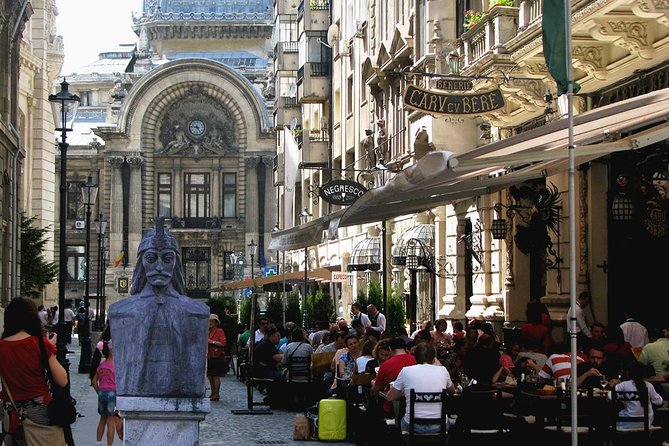
- Strada Lipscani is treated as the spine of the old town
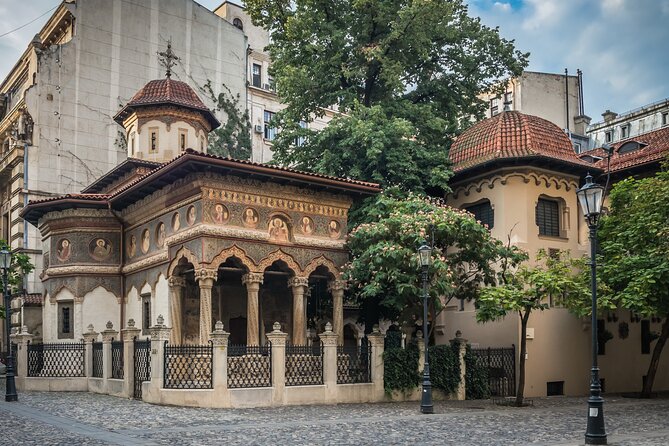
- Stavropoleos Monastery (built in 1724) gives you a clear architectural and historical stop
- Sturdy shoes matter, especially on flag stones
Entering Bucharest’s Old Centre without getting lost
This tour works best when you treat it like orientation plus a story. Bucharest can feel spread out, and the Old Centre has enough twists in its streets that a self-led wander can turn into, Where am I now? A local guide gives you the “why” behind what you’re seeing, from long-ago seats of power to everyday places where people met, traded, and ate.
You start with a focused introduction to the Old Centre area and the surrounding landmarks. It’s not just photo stops. The guide connects the points so your brain can build a simple timeline: where power sat, where common life happened, and how the city’s layout evolved.
And because the tour is only about an hour, it’s ideal if you want a first pass that you can build on later, when you explore on your own.
Other tours around Bucharest:
- Bucharest: Dracula’s Castle, Peles Castle, & Brasov Old Town
★ 4.5 · 17,858 reviews - Bucharest: Dracula Castle, Peles Castle & Brasov Old Town
★ 4.6 · 10,891 reviews - Bucharest: Dracula’s Castle, Peleș Castle & Brașov Day Trip
★ 4.5 · 5,919 reviews
Hotel pickup, drop-off, and a smooth 1-hour schedule
One of the biggest value points here is hotel pickup and drop-off from selected central hotels. In a city where transit and walking times can surprise you, that convenience is not small. It helps you arrive ready to walk, not still figuring out your route.
Departures are offered in the morning or afternoon, so you can slot the tour into a day that already has other plans. It’s also a private tour, so it’s only your group. That matters because the pace is more likely to match your comfort level, rather than being driven by strangers.
For the timing itself, think of it as a concentrated stroll. You’re not going to “see everything in Bucharest,” but you will walk through a section of the Old Centre that ties together major references you’ll keep encountering later.
Meeting point: National Museum of Romanian History, then off to the stories
The tour start point is the National Museum of Romanian History at Calea Victoriei 12, București 030026, Romania. From there, you move into the Old Centre core and begin the walk that strings together recognizable themes: rulers, churches, inns, and the streets where commerce and community happened.
The route is structured so you’re not bouncing randomly. You’re moving through the old quarter, with stops that function like chapter headings. That’s why this tour can be useful even if you plan to do more sightseeing afterward.
The tour ends back at the same meeting point, which keeps your schedule simple. If you’re trying to get back for a later reservation, you can.
The Princely Old Court and early power in the Old Centre

Your first major section emphasizes the Princely Old Court and the older structures that shaped Bucharest long before today’s city blocks formed. The focus is on how this area worked as a center of authority and daily life around it.
You also get references to places that sound almost like characters in the story: the Old Coffee House, Gabroveni Inn, and Linden Tree Inn. Even if you don’t go inside each one, the guide explains why inns and meeting points mattered. In cities like Bucharest, these were social hubs, not just “lodging.”
A practical benefit of this stop is that it helps you read the streets later. When you come across an old site, you’ll understand what kind of building it likely was and why people would care.
A different kind of day out:
- Bucharest: Palace of Parliament Tickets and Guide
★ 4.3 · 3,182 reviews - Bucharest: Day Trip to Dracula Castle, Peles Castle & Brașov
★ 4.4 · 3,049 reviews - Bucharest to Dracula Castle, Peles Castle and Brasov Guided Tour
★ 4.5 · 2,933 reviews - Bucharest: Palace of Parliament Tickets and Guided Tour
★ 4.4 · 1,877 reviews
Post Office history and the National History Museum context
Another stop brings you to the National History Museum of Bucharest and the former Post Office building. This is one of those “architecture with a job” moments. Museums can feel abstract until someone frames what the building represented and how it fits into the city’s growth.
The former Post Office is especially helpful because it connects Bucharest’s old world to a more modern administrative rhythm. You start to see the bridge between earlier centuries and the later systems that helped shape the city as people experienced it.
If you’re the type who likes understanding the purpose behind buildings, this part is a good match. If you just want quick highlights, ask your guide to keep it practical, so you still walk away with key takeaways.
Old Princely Palace ruins, and why Vlad the Impaler is mentioned here
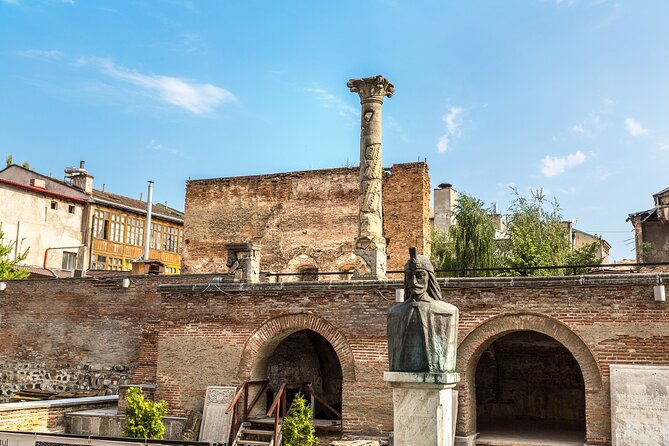
You’ll see the ruins of the Old Princely Palace, described as one of the oldest buildings in Bucharest and once a residence of Vlad the Impaler. That link can grab attention instantly, but the best value here is not the name alone. The guide uses the ruins to talk about time, power, and how sites get reused and reshaped.
Ruins can be hard to interpret on your own, because your eye wants a full building, not scattered fragments. With a guide, those pieces become clues. You’ll likely understand more about how princely life functioned and why this location mattered.
One thing to consider: because you’re looking at ruins, the experience can depend a bit on the weather and light. If it’s bright and dry, it’s easier to spot details. If it’s wet or gloomy, your guide’s explanations become even more important.
St Anton Orthodox Church: rulers, religion, and everyday importance
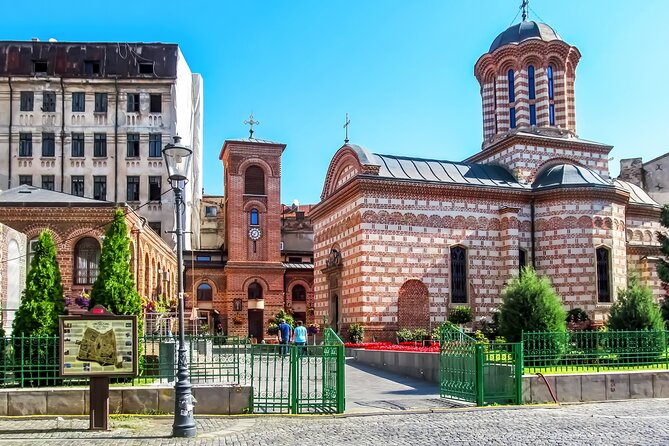
St Anton Orthodox Church is a key stop, and it’s described as a church of Wallachian rulers, located in the heart of Bucharest. The guide’s framing matters because you’re not only seeing a church exterior. You’re learning why it’s tied to leadership and how faith and politics were linked in that era.
When a church is in the middle of a city’s core, it often becomes a landmark people used to navigate life, not just a place for services. That’s the kind of context that makes the building feel less like a random stop and more like a central piece of the city’s story.
If you’re taking photos, give yourself a moment before moving on. This is one where you may want to pause and look before you speed ahead with the group.
Bucharest’s oldest inn, and why inns matter more than you expect
A standout section focuses on Bucharest’s oldest and most famous inn, plus the history of an ancient inn in the oldest part of Bucharest. Inns were not just for travelers. They were where news traveled, people waited, and business happened.
So when the guide talks about these places, you’re really learning about social rhythm. Where did people meet? How did they form alliances or settle disputes? How did commerce flow through the city?
This is also one reason the tour value feels strong for the price. You’re not paying only for a route. You’re paying for interpretation, which turns streets and old building names into something you can carry.
Strada Lipscani: the Old Centre’s main spine
You’ll walk along Strada Lipscani, described as the heart of the Old Centre. This is the part that often feels most “alive,” even during a simple daytime walk. The street is a practical line through time, and your guide helps you connect what you see on the ground to what used to function there.
Lipscani is also a good moment to ground yourself. After a few stops, you’ll have enough context to start noticing patterns, like clusters of older sites, how the street layout likely supported trade and movement, and why certain corners mattered.
If you want to explore after the tour, this is a smart place to keep on your mental map. You’ll know what to look for, instead of wandering with no anchors.
National Bank grandeur and the story behind the former Șerban voda Inn
Next you’ll see the National Bank and hear about its interesting history, plus the presence of ruins from the former Șerban voda Inn. This stop is a great example of how the tour helps you connect two things at once: impressive current architecture and what used to sit there before.
The ruins add depth. You can stand in front of a major, grand building and understand that the city’s important sites did not appear out of nowhere. They were built on older significance, then replaced as power and needs changed.
If you care about how cities evolve, you’ll get a lot from this section. If you don’t, it still gives you a strong “before and after” sense, which is rare on a one-hour walk.
Stavropoleos Monastery built in 1724
The final major highlight is Stavropoleos Monastery, built in 1724. This type of stop works well at the end because you can fold everything before it into one bigger picture: religion, community, and the kind of permanence cities try to create.
Monasteries often serve as both spiritual centers and historical bookmarks. You can use this moment to compare what earlier stops meant, like courts, inns, and administrative buildings, to what the monastery represents in the city’s longer memory.
Even if you don’t go in for a detailed interior visit, the guide’s explanation helps you understand what you’re looking at and why it’s referenced so often.
What you’re really paying for at about $16.77
For around $16.77 per person, the value is tied to three things you can feel right away:
- You get a local guided walking format for about 1 hour
- You have hotel pickup and drop-off from selected hotels
- You get professional guidance that turns names into meaning, not just landmarks
If you’ve ever done a self-led Old Centre walk and ended up with a handful of blurry photos but no clear connections, the guide is what you’re paying for. The price becomes more reasonable because the route is concentrated and the stops are selected to build a simple narrative arc.
Also, the tour uses a mobile ticket, which reduces friction on the day. You still need to show up in the right place, but you don’t have to manage printed paperwork.
Food and drinks are not included, so plan your day accordingly. A quick snack beforehand and a bottle of water can keep you comfortable, especially on a stone-surface walk.
The guide factor: local energy that makes old streets feel clear
The best feedback centers on the guide. One guide, Alina, is called out as very interesting and enjoyable, with humor, passion, and local perspective. That combo matters because it shapes how the story lands.
I like when guides don’t just list facts, they help you rethink what you assumed. That’s exactly what this tour seems to do well, especially when it talks about eras and figures tied to the city’s past.
You’ll also benefit from someone who can pace the group. For a one-hour walk, pacing is everything. Too slow and you lose momentum. Too fast and you miss the point of each stop.
How to prepare: shoes, weather, and what to expect
This experience requires good weather. That’s not a small detail when you’re walking on flag stones. If you’re visiting in rain or after rain, the ground can get slick and the walk gets more tiring.
Bring:
- Sturdy shoes with grip
- A light layer you can adjust for the time of day
- A small plan for a restroom stop earlier in your day, since you are moving between sights
The tour is “most travelers can participate,” and children must be accompanied by an adult. If you have mobility challenges, you should consider whether a stone-surface, walking-first route is comfortable for you. The tour does not list special accessibility details, so it’s worth thinking this through based on your own needs.
Who should book this tour
This Bucharest Old Centre Tour is a strong fit if you:
- Want a quick, guided orientation to the Old Centre in about one hour
- Like learning why places matter, not just what they look like
- Appreciate local storytelling, especially around old courts, inns, churches, and the monastery
- Prefer a private format for your group
It might not be your best choice if you want a long, slow museum-heavy day, or if you hate walking on uneven streets.
Should you book this Bucharest Old Centre Tour?
Yes, if you want an efficient, guided walk that helps you read Bucharest’s Old Centre with confidence. The combination of selected hotel pickup, a concentrated route, and strong guide feedback makes it a smart value for the time. I’d book it early in your visit, so the landmarks you see later feel connected instead of random.
If you’re very price-sensitive and plan to do only self-guided wandering, you could skip it. But if you’d rather pay a small amount to get the context fast, this is the kind of tour that makes the city click.
You’ll leave with a clearer mental map of the Princely Old Court area, Strada Lipscani, the inns, key churches, the palace ruins tied to Vlad, and Stavropoleos Monastery built in 1724. That’s a lot of meaning for a one-hour commitment.
FAQ
How long is the Bucharest Old Centre Tour?
It lasts about 1 hour.
How much does the tour cost?
The price is $16.77 per person.
Is hotel pickup included?
Yes, hotel pickup and drop-off are included from selected central hotels.
Do I get a ticket on my phone?
Yes, the tour includes a mobile ticket.
Where does the tour start?
It starts at the National Museum of Romanian History, Calea Victoriei 12, București 030026, Romania.
Does the tour visit landmarks like inns, churches, and a monastery?
Yes. The route includes stops such as the Princely Old Court, St Anton Church, the former Post Office and National History Museum area, the Old Princely Palace ruins, Strada Lipscani, the National Bank area, and Stavropoleos Monastery built in 1724.
Is this tour private?
Yes. It is private, and only your group participates.
What if the weather is bad or I need to cancel?
The experience requires good weather. If it is canceled due to poor weather, you will be offered a different date or a full refund. You can cancel for free up to 24 hours in advance for a full refund.
Recently added around Bucharest
- Bucharest: Dealu Mare Winery Private Trip with Wine Tasting★ 4.9 · 6 reviews
- Winery touring & private wine tasting – one day private tour★ 5.0 · 3 reviews
- Traditions in Bucharest: Village Museum and Wine Tasting★ 5.0 · 8 reviews
- Village Museum Bucharest Guided Tour★ 5.0 · 6 reviews
- Your rendez-vous with Europe’s past: time-travel to Maramures, Transylvania★ 5.0 · 6 reviews
- Walking Tour of Bucharest City Center – Private Tour★ 5.0 · 4 reviews
- Wine tasting in Bucharest Old town – bonus cheese platter★ 4.5 · 6 reviews
- Private Wine Tasting at Bucharest’s First Wine Bar★ 5.0 · 3 reviews
Tours, compared.
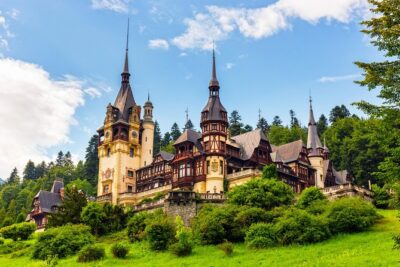
Bucharest to Dracula Castle, Peles Castle and Brasov Guided Tour
Read our review →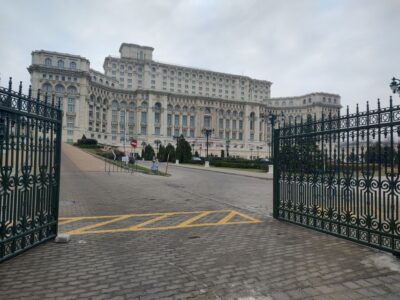
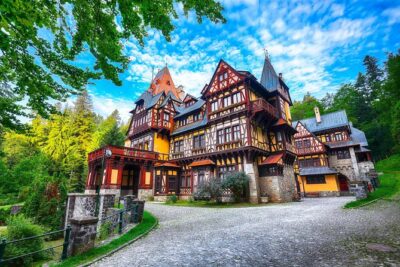
Transylvania and Dracula Castle Full Day Tour from Bucharest
Read our review →
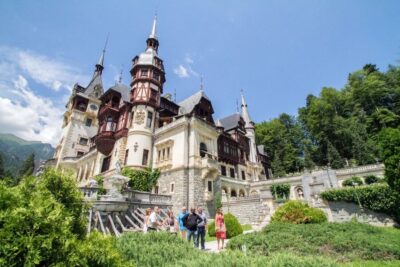
Peles Castle, Bran Castle, & Brasov Old Town Tour
Read our review →
Peles Castle, Bran Castle, & Brasov Full-Day Tour
Read our review →