Reviewed · BUCHAREST WALKING TOURS
Bucharest in a nutshell – half day private walking tour
Bucharest in a nutshell works because it gives you a chronological storyline you can actually follow, from older layers of the city through the Ottoman-influenced details, then into the 20th century and beyond. I especially like the private, flexible pace with a licensed guide, and how you finish with a clear sense of where modern Romania comes from. The only real drawback is that 4 hours is tight, so you’ll want comfy shoes and the willingness to move when your guide suggests it.
In a small group, you also get the kind of guiding that feels sharp, not rehearsed. The guide here, Razvan Trancu, stands out for his humor, punctual timing, and ability to explain big changes in a fun, human way, without losing control of the schedule.
You’ll also get practical pointers beyond the walk. If you ask, your guide can suggest dining and activities, and even help you plan 1-2 day trips outside Bucharest, which is great when you want to go beyond a highlight-only visit.
Key highlights you will feel on this walk
- A true timeline in one half day, so Bucharest’s layers make sense fast
- Biserica Sfantul Anton and Stavropoleos Monastery, built-in stops for understanding older influences
- End-of-century architecture stops along grand streets and palace fronts, not just random sightseeing
- Revolution Square and the Atheneum ending, where the story of the 20th century lands
- Private-group flexibility, so you can linger or skip based on your interests
Starting at Starbucks in Hanul lui Manuc: getting your bearings fast
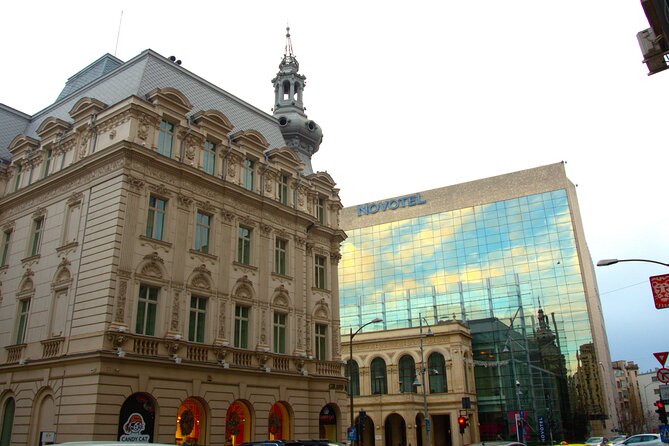
Your tour begins at a simple, easy-to-find spot: the Starbucks coffee shop at Hanul lui Manuc, main door. I like meeting at a recognizable landmark like this because it removes the stress of searching for a meeting point when you are already in “first-day Bucharest” mode.
From there, the guide frames the day as a storyline. You are not just collecting photos, you are building a mental map of how Bucharest grew, what shaped it, and why the city looks the way it does today. Because it is a private group (up to 12), you can ask questions early, and you can also steer the conversation if you care more about politics, architecture, daily life, or the economics of how the city changed.
More walking tours in Bucharest:
- Bucharest: City Highlights Guided Walking Tour
★ 4.9 · 1,482 reviews - Bucharest Highlights Walking Tour
★ 5.0 · 469 reviews - Bucharest: Ghost Stories & Romanian Mythology Walking Tour
★ 4.9 · 287 reviews
Biserica Sfantul Anton: old streets, lived-in faith, and a quick historical on-ramp
One of the first stops is Biserica Sfantul Anton, with a guided visit of about 20 minutes. This is a smart opener because religious buildings often act like time capsules. Even when you do not know the exact date of something, you can feel continuity in the way a city uses certain spaces again and again.
What I like here is that the tour does not treat the church as a stand-alone postcard. Your guide connects it to the bigger story, moving you from later medieval roots toward later influences that show up across the old center. If you have limited time in Bucharest, this kind of “why this matters” context is exactly what turns landmarks into understanding.
Potential consideration: if you are only interested in grand squares and major monuments, you might wish there were more time on the boulevard side. Still, the church stop is short and purposeful, and it pays off later when other buildings start clicking in your head.
Cărturești Carusel: a culture break that keeps the walk human
Next comes Cărturești Carusel for a short visit of about 10 minutes. This is the kind of stop I appreciate on a half-day tour because it breaks the rhythm of monuments and lets you catch your breath.
More importantly, it adds a modern cultural layer without derailing the historical flow. Bucharest is not frozen in time, and stops like this help you remember that the city’s identity includes the way people read, meet, and spend time now. Even if you only do a quick look, it helps the rest of the walk feel less like a museum run and more like a living city.
National Bank and CEC Palace: how finance and power shape the skyline
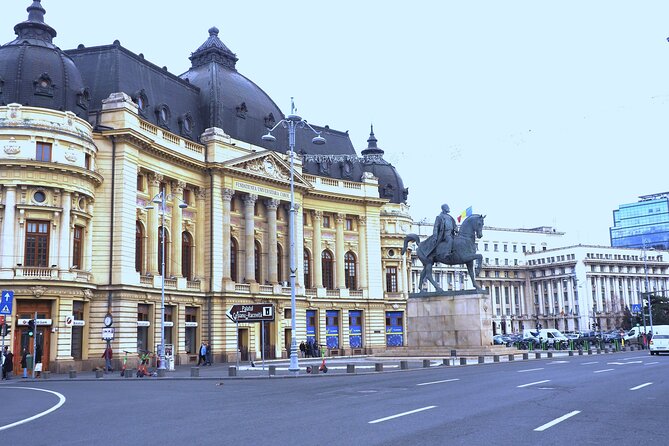
You’ll pass National Bank of Romania and later the CEC Palace, with brief stops around 10 minutes each as you move through the area. These are quick, “look and understand” moments, not long museum-style visits, and that is fine. In a walking tour with a strict four-hour window, you need these efficient beats to cover major themes.
Here’s why these moments matter: banking buildings and palace-front institutions usually tell you how a country sees itself at key turning points. Your guide uses these passes to connect the dots between monarchy-era ambitions, economic growth, and the city’s later architectural confidence. If you enjoy seeing how money and governance leave physical traces, you will enjoy this portion.
Practical tip: because these are pass-by moments, keep your phone camera ready but also listen. The explanation is where the value is.
Other Bucharest tours to compare
- Castles of Transylvania: Private Day Trip from Bucharest
★ 4.5 · 248 reviews - Dracula’s Castle, Peles Castle and Brasov – Private Day Trip from Bucharest
★ 5.0 · 211 reviews - Best of Bucharest | Private Walking Tour
★ 5.0 · 199 reviews - Bucharest Panoramic Sightseeing – Private City Tour
★ 5.0 · 128 reviews
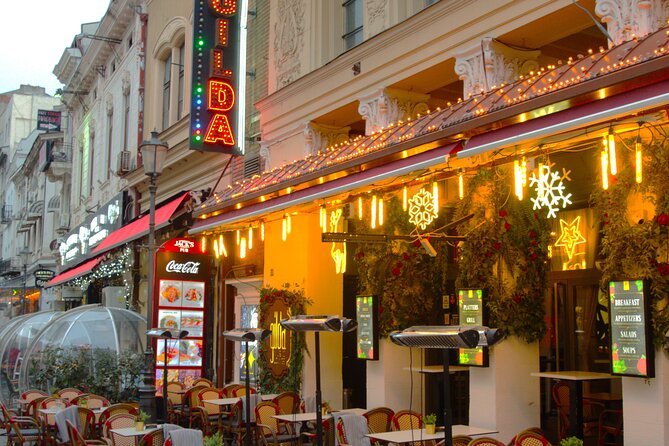
Stavropoleos Monastery: one of the most meaningful stops on the route
After the financial passes, the tour takes you to Stavropoleos Monastery for a guided visit of about 20 minutes. Monasteries can be visually striking, but what makes this one worth your time is the way it anchors the tour’s older layers.
You are walking through an area where the influences feel layered, not single-era. Your guide ties in how later empires and changing cultural currents left marks in the city, including echoes often associated with Ottoman influence remains. You do not need to be an expert to get it. The guide makes the connections step by step so you can recognize patterns as you move.
Potential consideration: this is a sit-and-stand style visit, so if you have mobility limitations, you’ll want to pace yourself. The good news is the tour is designed to be approachable, and it is listed as wheelchair accessible, so confirm the exact pace with your guide when you meet.
Caru’ cu bere: a short stop that shows old-city social life
You also get a brief visit of about 10 minutes at Caru’ cu bere. This is a short enough stop that it will not steal time from the bigger history beats, but it still adds something useful.
I like these “social architecture” stops because they remind you that cities are built not just by kings and regimes, but by everyday gatherings. A famous old restaurant spot can help you visualize what public life looked like before modern Romania’s changes took hold. It also gives you an easy conversational point when you later plan meals, because you already have a sense of where the old-center energy concentrates.
Calea Victoriei and University Square: the boulevard story and the education angle
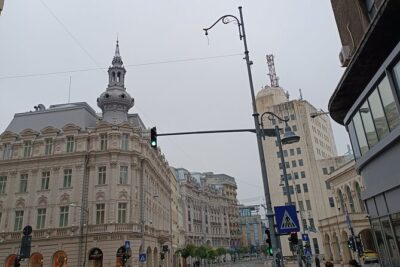
Then the tour shifts toward Bucharest’s grand street energy, starting with Calea Victoriei for about 20 minutes. If you connect this with the idea of Victory Boulevard from the monarchy and late 1800s “glory days” theme, you’ll see why the guide brings you here. This stretch is where end-of-century architecture tends to tell a confident story, and where Bucharest starts looking less like “old streets” and more like a capital showing off.
Next is University Square, Bucharest, a longer guided stop of around 30 minutes. This is one of those areas where history is not just in buildings but in purpose. A university square carries an education and youth pulse, and your guide uses it to widen the context beyond aesthetics.
If you like big-picture storytelling, this section is where it really clicks. You start connecting monarchy-period ambitions, cultural development, and the city’s modern identity into one storyline instead of separate facts.
National Military Circle pass-by: a quick lens on the power structure
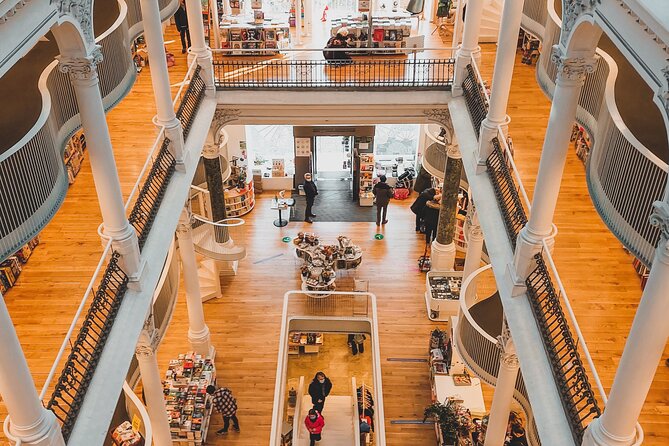
You also pass National Military Circle for about 10 minutes. Since it is a pass-by, you will not get a deep visit, but you do get a lens. Power has always shaped cities, and military institutions tend to be built in visible places.
I find pass-by stops useful on walking tours when the guide includes clear context. If your guide frames it well, you understand why it is there and what it symbolized, even without going inside.
Revolution Square: the 20th century stops being abstract
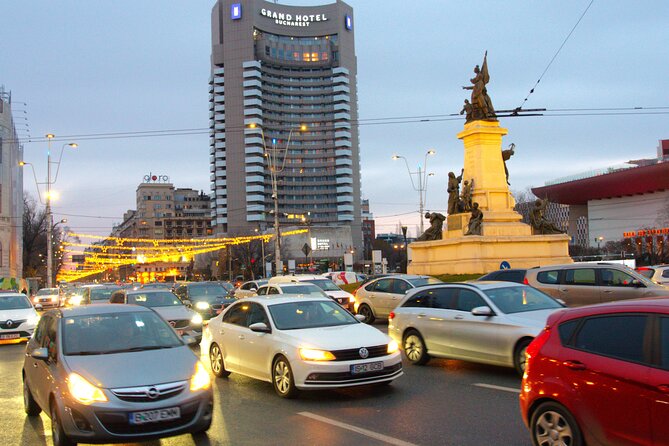
Now you reach the emotional center of the tour: Revolution Square, Bucharest, with a guided visit of about 30 minutes. This is where Bucharest’s modern and recent story turns darker, tied to the Communism period and the revolution that followed.
What I like about this part is the tour’s tone and structure. It does not treat this era as distant trivia. Instead, your guide walks you through what the “gruesome social experiment of Communism” meant in lived terms, then shows how Revolution Square became a visible stage for political change. The result is that you leave the square with a stronger sense of why this city remembers what it remembers.
If you have a history bias, this is likely the section you will remember most.
The Romanian Athenaeum ending: closure with a landmark you can build around
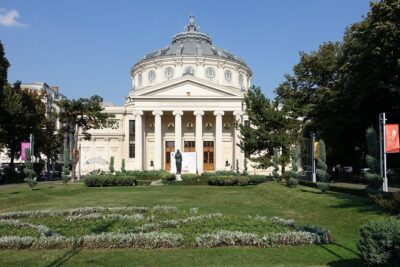
The tour finishes at the Romanian Athenaeum. Ending here works well because it is a visible anchor that helps you summarize the walk. By the time you arrive, you have already covered older layers, monarchy and architectural ambition, and the heavy 20th century shift. The Athenaeum gives you a strong final image tied to culture, public life, and Bucharest’s self-presentation.
Even if you only have a short time inside or around the building, you will use it later as a reference point. You’ll know where you are on the city story map, not just where you are on the city map.
Why the guide matters: Razvan Trancu’s humor plus strict time control
The strongest praise for this experience centers on the guide. Razvan Trancu is described as an encyclopedia, with the rare combination of huge information and the ability to deliver it in a fun, exciting way. You can also feel his communication skills and the way he keeps timing tight, while staying flexible when you ask for something specific.
That matters more than people think. A private walking tour can go off track fast, especially when the group size is small and the interests vary. Here, the guide’s punctuality, humor, and flexibility help keep the experience both informative and relaxed. You are not just “being shown,” you are being guided.
If you like asking questions, this tour is set up for that. If you prefer a more structured explanation, the chronological flow already gives you a backbone.
Price and value for a group of up to 12
At $188 per group (up to 12 people) for 4 hours, the pricing structure is built for shared cost. The value depends on your group size, but even for a small group, you are paying for more than a walk. You are paying for a private, licensed local guide and a route that covers multiple eras in one half day.
Here is what you are getting for that money that a basic “self-guided” approach cannot deliver:
- A chronological storyline that ties stops together instead of making them random
- Licensed local guiding in English, Italian, or Spanish
- Flexibility to customize based on your interests
- Practical suggestions for dining and additional local activities, including 1-2 day trips outside Bucharest
If you are traveling as a couple or a small group and you want your first impression of Bucharest to feel coherent, this price can make sense quickly.
Potential consideration: if you are traveling solo and you do not share the group cost, it can feel pricier than a standard group tour. In that case, treat it as a “get it organized fast” option, then spend the rest of your time exploring on your own.
How to make the most of a fast, four-hour timeline
A half-day walk is ideal when you want orientation. It is also a test of stamina, so do a little prep:
- Wear shoes you can handle for several hours on sidewalks and around squares.
- Bring water, because snacks are not included.
- Have 2-3 questions ready. Ask early so the guide can tailor the story.
- If you want more time at a stop like Stavropoleos Monastery or Revolution Square, say so. The tour is designed to be flexible and interactive.
Also, if you have wheelchair access needs, this tour is listed as wheelchair accessible. Still, since pace and stop length can vary, confirm the pace you need once you meet your guide.
Who should book this tour, and who might skip it
This is a great fit if you want:
- A first-time orientation to Bucharest that actually makes chronological sense
- A private setup where you can customize your interests
- A guide-led mix of older landmarks, grand boulevard architecture, and 20th century history
It may be less ideal if you:
- Want a deep, museum-style visit where you stay in one place for a long time
- Prefer slow travel with minimal walking
- Are not interested in political history, since Communism and Revolution Square are central to the story
Should you book Bucharest in a nutshell?
If you only have a half day and you want the city to connect in your head, I’d book it. The timing is right, the route covers the big emotional and architectural beats, and the guiding quality, especially with Razvan Trancu’s humor and pacing, is the kind that makes history feel clear instead of heavy.
Book it with confidence if you like structured storytelling and you want a local perspective that turns landmarks into meaning. Skip it only if you want a mostly relaxed, slow-paced stroll with no urgency.
FAQ
How long is the Bucharest in a nutshell half day private walking tour?
It lasts 4 hours.
What is the price for this tour?
It is $188 per group, up to 12 people.
Where do we meet for the tour?
Meet at the Starbucks coffee shop at Hanul lui Manuc, main door.
What does the tour include?
You get a private tour with a local licensed tour guide, plus suggestions for other local activities including 1-2 day tours outside Bucharest.
Are meals or snacks included?
No, snacks are not included, and there are also personal expenses not included.
What languages is the guide available in?
The live guide is available in English, Italian, and Spanish.
Is the tour wheelchair accessible?
Yes, it is listed as wheelchair accessible.
What is the cancellation policy and can I pay later?
Free cancellation is available up to 24 hours in advance for a full refund. You can also reserve now and pay later.
Recently added around Bucharest
- Bucharest: Dealu Mare Winery Private Trip with Wine Tasting★ 4.9 · 6 reviews
- Winery touring & private wine tasting – one day private tour★ 5.0 · 3 reviews
- Traditions in Bucharest: Village Museum and Wine Tasting★ 5.0 · 8 reviews
- Village Museum Bucharest Guided Tour★ 5.0 · 6 reviews
- Your rendez-vous with Europe’s past: time-travel to Maramures, Transylvania★ 5.0 · 6 reviews
- Walking Tour of Bucharest City Center – Private Tour★ 5.0 · 4 reviews
- Wine tasting in Bucharest Old town – bonus cheese platter★ 4.5 · 6 reviews
- Private Wine Tasting at Bucharest’s First Wine Bar★ 5.0 · 3 reviews
Bucharest Walking Tours, compared.
Ghost Stories & Romanian Mythology Walking Tour
Read our review →
Walking Tour- Delightful Bucharest (Highlights, Stories, Sights)
Read our review →
4h Bucharest Private Tour (2h by Car and 2h Walking in Old Town)
Read our review →
Browse the lists this tour appears in