Reviewed · BUCHAREST
Bucarest à vélo
Bucharest by bike is interesting because you get the city’s modern turning points on wheels, not in a stuffy lecture hall. I like that the route is built around clear history stops (monarchy, World War I, communism, and its end), and I also like the very practical setup, including use of a bike plus a drink along the route. One possible drawback to consider: it is a 3 to 4 hour ride, so if you want a long sit-down at each landmark or deep museum time, you will have to choose what to do with your extra hours.
This is led by a pro guide, and the bike time format keeps it from feeling like a checklist. In one past group experience, the guide Ionut stood out for explaining things in a way that worked even when English was not the only language in the group, and the pace felt right for hot weather. Still, you should plan for a bit of riding between stops, so comfortable shoes and a water plan matter.
Key points to know before you ride
- A tight 3 to 4 hour loop that hits major Bucharest landmarks without turning into a long bus day
- Comfortable, mechanically sound bikes that make the riding part feel easy and low-stress
- A guided story of the 20th century, from the Triumph Arch to communism-era architecture and the Revolution Square area
- Coffee or tea plus photos on the route, so you are not just moving, you are also capturing it
- Most stops have no admission fee, with only an optional small add-on at Ateneul Roman
- Private group experience, so your group stays together and the pace can work for you
Why riding Bucharest beats a bus day
Bucharest is one of those cities where the street layout and the architecture matter. On a bus or walking tour, you often miss the rhythm. Cycling keeps you close to the city, so you can spot details, feel the neighborhoods shift, and connect what you are seeing to what your guide is explaining.
This tour is also a strong value choice if you like context. The stops are not random. They are arranged like chapters, with quick story stops that are long enough to make the next place click, but short enough that you keep momentum. That matters, because you are paying for time on the bike and for a guide who can turn a drive-by into real understanding.
I also like that the experience includes more than just sights. You get a drink, and you get photos along the route. It is a small thing, but it helps you feel like the time is being captured, not lost to your own phone battery.
Other tours around Bucharest:
- Bucharest: Dracula’s Castle, Peles Castle, & Brasov Old Town
★ 4.5 · 17,858 reviews - Bucharest: Dracula Castle, Peles Castle & Brasov Old Town
★ 4.6 · 10,891 reviews - Bucharest: Dracula’s Castle, Peleș Castle & Brașov Day Trip
★ 4.5 · 5,919 reviews
Starting at Piața Presei Libere, and how the tour flows
You begin at Piața Presei Libere, Sector 1, and the tour ends back at the same meeting point. The start location is convenient in practical terms because it is near public transportation. That reduces stress on travel day, especially if you are arriving from another part of the city.
The format is designed to move. Each stop is timed in a way that keeps you from circling the same area too long. You are looking at about 3 to 4 hours total, which makes it a good half-day plan when you still want to keep your afternoon or evening free.
Also, this is a private tour/activity, meaning only your group participates. If you are traveling with friends, teenagers, or a mix of ages, it is often easier to stay together than in a large shared group. The pace is described as a good fit for hot summer conditions too, so it tends to feel realistic rather than rushed.
Triumph Arch: monarchy and World War I in a quick, meaningful stop
The tour’s first landmark is Arcul de Triumf, the Triumph Arch. This is not just a photo moment. You get a short story about the monarchy and how Romania’s early 20th-century path connects to World War I.
I like this kind of first stop because it sets the lens for everything that follows. Bucharest has multiple eras layered on top of each other. Starting with a monument tied to monarchy and WWI helps you understand why later communist-era architecture feels so different.
Practical tip: plan to be ready with your camera early. At this stop, you are looking at about a 5 minute window and the admission ticket is free. That is perfect for quick context, but it also means you should not expect long wandering.
Herastrau Park: Bucharest’s big green break for cyclists
Next you ride to Herastrau Park, which is described as the largest park in Bucharest. In a tour that deals with heavy political themes later, this stop is a reset button. It is also very suitable for cycling, which is exactly what you want when the itinerary is partly “get on, ride, listen, move on.”
Why it helps: you get a visual breathing space in the middle of the route. You can see how green areas fit into the city plan, and you get a moment where the guide’s job is easier because you are simply soaking in the setting.
Timing here is about 20 minutes, and admission is free. That amount of time is enough to stretch your legs and re-center, without turning the tour into a long park picnic.
A different kind of day out:
- Bucharest: Palace of Parliament Tickets and Guide
★ 4.3 · 3,182 reviews - Bucharest: Day Trip to Dracula Castle, Peles Castle & Brașov
★ 4.4 · 3,049 reviews - Bucharest to Dracula Castle, Peles Castle and Brasov Guided Tour
★ 4.5 · 2,933 reviews - Bucharest: Palace of Parliament Tickets and Guided Tour
★ 4.4 · 1,877 reviews
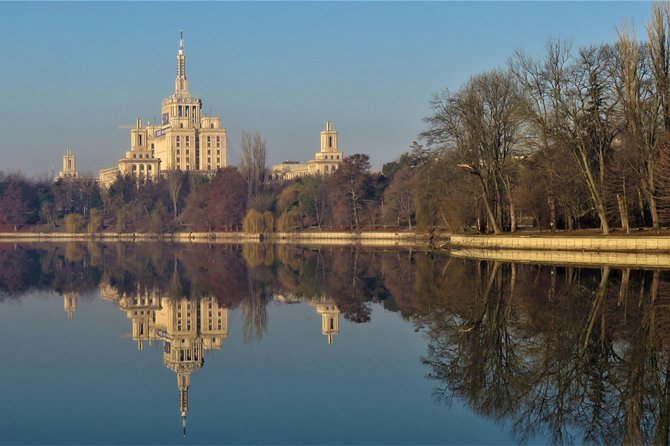
House of the Free Press: reading communism-era architecture
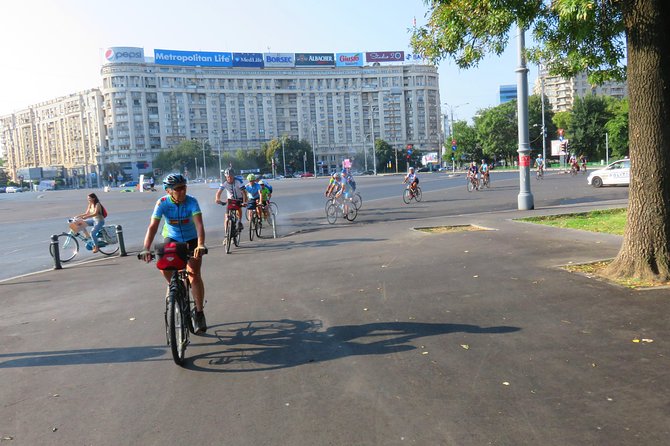
The route then goes to the House of the Free Press, a communism architecture building. This stop is short, and the emphasis is on recognizing the style and understanding why it was built the way it was.
This is one of the places where a good guide matters. Without context, communist-era buildings can blur together into a grey stamp. With the right framing, you start noticing patterns: scale, form, the way public power shows up in stone and symmetry.
Admission is free, and the stop fits into the tour’s quick chapter style. If you are the type who likes to return later for more photos or a closer look, this is also a great “preview” stop that can guide what you choose to do after the tour.
Piaka Revolukiei: the end of communism as a city landmark
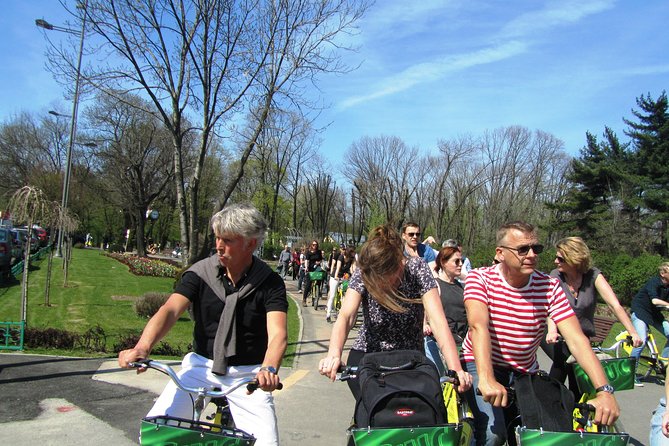
After that, you reach Piaka Revolukiei, a square tied to the end of the communism regime in Romania, along with a memorial. This is where the tour’s political storyline lands.
I like that the itinerary does not treat this as a random monument. It is presented as the end point of a bigger arc, so you understand what came before. If you have been to other European cities, you will recognize how important these squares are. They are where a city makes its memory visible.
Timing is about 10 minutes, free admission, and the goal is to get the meaning, then keep moving. If you want to linger longer, you will have to do that on your own after the ride, but the tour gives you enough context to make your extra time feel intentional.
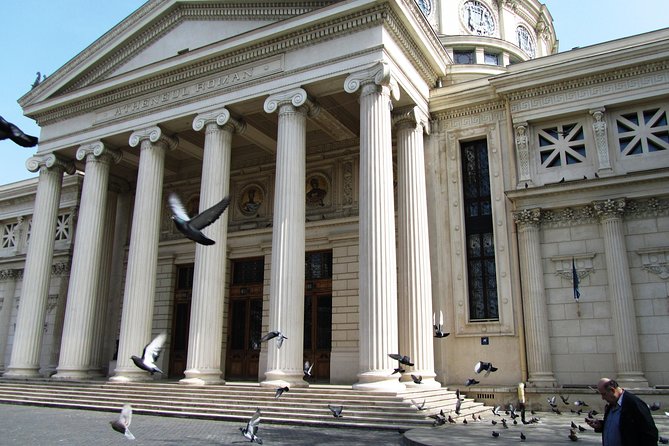
Ateneul Roman: an architectural symbol, with an optional add-on
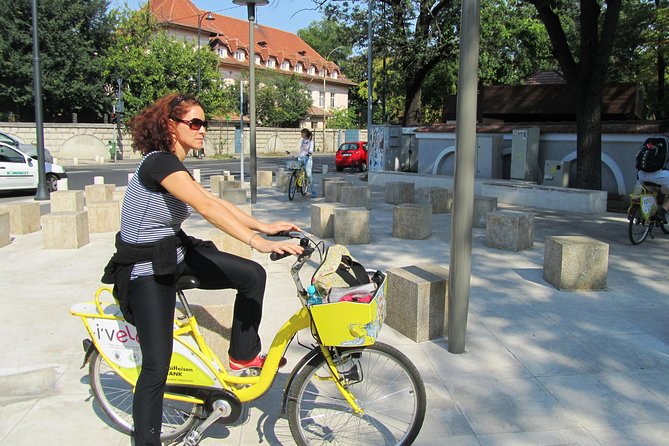
The tour continues to Ateneul Roman, described as an architectural symbol and a living story of the city. The stop is about 5 minutes, with free admission for the included viewing.
There is also an optional visit. If you want to step in, there is a 10 Lei fee mentioned for the site visit. This is a nice option because it lets you choose your style. Some people want the exterior and the story. Others want to see what is inside, even if it means paying a small extra amount.
Practical thought: since the listed time at the stop is short, you may want to decide quickly if you are going to take the optional entrance. If you do, plan your budget for that 10 Lei addition. If you skip it, you still get the main architectural context.
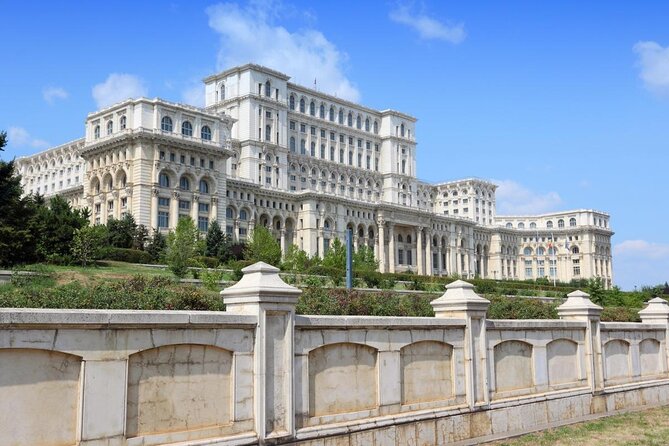
Palace of Parliament: the biggest finale on a bike
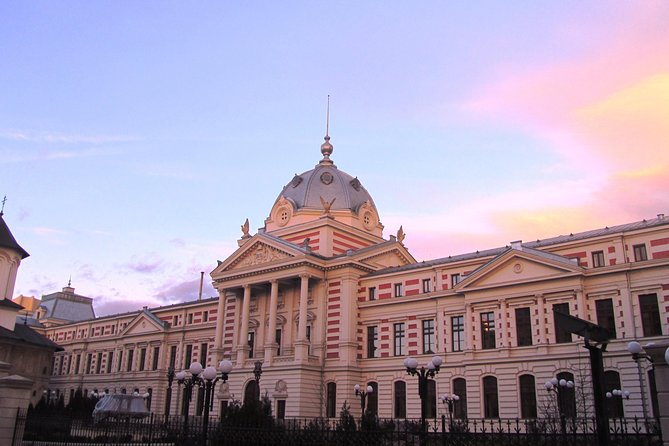
The last major stop is the Palace of Parliament. The tour calls it the heaviest building in the world and the second largest, after the Pentagon. It also explains that it was built by communist dictator Ceausescu.
This is a “wow” stop, but it can also be a “how did this happen here?” moment. The building’s scale changes how the city feels around it. Riding up to it rather than arriving by taxi makes that scale hit differently, because you are moving through the space instead of just seeing it from a stationary viewpoint.
Timing is about 5 minutes, and admission is free for the included portion. If you are hoping for a long interior visit, this is not the structure of the tour. Think of it as a strong landing point that gives you the basics and points you toward what you might study further later.
Price, included extras, and where the value really comes from
The price is $35.50 per person for 3 to 4 hours. On paper, that is not just “pay for a bike.” You are also paying for professional guiding with more than 10 years experience, a drink along the route, photos, and organized stops.
Here is why that value can make sense: Bucharest’s highlights are spread enough that you benefit from bike transportation, but the historical storyline is where the paid portion really pays off. A good guide turns a monument into a timeline, and a timeline helps you remember what you saw days later.
Included:
- Coffee and/or tea along the route
- Use of a bicycle
- Photos along the route
- Professional guiding with +10 years experience
Not included:
- Lunch and dinner
- Other additional fees, except what is already mentioned (the optional 10 Lei visit at Ateneul Roman)
If you plan your day around this, you can keep meals flexible. It works well as a morning or early afternoon activity, then you can eat wherever you want afterward.
Pacing, comfort, and how to get the most out of your ride
This is described as suitable for most travelers. It is not framed as a high-endurance cycling adventure. The pace is called just right, including for a hot summer day, which tells me the ride time is balanced with stops and short explanations.
The bike details that came up in prior experiences also matter. Bikes were described as new and light, rolling easily, and mechanically sound. That helps a lot because nothing kills a sightseeing mood faster than friction, wobbles, or gear issues.
What you should do to match the pace:
- Bring water, especially in warm months
- Wear comfortable shoes, since you will step off and walk briefly at landmarks
- Be ready for quick stop windows, so you can take photos efficiently
Also, since you get photos along the route, it is worth paying attention when the guide signals a good moment. Those photos are part of the value.
Who this tour fits best
This ride makes sense if you want:
- A non-touristy feeling, without losing the big landmarks
- History with clear locations, not just a spoken lecture
- A manageable half-day plan that still feels substantial
It is a good fit for families with teenagers, and it also works for couples who want a shared experience that is more active than walking. If you are a solo traveler, a private group format can still be reassuring because you stay in your own orbit instead of getting swallowed by a huge crowd.
If you are the type who loves architecture and political history, you will appreciate how the route moves from the monarchy and WWI context into communism-era architecture, then to the end of the regime, and finally to the Palace of Parliament.
Should you book Bucarest à vélo?
Book it if you want Bucharest in a few hours, with a guide who helps you connect the dots. The biggest reason I would say yes is the structure: you get quick, meaningful chapters instead of random stops. The bike setup, the drink, and the photo extras make it feel like a complete experience rather than a basic transport service.
Skip it if you are looking for long museum time, extended indoor visits, or a slow wandering day. The stops are short by design, so the best experience is when you treat each place as a prompt, not a full-day deep study.
If the weather is good, this is a smart, efficient way to get the city’s layers into your head quickly and then build from there on your own.
FAQ
How long is Bucarest à vélo?
The tour lasts about 3 to 4 hours.
What does it cost?
It costs $35.50 per person.
Is the tour guided?
Yes. You get professional guiding with more than 10 years experience.
What is included in the price?
The tour includes a bicycle, coffee and/or tea along the route, photos, and the guided service.
What is not included?
Lunch and dinner are not included, and other additional fees are not included except the optional 10 Lei fee at Ateneul Roman.
Where is the meeting point?
The tour starts at Piaţa Presei Libere, Sector 1, Bucharest, Romania.
Does the tour end where it starts?
Yes, it ends back at the same meeting point.
What language is the tour offered in?
The tour is offered in English.
Do you pay entry fees at the stops?
The listed stops have free admission tickets, and the only specifically mentioned paid option is the optional visit at Ateneul Roman for 10 Lei.
What is the cancellation and weather policy?
There is free cancellation up to 24 hours in advance for a full refund. The experience requires good weather, and if it is canceled due to poor weather, you will be offered a different date or a full refund.
Recently added around Bucharest
- Winery touring & private wine tasting – one day private tour★ 5.0 · 3 reviews
- Bucharest: Dealu Mare Winery Private Trip with Wine Tasting★ 4.9 · 6 reviews
- Traditions in Bucharest: Village Museum and Wine Tasting★ 5.0 · 8 reviews
- Village Museum Bucharest Guided Tour★ 5.0 · 6 reviews
- Your rendez-vous with Europe’s past: time-travel to Maramures, Transylvania★ 5.0 · 6 reviews
- Walking Tour of Bucharest City Center – Private Tour★ 5.0 · 4 reviews
- Wine tasting in Bucharest Old town – bonus cheese platter★ 4.5 · 6 reviews
- Private Wine Tasting at Bucharest’s First Wine Bar★ 5.0 · 3 reviews