Reviewed · PRIVATE
8 Days Private Romania Tour from Bucharest
This private Romania tour is interesting because you do not just hop between sights, you ride the road that links them, day after day. I especially like the private car setup and the fact that your English guide/driver, Nicolas, stays with you throughout, so you can ask questions in real time.
I also love the mix of big-name icons and offbeat stops, like the cliff ruins at Poienari and the colorful Merry Cemetery in Sapanta. One possible drawback: entrance fees are not included, so the total trip cost can rise once you add tickets at each stop.
Key things that make this tour work
- A guide who brings Romania to life (Nicolas): punctual, friendly, and prepared, with stories and jokes that keep long drives from feeling long
- Private, flexible driving: a car just for your group, with room to adjust the daily flow after you start
- A best-of route across regions: Wallachia, Transylvania, Maramures, Bucovina, and back toward the Carpathians and castles
- Season matters for the big highway moment: the Transfagarasan Highway is fully open only June to October
- You get “views plus meaning”: castles and monasteries paired with moments that explain why the country remembers its past
Private driving across Romania: what you’re really buying

You’re paying for comfort, time, and a smoother route than a bus-and-ferry style trip. The private car means you do not lose half a day coordinating connections, and it also makes frequent stops easier when a viewpoint or church is worth your full attention.
Another real advantage is that the guide is not an on-and-off “meet here, done” situation. You have a private, licensed English-speaking guide/driver available throughout the tour, plus complimentary wireless internet in the car. That matters when you want context, not just dates, and it also matters on driving days when you want the story behind what you are passing.
Value-wise, the headline price is $2,825.81 per person for 8 days. But remember what is missing: accommodation, meals, and most attraction entrance fees are not included for you. In other words, this is a strong “transport plus guiding” deal, and the best way to judge value is to compare it to what you would spend on a private driver plus separate tickets and hotels.
Other Bucharest tours to compare
- Castles of Transylvania: Private Day Trip from Bucharest
★ 4.5 · 248 reviews - Dracula’s Castle, Peles Castle and Brasov – Private Day Trip from Bucharest
★ 5.0 · 211 reviews - Best of Bucharest | Private Walking Tour
★ 5.0 · 199 reviews
Day 1 in Wallachia and the Carpathians, starting with real power centers
Your first day sets the tone with royal sites and defensive ruins, then hits one of Romania’s most famous road drives.
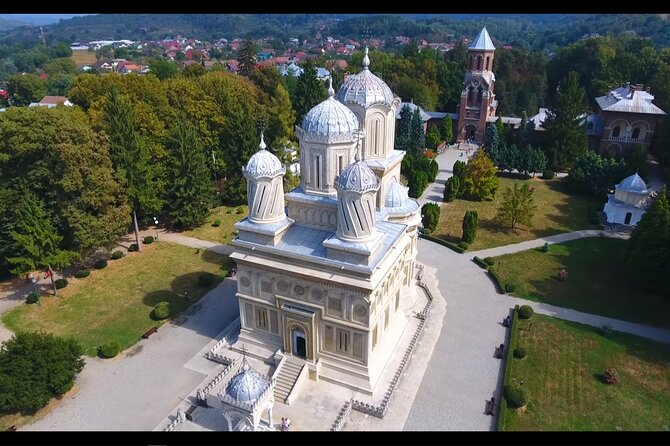
Curtea de Arges Monastery, royal tombs and a bittersweet backstory
You start at Curtea de Arges Monastery, known for important royal tombs. The stop includes time to see the ruins of the Wallachian princely court and the 13th-century Royal Church, plus the Arges Monastery itself.
The upside here is tone. Instead of starting with a single pretty church, you get a sense of how Wallachia’s rulers shaped the region, and why the stories around this site feel heavy.
Poienari Castle ruins above the Arges River
Next comes Poienari Castle ruins, perched high on a cliff over the Arges River in the foothills of the Carpathians. The fortress traces back to the early 13th century, and it is tied to major historical moments, including the Turks capturing it in 1462, Vlad’s escape via a secret passage, and the later consolidation and repairs by Wallachian rulers.
This is a stop that makes Romania feel physical, because you are seeing what power looked like when defense mattered more than comfort. The practical thing to consider is pacing: the itinerary gives about 2 hours here, and castle ruins often involve uneven ground and stairs.
A different kind of day out:
- Bucharest: Dracula’s Castle, Peles Castle, & Brasov Old Town
★ 4.5 · 17,858 reviews - Bucharest: Dracula Castle, Peles Castle & Brasov Old Town
★ 4.6 · 10,891 reviews - Bucharest: Dracula’s Castle, Peleș Castle & Brașov Day Trip
★ 4.5 · 5,919 reviews - Bucharest: Palace of Parliament Tickets and Guide
★ 4.3 · 3,182 reviews
Piata Mare in Sibiu, then the Transfagarasan Highway drive
Later, you hit Piata Mare, with the tour description also pointing you toward Sibiu highlights like the Evangelical Cathedral and the Sibiu Old City Center. This is a classic “old town clarity” stop. A square like Piata Mare gives you an easy way to orient fast and feel the town’s scale.
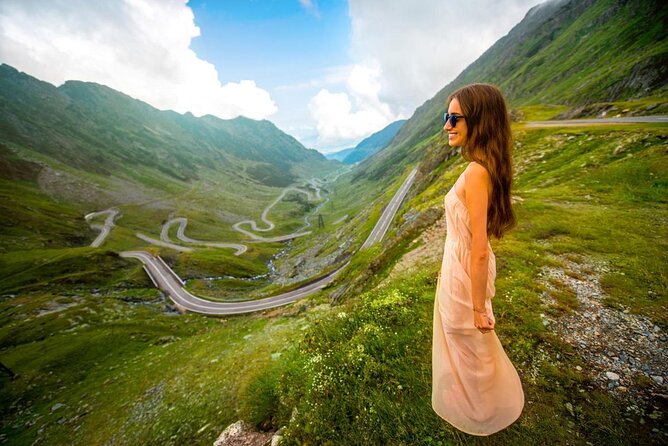
Then comes Transfagarasan Highway, Romania’s best-known road. The important practical detail: it is fully open only June to October, and the highest point is 2042 meters, with a tunnel linking the northern and southern sides at Lake Balea. If you’re traveling outside that June to October window, you should expect the highway segment in this plan may not match the same full access.
Day 2: salt air, wooden craft, and the Surdesti church that still feels impossible
Day 2 keeps the “Romania as a mix of human work and natural setting” idea going, but the stops are more varied in texture.
Salina Turda, Roman salt traces and underground wonders
Salina Turda is described as a place where the saline air helps your lungs, which is especially relevant if you have respiratory allergies or asthma. You also get the human-history side, including vestiges of Roman heritage and the long timeline of salt mining.
What I like about this stop is that it is not only about being underground. You can see named mines such as Iosif, Terezia, and Rudolf, medieval salt exploitation machinery unique in Europe, including the crivac (or gepel), a salt mill, and details like an altar carved in the salt wall and the Stairway of the Rich. It is hard to picture a “salt museum” until you are there, then it clicks.
Gradina Botanica Alexandru Borza, short but scenic
Next is the Gradina Botanica Alexandru Borza, scheduled for about 1.5 hours. The provided text also mentions a Cluj Napoca city tour angle, with a focus on older architecture and different styles. If your day feels like it includes both garden time and city time, that is exactly the point of a private route, you can adjust the emphasis without losing the day.
Surdesti Wooden Church, 54 meters of wooden achievement
You finish with Surdesti Wooden Church, with towers measuring an impressive 54 meters. The church is dated to 1721 and is presented as a major architectural masterpiece, built with craftsmanship that still feels mind-bending compared with modern methods.
This stop is short at about 45 minutes, so prioritize what you want most: the exterior towers and overall proportions, or details inside. If you are the type who likes photos, plan for a little extra time at the best angles, because your photo time here can turn into your favorite memories of the trip.
Day 3 in Maramures: comedy carved in wood, and a serious lesson in memory
Day 3 swings between light and heavy. That rhythm is a big part of why Maramures works as a region for a tour like this.
Merry Cemetery in Sapanta, poems on the crosses
The Merry Cemetery in Sapanta is built around a tradition tied to Dacian beliefs, with an emphasis on laughing at funerals and crying at births. The key idea is simple: the tomb markers and crosses have humorous poems about the deceased, and you will likely find it genuinely funny.
The practical side: this is about 1 hour. If you want to read poems closely, go slower. If you mostly want the overall effect, a quick pass is still worth it.
Memorial of the Victims of Communism and the Resistance
Then you shift into the Memorial Museum for the Victims of Communism and the Resistance. The tour description frames it as a place that helps you understand how damaging the totalitarian regime was and the pain it brought in a short time.
This is one of those stops that benefits from a guide who can explain. Without extra context, a memorial can feel like a building with words. With guidance, it becomes clearer why the people rebuilt their lives and their politics after.
Sapanta-Peri Monastery, stone next to a wooded setting
Finally, Sapanta-Peri Monastery is about 45 minutes. The wooden church is referenced for its 1391 date, while the text also explains how lands and properties were donated and how for 312 years the stone church served as headquarters of the Romanian Diocese of Maramures. It even lists the patron saint as Archangel Michael.
This is a good cooldown after the memorial stop. It is also a reminder that Maramures is not only about woodcraft, it has layers of religious history.
Day 4: Barsana and the long mountain road to Ciocanesti color

Day 4 is where you feel the region’s scale. You have both tall wooden monasteries and the kind of mountain driving that makes Romania look bigger than photos.
Barsana Monastery, one of the tallest wooden churches
Barsana Monastery is described as one of the tallest wooden churches in Romania, at 57 meters height. The itinerary gives about 45 minutes, which is enough for the main viewpoints and photos if your group stays focused.
Tihuța Pass, an Austro-Hungarian-built crossing
After Barsana, you drive through Tihuța Pass, also called Borgo Pass. It sits at 1201 meters and crosses the Bârgău mountains between Moldavia and Transylvania.
The text notes the road was first built between 1812 and 1817 at the initiative of the Austro-Hungarian Army, then paved in 1969 and asphalted later. You are told traffic can be busy and you might get stuck behind trucks, but villages along the route are limited, so cruising speed is acceptable.
For you, that means this is not a day to plan a tight shopping schedule. It is a driving and sightseeing day, and it works best if you accept that the road comes with slower stretches.
Ciocanesti, a painted village with a big reputation
You then visit Ciocanesti, a colorful village in Northern Romania that appears in Lonely Planet’s Places that pop list. The pitch here is simple: the village is painted in bright colors, described as looking like Easter eggs.
This is a “wow, I did not expect that” stop. It is also likely to be very photo-friendly. Just remember it is listed for about 1 hour, so you might only see the village’s main areas.
Day 5: Bucovina painted monasteries, plus the egg museum
Day 5 is all about Christian art in the north, especially the famous painted monasteries of Bukovina. If you like churches, this is the day.
Voroneț Monastery, the blue fresco nickname and the quick timeframe
Manastirea Voronet was built in 1488 by Stephen the Great over about 3 months and 3 weeks, to commemorate the victory at the Battle of Vaslui. It is commonly called the Sistine Chapel of the East, and the frescoes use an intense shade of blue known in Romania as Voroneț blue.
You get about 45 minutes here. That is short, but the focus is clear: go in with one goal, the blue frescoes, and spend your time on the most impressive sections instead of trying to read everything.
Humor and Sucevita, fortified monasteries that survived
Humor Monastery is described as a fortified monastery that endured over centuries. It survived after the first church around 1400 was destroyed, and it is about 500 years old in its current form.
Sucevita Monastery is framed as UNESCO World Heritage. The stop focuses on biblical scenes and icons painted on the walls and the fortified church’s layout, described as like an open book inside.
If you want context, ask the guide what to look for in each painted layer. With a private route, you can make this a guided visual experience rather than a quick checkpoint.
Moldovita Monastery, murals inside and outside
Moldovita Monastery is described as one of the oldest monastic settlements in Romania, built in 1532, with murals both inside and outside. The fortified church is described as combining Byzantine, Gothic, and Moldavian style.
This is the kind of stop where you might feel you need more than 45 minutes, but you can still get a strong first impression. Keep your eye on the overall architecture first, then switch to mural details.
Lucia Condrea egg museum, 5,500-plus exhibits
The last stop is the Muzeul International al Oualor Lucia Condrea in Moldovita. Opened starting in the summer of 1993, it is described as unique, with over 5,500 exhibits in 56 display cases across two levels.
This is an oddball, fun counterpoint to the religious sites. It also makes Day 5 less predictable, which I like. If you are traveling with kids or anyone who gets museum fatigue, this could be the best mental break of the trip.
Day 6: Bicaz Gorges, Red Lake, and a sculptor who refused to disappear
Day 6 is nature heavy, with one creative museum stop that adds a human story.
Bicaz Gorges, 8 kilometers of sharp road views
Bicaz Gorges is described as a passage between Moldavia and Transylvania, carved by the Bicaz River. The itinerary calls out wallcreeper birds, and the road along the 8 kilometers of ravines with serpentines and steep drops is framed as one of Romania’s most spectacular drives.
The “consideration” here is simple: if you get motion sickness, you might want to plan how you’ll handle winding roads. It helps to sit in the seat with the best view and keep your eyes on the horizon.
Lacul Roșu, landslide origin and mountain calm
Lacu Rosu, the Red Lake, is near Bicaz Gorges and is described as a young formation caused by a landslide in the 19th century. The text mentions discussions about the formation year, including references to January 23, 1838 earthquakes and related violent storms and heavy rains.
This stop is only about 45 minutes. Use it as your decompression after the gorge driving, then roll into the next cultural stop without rushing.
The Popa Museum, naive sculpture shaped by imprisonment
The Popa Museum is in Tarpesti, Neamt County, about 12 kilometers away from Targu Neamt. It was founded in the 1970s by Nicolae Popa in his own house, and the story is powerful: after being wounded in WWII, imprisoned by communists, and left without possessions besides his house, he dedicated himself to preserving Romanian values through art.
This is a rare museum type: one man’s home turned into a message. It also explains why the guide experience matters here. The story makes the sculptures more than objects.
Day 7: medieval Sighișoara, Viscri’s fortified life, then Brașov’s market square
Day 7 returns to towns, but keeps the medieval and historic mood front and center.
Sighișoara Clock Tower and Arms museum
You start in Sighișoara Old Town with time at the Clock Tower and the Arms museum. The itinerary also calls Sighișoara a medieval town and cites Vlad the Impaler, describing him as born there.
The citadel is said to have been built in 1280 and still be inhabited for over 700 years, which is a big part of its appeal. The practical thing to remember is that 2 hours can fly by in a medieval center, so decide what you want most: tower views, museum time, or wandering.
Village de Viscri, fortified church and a modern safety net
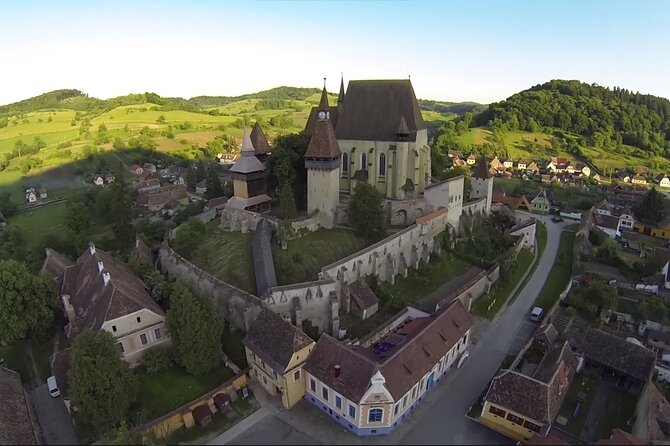
Viscri is about 2 hours and described as having history going back to the 12th century. The text highlights a fortified church, Prince Charles’ visits, and the Mihai Eminescu Trust as key to the village’s reinvention.
This is a good stop if you want a slower, rural feel without losing a strong anchor point. A village stop like this also balances the castles and monastery days.
Piața Sfatului in Brașov, market history with a long timeline
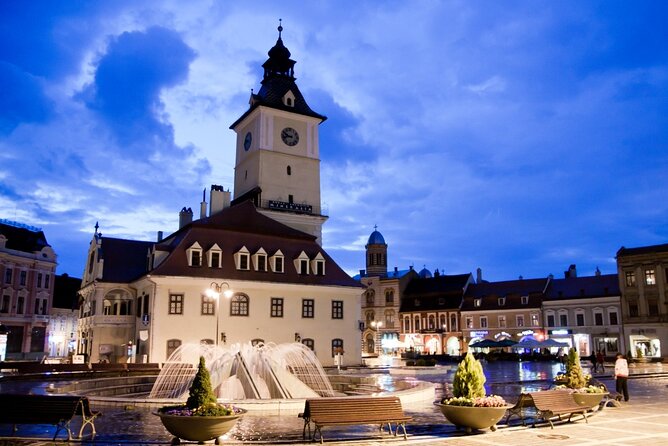
Finally, you visit Piaka Sfatului, the Council Square in Brașov. The text notes it received rights to hold markets in 1520, but markets happened there since 1364, with merchants from the country and abroad.
This kind of square is valuable because it gives you a sense of how commerce shaped everyday life. It also tends to be easy for photos, and it is listed for about 2 hours.
Day 8: Bran and Peles for the castles, plus Sinaia Monastery for balance
Day 8 is your pop-culture to royal-art to spiritual-mood sequence, all in a single day.
Bran Castle, the Dracula myth link and food tasting outside
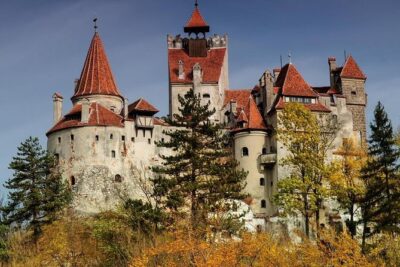
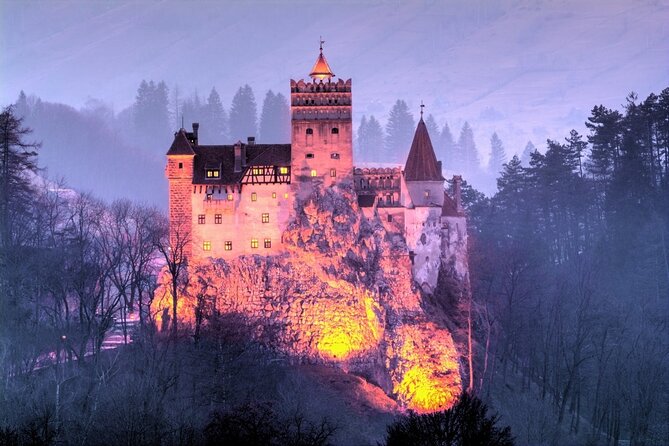
Bran Castle is framed as between myth and history, tied to the Dracula association. The itinerary also mentions traditional foods you can try outside the castle: handmade cheeses, pálinka (plum and pear brandy), and traditionally-produced ham and sausages.
This matters for value because it turns a castle stop into a full experience instead of only photos. The main consideration is that the itinerary gives 2 hours here, so if the food tasting is a priority, plan your time so you do not miss the castle overview.
Peles Castle, the royal summer residence
Next is Peles Castle, described as the Romanian royal family’s summer residence and one of the most important tourist attractions in Romania and Europe. It is scheduled for about 2 hours.
If you like architecture and interior design, this is likely your favorite castle day. It is also one of the more “sit back and appreciate” stops, compared with the more rugged ruins earlier in the tour.
Sinaia Monastery, founded in 1695 and still active
You finish at Manastirea Sinaia. The text says it was founded in 1695 by Prince Mihail Cantacuzino and named after Saint Catherine’s Monastery on Mount Sinai in Egypt. It also notes that as of 2005, it is inhabited by 13 Orthodox monks led by hegumen Macarie Boguș.
This ending works well because it shifts from castles to a working religious setting. It also gives the day a quieter close, which can help you absorb everything you saw since Day 1.
Price and what’s actually included for $2,825.81 per person
Let’s talk value in plain terms. This tour includes a private car for just your group, a private licensed English-speaking guide/driver, and all car expenses like gasoline, parking, and road tolls. You also get accommodation, meals, and entrance fees for the guide, plus Wi-Fi in the car and recommendations for hotels based on budget.
What is not included is just as important. Accommodation, meals, and beverages are not included for you, and entrance fees for the itinerary attractions are not included. That means you are likely paying two separate buckets: the tour fee for transport and guiding, and then your personal costs for lodging and tickets.
So who gets the best value? You usually do if:
- you want to avoid planning headaches and want a single guide to organize the route
- you prefer private time over rushing through group tours
- you care about context enough to pay for interpretation, not only photos
If you are comfortable driving and planning your own route, and you only want a few of these sites, a DIY plan could be cheaper. But DIY rarely matches this specific combination of monasteries, mountains, and castle days in one smooth loop.
Should you book this 8-day private Romania tour?
Book it if you want a guided drive through multiple Romanian regions, not a checklist of far-apart highlights. The strongest reason is the guide factor: Nicolas is described through the experience as top tier, punctual, friendly, prepared, and full of information and jokes, which matters when the car time adds up.
Skip or modify it if entrance fees and your own lodging and meal plan will be a deal breaker. Also, pay attention to timing if you care most about the Transfagarasan Highway, since the road is fully open only from June to October.
If you like roads with views, churches with stories, and a route that mixes light moments with serious ones, this is a solid pick for an 8-day Romania trip.
FAQ
How long is the 8 Days Private Romania Tour?
The tour runs for about 8 days.
Is this a private tour?
Yes. It is a private tour/activity, and only your group will participate.
Do you offer pickup?
Pickup is offered.
Is wireless internet included?
Yes. Complimentary wireless internet access is included in the comfortable car.
Are attraction entrance fees included?
No. Entrance fees as per the itinerary are not included.
Are accommodation and meals included for participants?
No. Accommodation, meals, and beverages are not included for you.
Is the Transfagarasan Highway open year-round?
No. The Transfagarasan Highway is fully open only from June to October.
Does the tour include an English-speaking guide?
Yes. You get a private, licensed English speaking guide/driver available throughout the tour.
Are service animals allowed?
Yes, service animals are allowed.
When will I receive confirmation?
Confirmation will be received at time of booking.
Recently added around Bucharest
- Bucharest: Dealu Mare Winery Private Trip with Wine Tasting★ 4.9 · 6 reviews
- Winery touring & private wine tasting – one day private tour★ 5.0 · 3 reviews
- Traditions in Bucharest: Village Museum and Wine Tasting★ 5.0 · 8 reviews
- Village Museum Bucharest Guided Tour★ 5.0 · 6 reviews
- Your rendez-vous with Europe’s past: time-travel to Maramures, Transylvania★ 5.0 · 6 reviews
- Walking Tour of Bucharest City Center – Private Tour★ 5.0 · 4 reviews
- Wine tasting in Bucharest Old town – bonus cheese platter★ 4.5 · 6 reviews
- Private Wine Tasting at Bucharest’s First Wine Bar★ 5.0 · 3 reviews
Private, compared.

Castles of Transylvania: Private Day Trip from Bucharest
Read our review →
Dracula’s Castle, Peles Castle and Brasov – Private Day Trip from Bucharest
Read our review →
Bucharest Panoramic Sightseeing – Private City Tour
Read our review →
THERME “Take It Easy” Pack: Full Spa Access + Private Transfers
Read our review →
4h Bucharest Private Tour (2h by Car and 2h Walking in Old Town)
Read our review →
Discover Bucharest: Private Highlights and Traditional Food Tour
Read our review →