Reviewed · DRACULA TOURS
7-Day Dracula Tour in Romania from Bucharest including ‘The Ritual of Killing of a Living Dead’
This tour is interesting because it tracks Dracula legends across real Romanian places, then helps you connect the myths to what you can actually see on site. I love that it handles round-trip transfers and paid entry, so you spend less time planning and more time looking closely. I also love the Vampire menu dinner in Turda and the included special event, the Ritual of Killing of a Living Dead.
One possible drawback to consider is the pace. This is a full week with lots of stops, and you’ll be on the road for transfers several days in a row, even though the transportation is air-conditioned.
Key moments you should expect
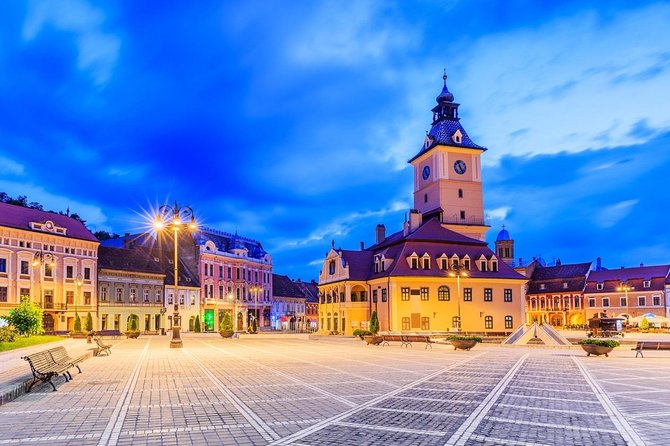
- Convenient pickup in Bucharest at Moxa Boutique Hotel, with the day 7 return drop off back to the same meeting point
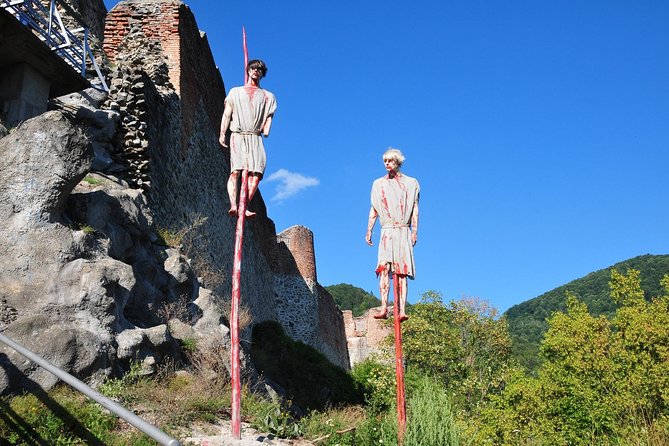
- Snagov Monastery visit tied to the Vlad legend of where he was buried after his assassination
- Poienari Citadel ruins plus a night experience in Sibiu, a fortified medieval town
- Corvinestilor Castle and Salt Mines of Turda, with the Turda stop built around both drama and logistics
- The Ritual of Killing of a Living Dead in Turda, included but only for groups of at least 4 travelers
- UNESCO Sighisoara old town and Clock Tower time, before you head to Bran and Brasov
Entering Dracula country from Bucharest, without the stress
The trip starts with a simple setup. You meet at the Moxa Boutique Hotel in Bucharest at 10:00 am, then you’re picked up from there. From the first day, the idea is clear: you are not driving yourself, you are getting carried between key Dracula and medieval locations in comfort.
Transport is handled by coach, minibus, or car, and it is air-conditioned depending on group size. The group is capped at 50 travelers, and the tour includes an English-speaking guide service, which matters because so many of these sites mix legend, literature, and local history.
The value here is practical. Entry fees for major stops are included, and the itinerary also includes lodging for most of the week, so your daily budget is easier to control.
More Dracula castle trips from Bucharest:
- Bucharest: Dracula’s Castle, Peles Castle, & Brasov Old Town
★ 4.5 · 17,858 reviews - Bucharest: Dracula Castle, Peles Castle & Brasov Old Town
★ 4.6 · 10,891 reviews - Bucharest: Dracula’s Castle, Peleș Castle & Brașov Day Trip
★ 4.5 · 5,919 reviews
Day 1: Snagov Monastery, then back to Bucharest for a proper night
Day 1 is built around Snagov Monastery, which is where the Vlad legend gets very specific. You drive out to the monastery and see the place tied to the story that Vlad was buried there after his assassination.
This stop is short, about an hour, which is a good way to start. You get the Dracula myth anchor point, then you don’t have to spend the whole day in transit and waiting. After that, you stay in Bucharest in a centrally located 4-star hotel, and you get a welcome dinner included.
If you like tours that start with a clear storyline, this is a strong opening. You end the day where you can decompress, not in a high-activity rush to the next city.
Day 2: Poienari Citadel ruins and the fortified feel of Sibiu
On Day 2 you visit the ruins of Poienari, described as Vlad’s old and faithful fortress. Even before you know every detail of the legend, ruins like these do something simple but powerful: they make the stories feel grounded in geography and architecture.
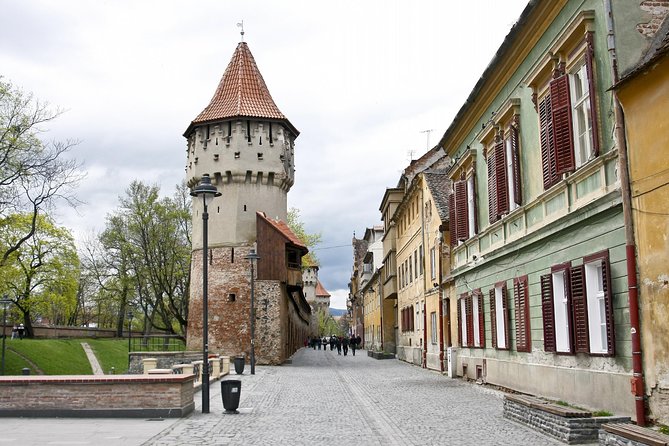
You also get Sibiu in the evening, with a tour of the fortified town. This matters because Sibiu is more than a stop on a route. Fortified medieval cities help you understand the mindset behind the myths, because they were shaped by fear, defense, and power struggles.
The overall approach is balanced. You get a dramatic legendary site with Vlad’s name attached, then you shift to the calmer rhythm of a medieval town experience.
Day 3: Hunedoara, Corvinestilor Castle, and the Salt Mines of Turda
Day 3 is one of the most fun days on the calendar because it layers spectacle and atmosphere.
First up is Corvinestilor Castle in Hunedoara, known for its Gothic style and described as Romania’s greatest Gothic-style castle. Castles like this are not just pretty. They help you see why medieval Romania became so easy for literature to latch onto: you can point at towers, walls, and designs and understand how someone would build a myth around them.
Then you head to Turda for Salina Turda, the Salt Mines. This is included, and you descent into one of Romania’s biggest saline systems. It’s a different kind of “Dracula setting” because the mood is not cold stone and battlements, it is underground and unusual.
The day also includes a dinner with a vampire menu in Turda. I like this kind of meal inclusion because it turns the theme into something you can taste, not just something you watch.
And this is also where the special event happens later in the itinerary: the Ritual of Killing of a Living Dead.
Other Bucharest tours to compare
- 4×4 Driving Experience at Flying Altitudes – 7 Days
★ 5.0 · 13 reviews - 7-Day Private Tour of Transylvania from Bucharest
★ 5.0 · 13 reviews - Transylvanian week
★ 5.0 · 7 reviews - Amazing Romania – Seven day private tour from Bucharest
★ 5.0 · 7 reviews
The Ritual of Killing of a Living Dead in Turda: what to know
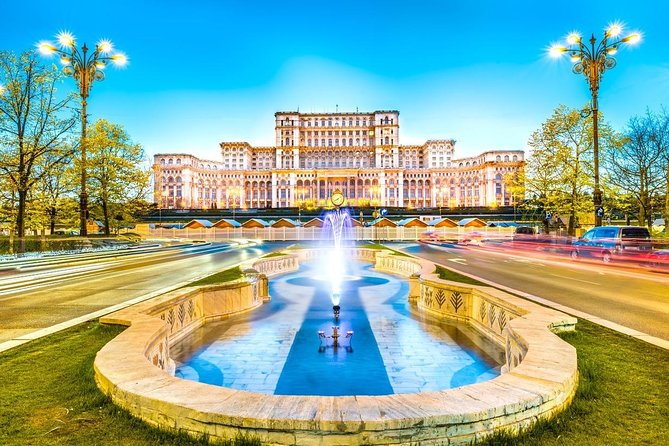
This is the one item on the tour that feels like pure genre. It is included as a special event in Turda, and the name is exactly what you should expect: a themed performance connected to living dead mythology.
There is one important condition stated clearly. The ritual takes place for groups of at least 4 travelers. If you are the only one in your travel party, or you’re traveling on a date that does not meet the minimum, it could be a factor to ask about before you commit.
I’m also glad it’s scheduled in Turda, because the salt mine day already puts you in a strange, memorable setting. The combination makes the evening feel like part of the same story world.
Day 4: Cluj-Napoca architecture and the Jonathan Harker route to Bistrita

Day 4 starts in Cluj-Napoca with a city tour focused on medieval buildings, including Saint Andrews Cathedral. This is where the tour avoids the trap of only repeating vampire landmarks. You get city form, religious architecture, and the kind of street-level history that makes Dracula mythology easier to place in real time.
Later, you follow the steps of Jonathan Harker toward Bistrita, close to Borgo Pass. That literary angle is worth paying attention to, because it turns the route into a reading experience. You’re not just seeing places, you’re seeing them as part of a story that already shaped people’s expectations for Romania.
One note on pacing: this day is a mix of a guided city portion and a road connection toward the literary trail. It can feel like a “lighter” day than full castle mornings, but it still fits the overall rhythm of the week.
Day 5: Sighisoara UNESCO old town and the Clock Tower details
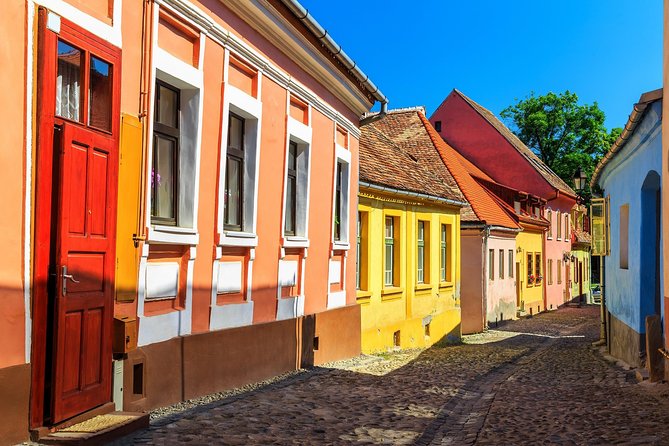
Sighisoara is a standout because it is a UNESCO World Heritage Site, and the itinerary gives you real time in the medieval core. You spend about 3 hours in the old town area, in and around the citadel.
Then you visit the Sighisoara Clock Tower, with about an hour on it. The tour includes specific context about the tower’s role over time, including council meetings and storing archives and the thesaurus. Those are the kind of details I personally love, because they connect the building to how people actually lived and governed.
If you enjoy walking through old streets and letting the past become visible, this is a day that rewards you for slowing down. You can take your time with photos, and you’re not racing between stops that are constantly changing.
Day 6: Bran Castle and Brasov’s fortress-minded center
Day 6 hits two heavy hitters: Bran Castle and Brasov historical center.
At Bran Castle, you explore Transylvania’s symbol, with the myth tied to Bram Stoker. This is the stop where expectations can run hot, because Dracula’s name is attached so tightly. The best way to enjoy Bran is to treat it as a cultural intersection, not only as a movie set.
You also get the Brasov Historical Center for around two hours. The tour context points you toward the city’s defensive fortifications built between the 15th and 17th centuries, shaped by repeated invaders coming from the east. That matters because it changes how you read the streets and walls. You start seeing how survival shaped design.
This day is a good test of your stamina. If you like action on foot and short focused stops, you’ll be happy. If you want fewer big-site days, this is the day to pace yourself and take breaks when you can.
Day 7: Peles Palace in Sinaia, then Targoviste and back to Bucharest
The final day brings you into royal scale with Peles Castle in Sinaia. The itinerary has you explore the main attraction, with time set aside for the castle. Even if you are not a formal architecture expert, a royal palace gives you a different contrast from the fortress and ruin sites of the earlier days.
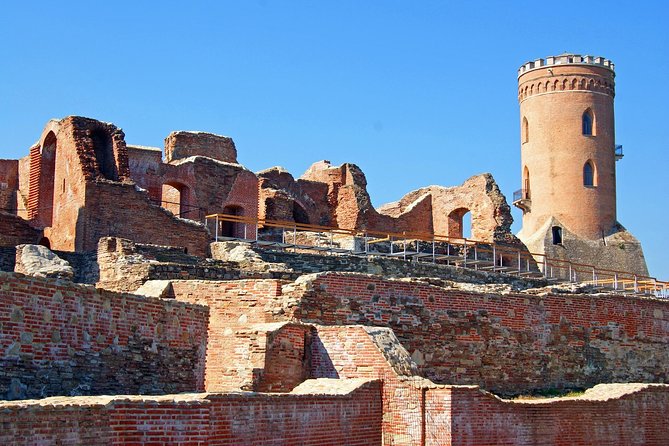
After Sinaia, you head to Targoviste, visiting the ruins of Vlad Tepes old court. Entry to the Tirgoviste Citadel is included, and the site is tied to the former capital of Valahia.
You end with a late arrival back in Bucharest, after 7:00 pm, with the tour ending back at the original meeting point. The tour does not include accommodation on the last day, so plan that final night yourself.
Where your money goes: price and real value at $1,685.87 per person
At $1,685.87 per person for a 7-day trip, the price is not meant to be budget travel. It is built around organized transport, scheduled entry fees, and a tight set of included meals and hotels.
Here is what you are getting that most independent planning would cost you time or money to replicate:
- Accommodation for 6 nights: 3 nights in centrally located 4-star hotels and 3 nights in centrally located 3-star hotels
- Meals: 6 breakfasts, plus 2 dinners (welcome dinner and dinner with the vampire menu in Turda)
- Entry fees included for major stops: Snagov Monastery, Peles Palace, Bran Castle, and Tirgoviste Citadel
- Included experiences beyond typical castle tickets: Salt Mines of Turda, Poienari Citadel, and Corvinestilor Castle in Hunedoara
- Transportation inside the tour using air-conditioned vehicles, with hotel pick up and drop off
What is not included is also clear, and you should budget for it:
- Plane ticket and airport fees
- Photo and video taxes
- Accommodation on the last day of the tour
- Any inclusions not listed
For me, the value works best if you like structure. If you are the type who gets stressed when schedules pile up, an organized itinerary with everything priced in can be a relief, even when the total cost is high.
Group size, language, and the pace you should expect
This tour has a maximum of 50 travelers, which usually helps keep things from turning into a giant cattle line. You’ll likely move as a group between sites, and the included coach or minibus transport does the heavy lifting.
The tour includes English-speaking guide services, which is key for sorting myth from fact. Dracula tourism can become a blur of names and photos, but guided context is what makes the week feel like it has a point.
The itinerary is active and packed with major attractions. It is not a slow, couch-to-café travel style. Still, the schedule includes stays overnight in historic areas, which is the difference between seeing places fast and actually feeling the medieval cities after the day-trippers thin out.
Who this Dracula tour fits best, and who should look elsewhere
This is a great fit if you want:
- A Dracula and Transylvania-focused week with major sites handled for you
- The theme plus the “why” behind it, with guide commentary helping you connect fact to fiction
- A route that mixes castles, monasteries, and a UNESCO old town, not just one type of site
It may be less ideal if you:
- Want lots of free time to wander with no schedule pressure
- Prefer fully independent travel where you set timing and ticket choices on your own
- Are traveling with very strict mobility limits, since ruins and castle steps can mean uneven footing and more walking
If you are on the fence, ask yourself if you enjoy guided storytelling. This tour leans into narrative, and the pacing is designed to keep the story moving from place to place.
Should you book this 7-Day Dracula Tour from Bucharest?
I’d book it if you want a themed week that is well structured and largely priced in. The combination of Snagov Monastery, Poienari Citadel, Corvinestilor Castle, Salt Mines of Turda, Sighisoara, Bran, Brasov, and the finale at Peles Castle plus Targoviste gives you strong variety.
I’d hold off if you hate packed days or you need extra flexibility. The tour is active, and the special event, the Ritual of Killing of a Living Dead, depends on group size being at least 4 travelers.
Also keep in mind that this experience is non-refundable, and the tour requires a minimum number of travelers to run. If you like firm plans and a complete Dracula route, that can feel reassuring. If you’re booking on uncertain dates, it can feel risky.
If your goal is a memorable Dracula-themed week with included transport, lodging, and major sites, this one is built for you.
FAQ
What time and where does the tour start in Bucharest?
The tour starts at 10:00 am at MOXA Bucharest Boutique Hotel, address 129 Calea Victoriei Corner 2-4 Mihail Moxa Str, Bucharest 010962 Romania.
Is pickup included, and where do you end on the last day?
Yes. You have hotel pickup at Moxa Boutique Hotel, and on the last day you are dropped off back at the meeting point between 5:00 pm and 7:00 pm.
What meals and dinners are included, and is there a vegetarian option?
The tour includes 6 breakfasts and 2 dinners: a welcome dinner and a dinner with a vampire menu in Turda. A vegetarian option is available, and you should advise when booking.
How many nights of accommodation are included, and is the last night covered?
Accommodation is included for 6 nights total: 3 nights in 4-star hotels and 3 nights in 3-star hotels, both centrally located. Accommodation on the last day is not included.
Which major attractions have entry fees included?
Entry fees included are for Snagov Monastery, Tirgoviste Citadel, Peles Palace, and Bran Castle. Also included are the Salt Mines in Turda, Poienari Citadel, and Corvinestilor Castle in Hunedoara.
Is the Ritual of Killing of a Living Dead guaranteed?
It is included as a special event in Turda, but it takes place for groups of at least 4 travelers, so group size matters.
What is the maximum group size, and what language is the guide?
The tour has a maximum of 50 travelers, and it includes English speaking guide services.
Recently added around Bucharest
- Bucharest: Dealu Mare Winery Private Trip with Wine Tasting★ 4.9 · 6 reviews
- Winery touring & private wine tasting – one day private tour★ 5.0 · 3 reviews
- Traditions in Bucharest: Village Museum and Wine Tasting★ 5.0 · 8 reviews
- Village Museum Bucharest Guided Tour★ 5.0 · 6 reviews
- Your rendez-vous with Europe’s past: time-travel to Maramures, Transylvania★ 5.0 · 6 reviews
- Walking Tour of Bucharest City Center – Private Tour★ 5.0 · 4 reviews
- Wine tasting in Bucharest Old town – bonus cheese platter★ 4.5 · 6 reviews
- Private Wine Tasting at Bucharest’s First Wine Bar★ 5.0 · 3 reviews
Dracula Tours, compared.
Dracula’s Castle, Peles Castle, & Brasov Old Town
Read our review →
Dracula Castle, Peles Castle & Brasov Old Town
Read our review →
Dracula’s Castle, Peleș Castle & Brașov Day Trip
Read our review →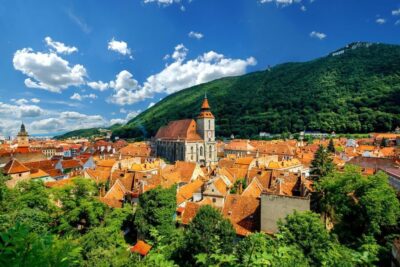
Day Trip to Dracula Castle, Peles Castle & Brașov
Read our review →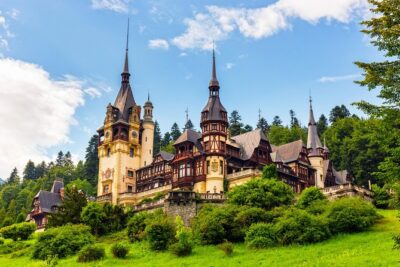
Bucharest to Dracula Castle, Peles Castle and Brasov Guided Tour
Read our review →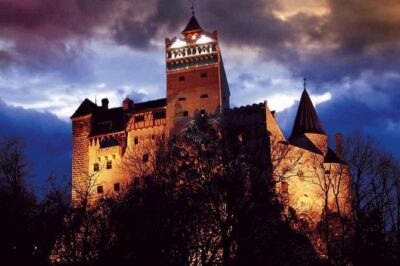
Dracula’s Castle, Peles Castle and Brasov Day Trip from Bucharest
Read our review →
Transylvania and Dracula Castle Full Day Tour from Bucharest
Read our review →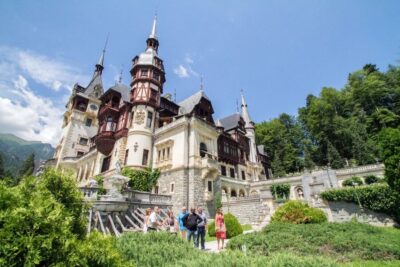
Browse the lists this tour appears in