Reviewed · BUCHAREST WALKING TOURS
Bucharest : Highlights & Hidden Gems Walking Tour
Bucharest has a talent for showing you different eras in the same few blocks. This walking tour is interesting because it strings those eras together in a smart route, starting in the Lipscani area and finishing back in Cismigiu Park.
I like how it mixes the big-name stops with quieter, story-rich places, like Stavropoleos Monastery and the old merchant lanes. I also love the practical help from the guide and team, including language support and assistance with tickets for visits when you want them.
One possible drawback is the pace: it is a focused 2 hours, so if you prefer long sits and slow museum time, you might want to come back on your own for extra wandering.
Key highlights I think you’ll care about
- Private and customizable feel: your guide can shape the walk around what you actually want to see.
- Old-town trade stories: places like Hanul Gabroveni and Manuc’s Inn explain why Bucharest grew.
- Orthodox culture on the route: Stavropoleos Monastery adds spiritual and architectural context beyond the street scenes.
- Monarchy, communism, democracy in one walk: you’ll see how power left its buildings behind.
- Cismigiu Park as a reset: you pause in the oldest park to breathe and re-orient yourself.
- English, French, or Spanish guides: several guides have a reputation for being attentive and warm while keeping the facts clear.
Starting in Lipscani, meeting in Str. Franceză 60
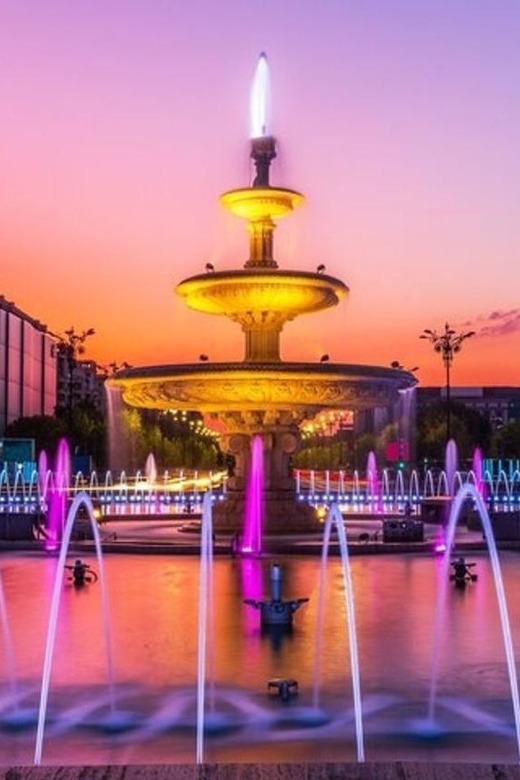
This tour starts in a part of Bucharest that makes sense for first-timers. You meet at Str. Franceză 60 in the historic Lipscani district, which is handy because it sits close to a lot of the city’s core sights. Even before you start walking, you’re already in that old streetscape zone where you can feel the city’s layers: trade, religion, politics, and later modern national identity.
Lipscani is also a good place to be because it keeps your options open. If you want to extend your day afterward with a meal or a museum visit, you are not far from choices. And because this is a short, well-structured walk, you get the orientation piece early. That matters in Bucharest, where it is easy to bounce between landmarks without truly connecting them.
More walking tours in Bucharest:
- Bucharest: City Highlights Guided Walking Tour
★ 4.9 · 1,482 reviews - Bucharest Highlights Walking Tour
★ 5.0 · 469 reviews - Bucharest: Ghost Stories & Romanian Mythology Walking Tour
★ 4.9 · 287 reviews
Parcul Cismigiu: the pause that makes the rest of the day click
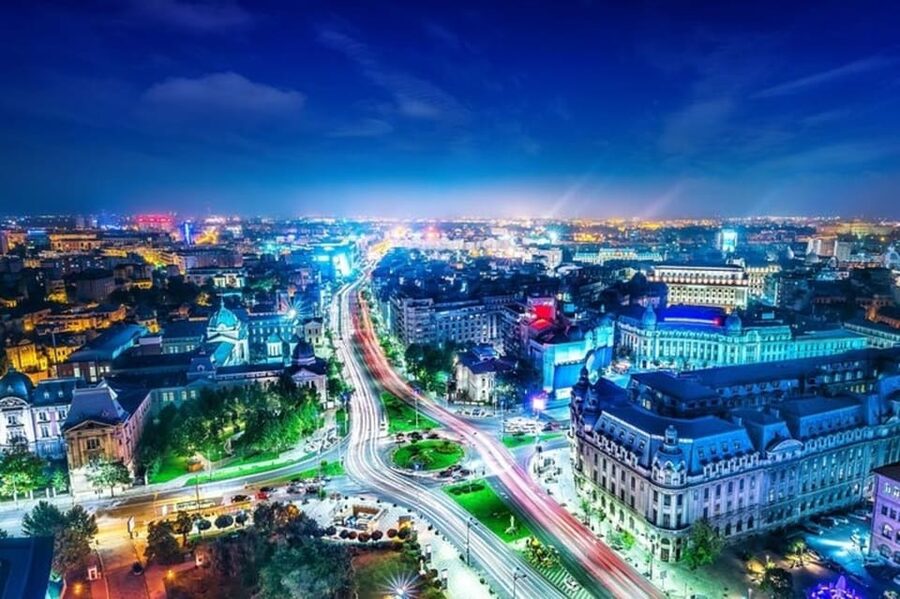
You’ll spend time at Parcul Cismigiu, Bucharest’s oldest park. This isn’t just a “pretty stop.” Think of it as your mental breather between architectural eras. When the walk shifts from old streets and stone facades to bigger political buildings, the park gives you a reference point. It also gives you a clean, calm photo moment so you’re not stuck taking pictures only in crowds or along busy roads.
What I like about starting (or ending) here is simple: your brain processes the city better when you have a quiet moment. You can ask questions too. This is one of those moments where your guide can point out what to notice next, like how street-level details connect to the grand buildings you’ll see later.
Practical note: you are still walking on uneven city surfaces around the park area, so wear comfortable shoes. This is not a gentle stroll on a paved track for two hours straight, it’s a real city walk.
Macca – Vilacrosse Passage: a narrow route through commerce and style
Next up is Macca – Vilacrosse Passage, a covered corridor that feels like a small secret compared to the wider streets of Bucharest. Passages like this are where the city’s merchant energy shows up in architecture. Even if you are not a design nerd, you’ll enjoy this stop because it’s visually different. The scale changes, the light changes, and you get that “why does this place exist here?” feeling.
This is also a place where guided context pays off. A guide can explain what a passage meant for everyday life, not just how it looks in a photo. You’ll likely see how Bucharest’s trade culture shaped the built environment, linking back to what you’ll learn later around the inns and market lanes.
If you hate rushing indoors, you’re fine. The tour allows time for a guided look and a photo moment, not just a quick point-and-go.
Palatul CEC: banking, status, and the city’s ambitious self-image
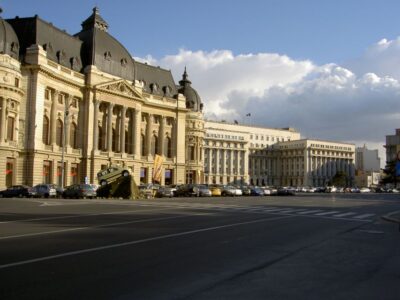
Then you move to Palatul CEC. This stop works well because it shows a different side of Bucharest’s growth. Instead of focusing only on churches and palaces, you get a financial building that reflects how institutions wanted to look and how cities signal importance.
For you, that means you start understanding the city beyond postcards. People often arrive thinking Bucharest is mainly about political drama. It is, but money, banking, and commerce also built the stage. A building like this helps you connect the dots between trade streets and larger national ambitions.
Look for the mix of formality and statement. Your guide can point out details tied to its role in the city’s evolution, from modern organization to national identity over time. Even if you only catch the broad strokes, you’ll walk away with better “why this looks like this” answers.
One consideration: if you’re very short on time in Bucharest, you might later wish you had another hour just to re-read the facades at a slower pace. That is not a flaw, it’s just the nature of a compact walk.
A different kind of day out:
- Bucharest: Dracula’s Castle, Peles Castle, & Brasov Old Town
★ 4.5 · 17,858 reviews - Bucharest: Dracula Castle, Peles Castle & Brasov Old Town
★ 4.6 · 10,891 reviews - Bucharest: Dracula’s Castle, Peleș Castle & Brașov Day Trip
★ 4.5 · 5,919 reviews - Bucharest: Palace of Parliament Tickets and Guide
★ 4.3 · 3,182 reviews
Stavropoleos Monastery: Orthodox art and atmosphere
Stavropoleos Monastery is the spiritual and architectural contrast point on the walk. This is the kind of place you remember because it changes your pace. The monastery setting gives you that quieter focus you need after moving through more civic or commercial buildings.
Even in the time available, you get a guided visit that frames what you’re seeing. You’ll learn how Orthodox culture expresses itself through space, design, and what the building communicates. This matters because Bucharest’s story is not only political. It’s also cultural and religious, and monasteries are where you often see continuity.
The best part? This stop helps you avoid a common first-timer mistake: treating Bucharest’s old sites as isolated objects. With a guide, the monastery becomes part of the chain, connecting trade-era spaces and later political monuments through the city’s long timeline.
If you want calm photos, this is a good stop, but still be respectful and mindful of how people use the space.
Hanul Gabroveni: the merchant courtyard that explains Bucharest’s backbone
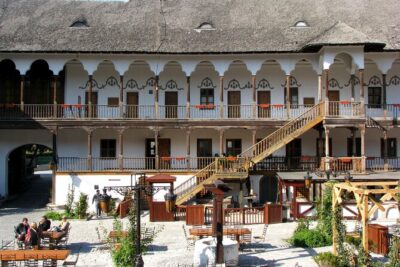
Now you hit Hanul Gabroveni, a reminder that Bucharest’s old prosperity came from traders and travelers. Inns and merchant courtyards are not just quaint background. They were the logistics hubs of the past, places where goods moved, deals happened, and visitors found temporary shelter.
This is one of the most practical learning stops in the tour. You start to see why certain streets were important and how commerce shaped the city’s layout. If you are the type of traveler who hates vague history, you’ll appreciate how this stop turns into an “oh, that’s why” moment.
You’ll also likely hear the kind of context that makes you look closer. For example, a guide can help you notice how the building was made for movement and business, not for show. Then, when you reach the next inn, the comparison hits harder.
Manuc’s Inn: a trading legacy with a human scale
The walk finishes with Manuc’s Inn, another historic trading inn that brings the merchant story full circle. This is where you feel the “human” side of the city’s past. The scale feels approachable compared to the bigger palaces and official buildings, but it still carries serious history.
In a short tour, Manuc’s Inn is a smart final anchor. It gives you a way to summarize what you learned earlier: Bucharest didn’t just grow by decisions made in grand offices. It grew by people moving through streets, buying, selling, staying, and doing business in spaces designed for them.
If you enjoy photography, this is a very usable stop because courtyards and old facades naturally give you multiple angles without needing you to hunt for good light. If you’re traveling with someone who prefers stories over stone, this is also a good fit. It has a narrative you can feel.
BNR Palace, Palatul Regal, and Sala Palatului: power, money, and politics in stone
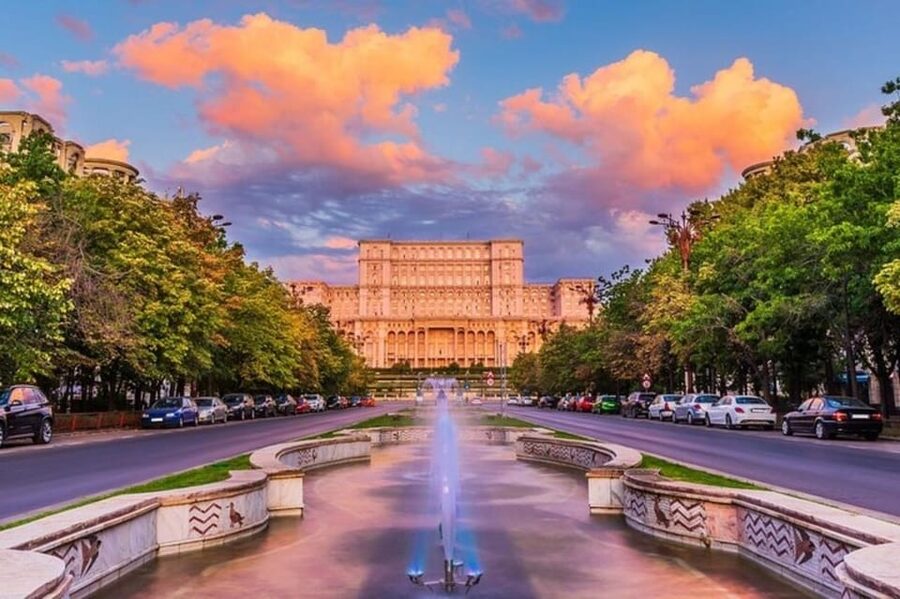
Your route includes major buildings tied to Bucharest’s political evolution, including the BNR Palace, the Palatul Regal/Royal Palace, and Sala Palatului with its Stalin-era architecture. This is where the tour does something that many “highlights” walks skip: it links the look of buildings to the era that created them.
The BNR Palace helps you understand the city’s financial evolution. Then the Royal Palace area shifts you to the national political story, and Sala Palatului adds the heavier mood of twentieth-century power. You start to see architecture as a record. Each era tries to leave its signature, and if you pay attention, the materials and massing start telling you the timeline.
This section is ideal if you want context for things you might otherwise feel are just large buildings. It’s also helpful for pacing. After the older inner-city stops, these bigger landmarks give you a sense of scale, like switching from a family photo album to a historical film poster.
If you dislike political history, don’t worry. You can still enjoy this part for the visuals and the “how the city’s priorities changed” angle.
How the private, language-supported guide makes it feel worth $29
At $29 per person for a 2-hour walk, the value comes from two things. First, you get focused time with a live guide who can connect sights into a coherent story. Second, you get help planning visits, including support from the team to book tickets for desired stops.
This is especially useful if you want more than one day in Bucharest. Your guide can help you avoid the classic problem of arriving at a major site without knowing what to do first. In some cases, guides like Alexandra have been especially helpful with planning tickets for the Palace of the Parliament, which is a common add-on for people who only have a short stay.
The guide quality also comes through in the names you might encounter. I’ve seen accounts of guides such as Augustin, Karim, Zoé, Irina, and Camélia bringing a mix of warmth and clarity. That matters because on a short tour, you don’t have time for vague speeches. You need answers that fit into the walk.
Also, this tour is described as private and customizable. Even if you’re not choosing your own route each minute, the point is you should not feel like you’re trapped in someone else’s slideshow. You can ask questions, and your guide can steer you toward what you care about.
Pacing and what you should do before you go
This is a compact walk, around 2 hours, with about 20 minutes at each main stop in the core sequence. That gives you enough time to see, listen, and take photos, but not enough time to become a slow gallery visitor.
Here’s how to make the most of it:
- Come in with one or two priorities, like Orthodox architecture, old commerce, or political buildings.
- Bring your best question. Examples: What links these stops in one story? Why are there so many layers here?
- Wear shoes that handle uneven sidewalks. You’re walking through city streets and corridors, not just park paths.
- If you want food or drinks, plan that outside the tour because drink or food is not included.
The tour also includes walking and public transport unless you select an option that changes that. That means you can cover more ground without making everything a legs-only marathon.
Wheelchair accessible, and a route that still feels logical
This experience is marked as wheelchair accessible, which is great for planning. Still, city walking means you’ll want to be realistic about sidewalks and crossings. If you need step-free routing or extra time, it’s worth telling your guide at the start so they can manage pace and stop choices.
The upside is the route is designed as a sequence of meaningful nodes. Even when you’re moving between them, the tour theme stays consistent: Bucharest’s identity through commerce, faith, and political transformation.
Who this tour fits best
This is a strong choice if:
- you’re in Bucharest for a short time and want orientation fast
- you like your history tied to places, not just dates
- you want a structured walk through Lipscani and central landmarks, without planning logistics
- you enjoy photography stops that don’t feel like frantic scavenger hunts
It may not be the best fit if you:
- prefer long time inside churches or palaces (this is a walk, not a half-day museum crawl)
- want a food-focused tour
- hate any political-history context at all (because the Royal Palace and Stalin-era architecture are part of the story)
Should you book this walking tour of Bucharest?
If you want an efficient way to understand Bucharest, I’d book it. For $29, you’re not just buying a route, you’re buying a translation layer between what you see and what it means. The mix of Cismigiu Park, passage architecture like Macca – Vilacrosse Passage, the financial and cultural landmarks, and the merchant inns gives you a complete city picture in a short window.
The decision gets even easier if you can use the guide’s help with ticket planning for big sights. With a good guide, the walk feels like a guided key, not a list of stops.
If you’re on the fence, do this quick check: Do you want context and direction? If yes, book it. Then, after the tour, you’ll know exactly what to return to on your own time.
FAQ
How long is the Bucharest Highlights & Hidden Gems Walking Tour?
The tour lasts 2 hours.
Where is the meeting point?
The meeting point is Str. Franceză 60, located in the historic Lipscani district.
Is this tour private?
It is described as a private and exclusive walking tour, and it is customizable.
What languages are available for the live guide?
The live guide is available in English, French, and Spanish.
What sights are included in the walk?
You’ll visit stops including Parcul Cismigiu, Macca – Vilacrosse Passage, Palatul CEC, Stavropoleos Monastery, Hanul Gabroveni, and Manuc’s Inn, plus major central landmarks like the BNR Palace and Palatul Regal/Royal Palace, and the Sala Palatului.
Is food or drink included?
No. Drink or food is not included.
Does the tour include public transport?
Yes, the walking tour and public transport are included, except if you select an option that changes this.
Is the tour wheelchair accessible?
Yes, it is wheelchair accessible.
Can I cancel for a refund?
Yes, you can cancel up to 24 hours in advance for a full refund.
Recently added around Bucharest
- Winery touring & private wine tasting – one day private tour★ 5.0 · 3 reviews
- Bucharest: Dealu Mare Winery Private Trip with Wine Tasting★ 4.9 · 6 reviews
- Traditions in Bucharest: Village Museum and Wine Tasting★ 5.0 · 8 reviews
- Village Museum Bucharest Guided Tour★ 5.0 · 6 reviews
- Your rendez-vous with Europe’s past: time-travel to Maramures, Transylvania★ 5.0 · 6 reviews
- Walking Tour of Bucharest City Center – Private Tour★ 5.0 · 4 reviews
- Wine tasting in Bucharest Old town – bonus cheese platter★ 4.5 · 6 reviews
- Private Wine Tasting at Bucharest’s First Wine Bar★ 5.0 · 3 reviews
Bucharest Walking Tours, compared.
Ghost Stories & Romanian Mythology Walking Tour
Read our review →
Walking Tour- Delightful Bucharest (Highlights, Stories, Sights)
Read our review →
4h Bucharest Private Tour (2h by Car and 2h Walking in Old Town)
Read our review →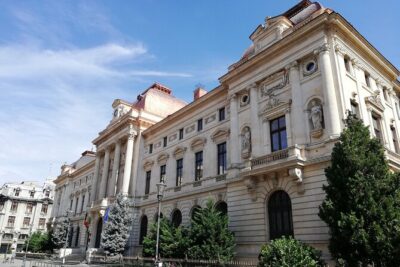
Browse the lists this tour appears in