Reviewed · BUCHAREST
The Real Story of Gypsies – Slavery in Romania
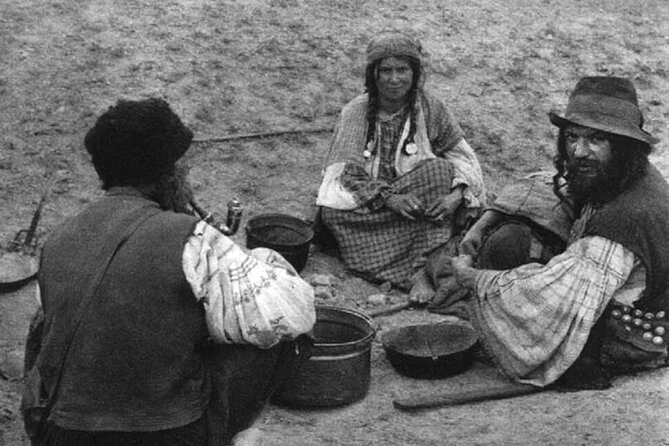
This tour is interesting because it maps Roma history onto Bucharest’s real streets and famous buildings, not just on paper. You walk through places tied to slavery, persecution, and remembrance, then you finish in a small shop where Roma makers show their craft.
I especially like the clear focus on Roma history in Romania, with stops that connect big events to specific landmarks. I also like that the tour is practical and easy to join, with an English-speaking guide and a small group size.
One consideration: this is not a casual sightseeing stroll. A couple of stops are somber, so if you want only light, feel-good photos, you may find the mood heavy.
Key highlights worth planning for
- A tight 3-hour route with guided stops and time left for walking in between
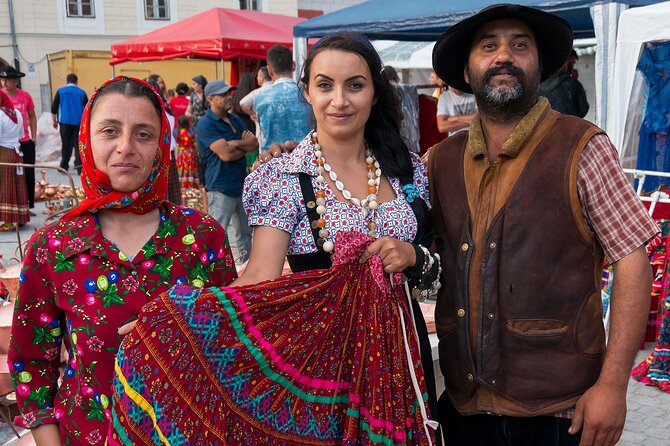
- Historical anchor points tied to Roma slavery and long-term impacts on identity
- Low friction logistics, starting near public transportation and using a mobile ticket
- Memorial stops that include Roma victims within Romania’s Holocaust history
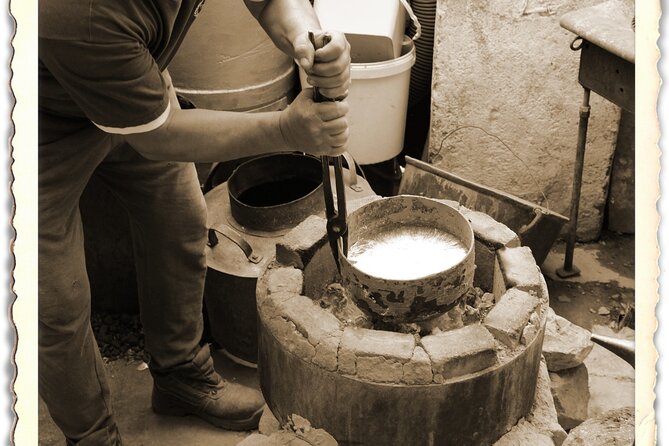
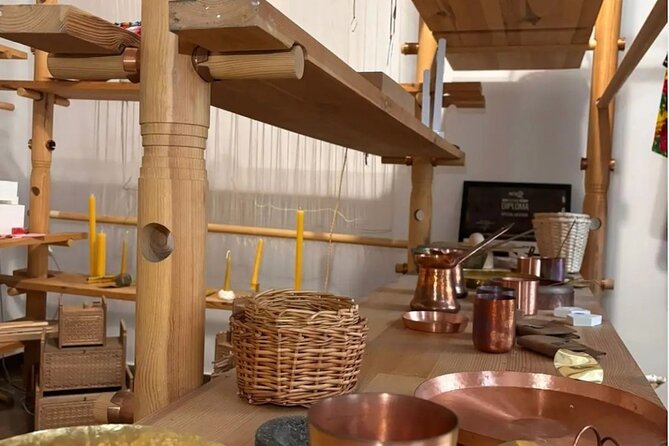
- A craft finale at Mesteshukar ButiQ, featuring Roma-made copper work
Bucharest on foot, with Roma history mapped to real streets
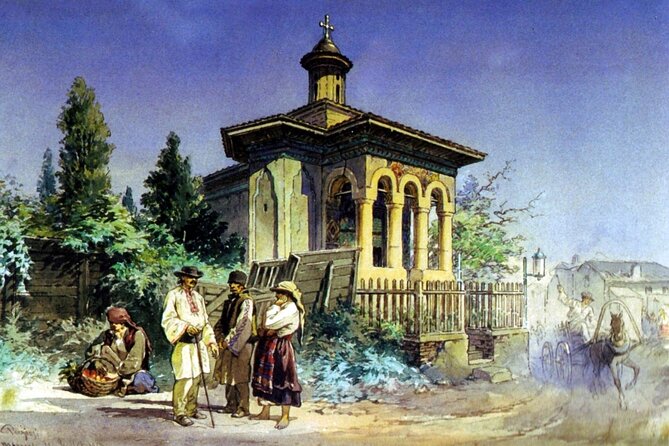
This is a walking tour built for people who like meaning in their travel, not just a check list of sights. In about 3 hours, you cover a compact part of central Bucharest with a guide who keeps the story grounded in the city itself.
You start near Teatrul „Ion Creangă” and you end at Mesteshukar ButiQ, which makes the route feel like a true morning out, not a bus shuttle between far-flung places. The group is capped at 15 people, so questions do not get lost and you can actually hear the explanations.
The price, $30.04 per person, is modest for a guided, English-led historical walk that includes multiple major landmarks. You are also not stuck paying extra for entry at stops, because admissions are free as part of the experience.
Other tours around Bucharest:
- Bucharest: Dracula’s Castle, Peles Castle, & Brasov Old Town
★ 4.5 · 17,858 reviews - Bucharest: Dracula Castle, Peles Castle & Brasov Old Town
★ 4.6 · 10,891 reviews - Bucharest: Dracula’s Castle, Peleș Castle & Brașov Day Trip
★ 4.5 · 5,919 reviews
Starting where the story turns: Piata Amzei’s old slaves market site
Your first stop sets the emotional tone, and it does it quickly. You go to Platoul Piata Amzei, tied to the site of an old slaves market, a brutal reminder of Romania’s history with the Roma community.
This is the kind of beginning that changes how you see a city block. Bucharest looks elegant and monumental, but here the past is harder and more direct. The guide talks about the historical context of human trafficking and slavery, and then connects it to how Roma identity formed under pressure and discrimination.
Practical note: this stop is short, about 15 minutes, so you will likely hear the big picture and then move on. If you want to spend more time reading on your own, I suggest you bring a bit of patience and let the tour lay the groundwork first.
Palatul Stirbei and the long shadow of power
Next you visit Palatul Stirbei, a palace built in 1835. It is one of those beautiful Bucharest structures that, on the surface, belongs to architecture and upper-class life.
But your guide ties it to a major moment in Roma history through the palace’s owner. That is the key idea here: when power and wealth surround you, it is easy to miss how those same systems can shape suffering. By the time you leave the palace area, you are looking at the building differently, with history sitting right behind the façade.
This stop is about 10 minutes, so it works best as a focused “this matters” stop. You do not get overwhelmed with details, but you still leave with a clearer sense of how institutions and elites affected Roma lives.
The Romanian Athenaeum: arts, public images, and Roma perceptions
As you continue, you pass by the Ateneul Romanian Athenaeum, a major symbol of Romanian cultural pride. Even though you are not going inside as part of this walk, the exterior still functions like a lesson in how nations present themselves.
The guide connects the arts and culture to how Roma people were perceived throughout history. That angle matters because it shows something uncomfortable, how public narratives can support stereotypes just as easily as they can celebrate national identity.
You are given about 15 minutes here, which is enough time for the “why this building matters” explanation without turning it into a museum-style lecture. If you enjoy big-city architecture, you will likely appreciate how the guide pairs beauty with accountability.
A different kind of day out:
- Bucharest: Palace of Parliament Tickets and Guide
★ 4.3 · 3,182 reviews - Bucharest: Day Trip to Dracula Castle, Peles Castle & Brașov
★ 4.4 · 3,049 reviews - Bucharest to Dracula Castle, Peles Castle and Brasov Guided Tour
★ 4.5 · 2,933 reviews - Bucharest: Palace of Parliament Tickets and Guided Tour
★ 4.4 · 1,877 reviews
Cismigiu Park: myths, truth, and the calm between heavy stops
Then you get a breather in Cismigiu Park, Bucharest’s oldest and largest garden. The walk here is more relaxed, about 15 minutes, and the greenery gives your brain a chance to catch up after the heavier history.
What I like about this park stop is that it is not just scenery. You learn more truths and myths about Roma history, using the park as a setting for that conversation. It is an effective teaching move, because it lets you think while you walk.
There is also a real practical benefit: a short green pause keeps the tour from feeling like you are constantly walking from one emotionally intense moment to the next. You get movement, fresh air, and a chance to ask simple questions before the remembrance portion.
Holocaust Memorial: remembrance that includes Roma victims in Romania
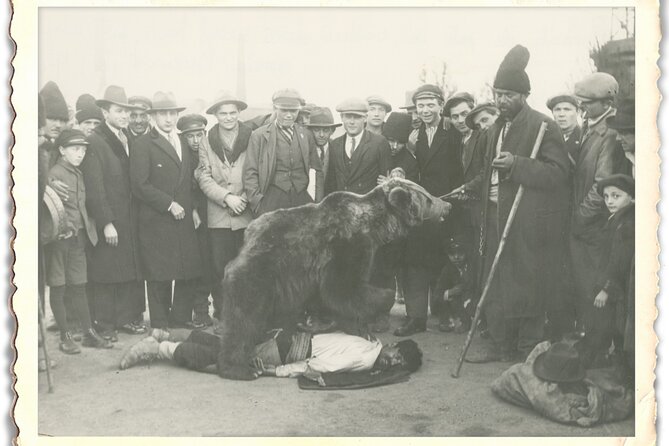
The tour takes a somber turn at the Holocaust Memorial. This stop is about 15 minutes, and you are there to remember victims of Romania’s darkest chapter, including thousands of Roma people who were persecuted and killed in genocide.
This part of the walk is not about scoring facts. It is about learning to see the memorial as part of the larger historical map, not a separate topic you can compartmentalize.
If you are the type who likes to understand how communities were targeted across different periods, this stop will land. It also makes the tour feel more complete, because it connects earlier slavery and discrimination to later catastrophe instead of treating them as isolated eras.
Iuliu Maniu Statue: seeing how labels changed over time
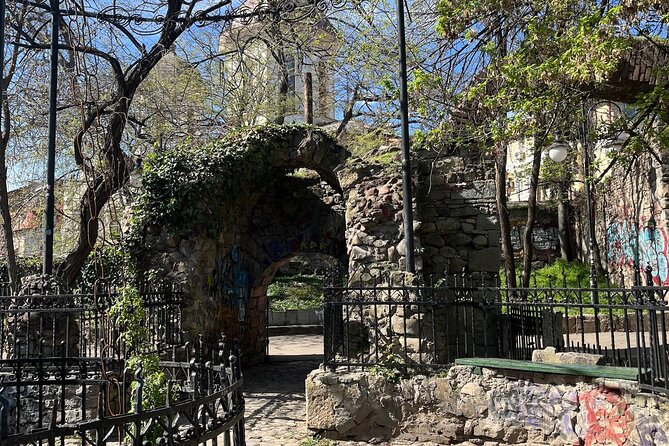
After the memorial, you move to the Iuliu Maniu Statue, tied to another significant moment in Roma history when they were still often called gypsies. This stop again is about 15 minutes, which is long enough to explain the historical context but short enough to keep you moving.
I like this stop because it focuses on language and labels. Names are not neutral, especially when they are used to justify unequal treatment. When a guide brings that up at a statue, it makes the idea of “how we talk about people matters” feel immediate.
You also get variety in the route here: you are moving from memorial space into a public monument setting. That shift helps you process the material in stages.
Mesteshukar ButiQ: a craft stop that feels human, not token
At the end, you finish at Mesteshukar ButiQ, a small shop where products are made by Roma craftsmen. The store is on Bulevardul Mihail Kogălniceanu 12, and the tour ends there, giving you a natural wrap-up point with something tangible.
You get about 15 minutes at the shop, and the focus is on craftsmanship, specifically copper work. This is the part of the tour that turns from history to presence, from what was taken to what continues.
I appreciate the balance here. A tour like this can easily fall into only heavy storytelling, but ending with visible skill lets you leave with an image of Roma culture that is active and ongoing. You can look at the objects, watch the work theme, and understand how tradition gets carried forward.
Price and timing: what $30.04 buys you in real time
The tour runs for about 3 hours, starting at 10:00 am. You also get a note that around 1 hour and 20 minutes is allocated for walking time, which helps you judge your stamina.
I like tours where the pacing is transparent. It tells you this is a structured walk, not a random amble where you are suddenly “late” to the guide’s next stop.
The mobile ticket detail is also worth it. You are not scrambling for printed paperwork on a first day in town. And because the tour is near public transportation, you can plug it into a Bucharest itinerary without turning your morning into a logistics puzzle.
Since the tour maximum is 15 travelers, plan to arrive a few minutes early near Teatrul „Ion Creangă” on Strada Piața Amzei 13. In small groups, punctual starts keep the vibe calm and respectful.
Who this tour is best for, and who should think twice
This is a strong fit if you want Bucharest to feel connected to real lives, not just monuments. If you enjoy walking tours that explain context, and you can handle serious historical themes, you will get a lot from this route.
It is also a good choice if you like asking questions. The small group format plus the fact that the guide speaks English makes it easier to stay engaged.
If you want purely scenic sightseeing, this may feel too focused on tragedy and remembrance. And if you are sensitive to topics like slavery and genocide, you should be mentally prepared for that tone at key stops.
The guide experience: clear English and time for questions
One of the most praised parts of this tour is the guide’s communication. I like the pattern here: the explanations are clear in English, and the guide is willing to slow down for questions.
That matters more than people expect. In a tour dealing with charged history, you want to understand the terms and the why behind the story, not just memorize a sequence of stops. A guide who takes questions seriously helps you leave with comprehension, not confusion.
Also, the tour includes real-city context beyond the main historical points, so you get a more usable sense of Bucharest while you learn.
Should you book The Real Story of Gypsies: Slavery in Romania?
If you are looking for a meaningful walking tour that connects Roma history to specific Bucharest landmarks, this is worth your time. For $30.04, you get a focused, English-led route, free admissions at stops, a small group, and a thoughtful ending at a Roma crafts shop.
Book it if you like history that is location-based and you are comfortable with somber remembrance. Skip it if you want only light sightseeing, because this route intentionally carries weight at multiple points.
FAQ
FAQ
Where does the tour start?
The tour starts at Teatrul „Ion Creangă” – Sala Mare, Strada Piața Amzei 13, 030167 București, Romania.
What time does it begin?
It starts at 10:00 am.
How long is the tour?
It lasts about 3 hours.
Where does the tour end?
It ends at Mesteshukar ButiQ [MBQ], Bulevardul Mihail Kogălniceanu 12, București 030167, Romania.
Is the tour offered in English?
Yes, it is offered in English.
Do I need to buy tickets for entry at the stops?
Admission tickets are free as part of the experience.
Is the tour limited to a small group?
Yes, it has a maximum of 15 travelers.
Is there free cancellation?
Yes, you can cancel up to 24 hours in advance for a full refund.
Recently added around Bucharest
- Winery touring & private wine tasting – one day private tour★ 5.0 · 3 reviews
- Bucharest: Dealu Mare Winery Private Trip with Wine Tasting★ 4.9 · 6 reviews
- Traditions in Bucharest: Village Museum and Wine Tasting★ 5.0 · 8 reviews
- Village Museum Bucharest Guided Tour★ 5.0 · 6 reviews
- Your rendez-vous with Europe’s past: time-travel to Maramures, Transylvania★ 5.0 · 6 reviews
- Walking Tour of Bucharest City Center – Private Tour★ 5.0 · 4 reviews
- Wine tasting in Bucharest Old town – bonus cheese platter★ 4.5 · 6 reviews
- Private Wine Tasting at Bucharest’s First Wine Bar★ 5.0 · 3 reviews