Reviewed · TOURS
9 days Balkans Tour from Bucharest to Sofia and Budapest
This Balkans route is interesting because it is one-way and fact-packed, moving you through Romania, Bulgaria, North Macedonia, Albania, Montenegro, Bosnia, Serbia, and Hungary without needless backtracking. I especially like the climate-controlled transport, so long travel days feel less punishing. I also like that your days end in 4-star hotels with breakfast, so you start each new sightseeing block with real food in your system.
One drawback to keep in mind is the vehicle comfort and timing. Even though the tour promises a comfortable ride, one past guest flagged issues with a small van and late day starts, which can shrink your time at places you came to see.
Key Things That Make This Tour Worth Your Time
Well-lit cave and big waterfall scenery at Devetàshka and Krushùna Falls, plus greenery that makes you feel less like you are underground.
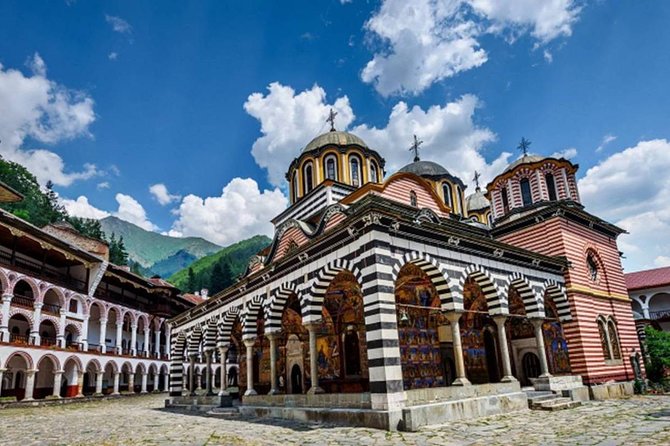
Rila Monastery is the headliner with UNESCO status and an especially strong focus on church art and woodcarving traditions.
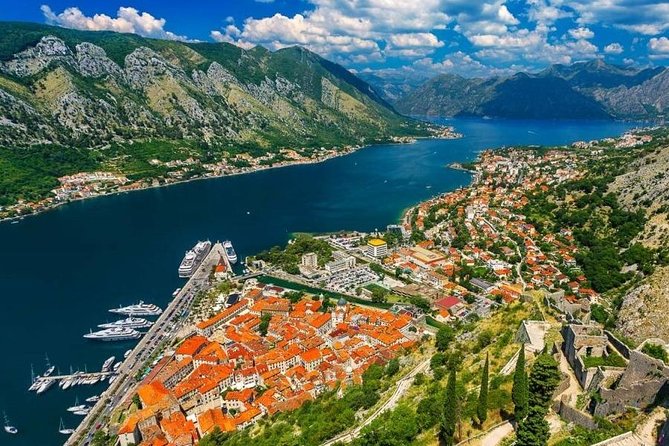
UNESCO Old Towns are paired well with Ohrid on a lake and Kotor in a fortified medieval setting.
Mostar and Sarajevo are story-heavy stops, including the Mostar bridge history and Sarajevo’s WWI connection at the Latin Bridge.
Group size stays reasonable with a max of 46 travelers, which helps tours feel organized rather than chaotic.
Price and What You Are Actually Buying
The listed price is $1,191.42 per person for about 9 days, with 8 nights in 4-star hotels and breakfast included each morning. You also get transport by air-conditioned vehicle for the entire tour, plus a professional tour leader and walking tours in key cities.
So the value here is not just “beds and buses.” It is the way the route strings together major sights across multiple countries, while the organizer handles the big pieces: where you stay, how you get from city to city, and where the guided walking time is scheduled. That matters when you are crossing borders and stitching together different currencies, languages, and transit systems.
What is not included matters too. Expect tips (5 euro per day per person), meals and drinks unless specified, and entrance fees for paid sights. Even if many walking tours are described as included, certain attractions like Devetàshka Cave and Krushùna Falls are listed as having admission not included. If you are trying to keep daily costs predictable, bring some buffer for tickets and casual meals.
Other tours around Bucharest:
- Bucharest: Dracula’s Castle, Peles Castle, & Brasov Old Town
★ 4.5 · 17,858 reviews - Bucharest: Dracula Castle, Peles Castle & Brasov Old Town
★ 4.6 · 10,891 reviews - Bucharest: Dracula’s Castle, Peleș Castle & Brașov Day Trip
★ 4.5 · 5,919 reviews
Your Route From Bucharest to Budapest, Why It Works
This is a one-way itinerary, meaning you do not waste time doubling back. That is a big deal on multi-country trips where the borders and roads already eat up hours.
Also, it is built around short-to-medium walking blocks, not daylong hikes. The tour notes a moderate physical fitness level and describes the walking as an easy to moderate pace, with city walks typically around 2 to 4.5 hours depending on the day. Sofia and Skopje are given as examples of walking distance at about 1.5 hours and 4 km for Sofia, and 1.5 hours and 3 km for Skopje. If you can handle that plus a few hotel-stair steps (many hotels have elevators), this tour style should feel realistic.
Group size is capped at 46 travelers. That tends to keep guides in control, especially when you hit older streets, plazas, and waterfront areas.
Getting Started in Bucharest: Meeting Point and Day One Timing
You meet at Bulevardul Regina Elisabeta 7, București 030167 and the tour start time is listed as 8:30 am. The first day’s driving departure is also described as 08:00 from University Square in front of the statues. In practice, plan to be ready early and confirm with your tour leader the exact check-in spot and timing that morning.
Day one is an early sight sprint. The logic is good: hit the nearby Bulgarian naturals first, then you sleep in Lovech. That lets you avoid wasting the next morning with long transfer time before you start real sightseeing.
Devetàshka Cave: A Cave Stop That Does Not Feel Dark and Lost
The tour heads first to Devetàshka Cave, a karst cave near waterfalls. What makes this cave stop different is how it is staged: it is described as very well lit, and the floor is covered in lush greenery, especially in spring and summer. That is a rare combo. Most caves feel like a dim tunnel. This one can feel closer to a landscaped underground space.
The big practical point: the admission ticket is not included. So if you like to budget tightly, set aside money for this. Also note the cave is listed as about 1 hour, so do not expect a slow wandering afternoon. Go with a watch on your watch, not your imagination.
A different kind of day out:
- Bucharest: Palace of Parliament Tickets and Guide
★ 4.3 · 3,182 reviews - Bucharest: Day Trip to Dracula Castle, Peles Castle & Brașov
★ 4.4 · 3,049 reviews - Bucharest to Dracula Castle, Peles Castle and Brasov Guided Tour
★ 4.5 · 2,933 reviews - Bucharest: Palace of Parliament Tickets and Guided Tour
★ 4.4 · 1,877 reviews
Krushùna Waterfalls: Big Travertine Falls and Natural Terraces
Next comes Krushunskiye Waterfalls. This is Bulgaria’s biggest travertine cascade, and the key visual is how the water drops across round-shaped terraces and small natural pools. The main waterfall is about 20 meters high, and the water splits into smaller cascades as it moves down limestone.
Like the cave, admission is not included. Time is tight too at about 1 hour. If you are the type who wants to linger for photos, you will still get good views, just do it efficiently.
One thing I like about this waterfall pairing is the contrast. You go from a protected, lit cave environment to open air, lush vegetation, and water sound. It helps keep the day from feeling monotonous even though it is early.
Lovech Overnight: A Useful Base, Not a Big Destination Day
You sleep in Lovech at a hotel rated 4-star, based on the day one overnight description. This matters because Lovech is not just a random stop. It sets up the next morning’s easy city walk and then your evening arrival into Sofia.
The Lovech segment is also designed to be light on the effort side. Think short walks, photo stops, and a key landmark rather than a marathon.
Lovech’s Covered Bridge and Osam River Views
On day two, you visit Lovech and focus on the Covered Bridge over the Osam River. The bridge unites two halves of the town, and it is presented as a distinctive piece of construction that represents Lovech.
This is one of those attractions where the “why” is easier than the “how.” You will not need a long explanation to enjoy it. You just need a few stops to walk the approaches, look at the river angle, and take in the bridge details. The tour lists it as about 1 hour, and entrance is free.
Sofia by Night: Big Icons Plus a Shopping Street Stroll
In the evening, you arrive in Sofia. Then you get a walking tour of the city center with a highlight set that hits the classics fast.
You will see:
- Alexander Nevsky Cathedral for its gold-domed presence
- Saint Sofia Church
- Banya Bashi Mosque
- Sofia Synagogue
- Vitosha Boulevard, the main shopping street
The total time is about 3 hours, and the tour notes admission as free. This is a strong first-impression mix. It also helps if you are traveling solo or not sure how to navigate the city center on your own, because you get a guided logic for where to look and what stands where.
The only caution is pacing. After a travel day, a 3-hour walk can feel like more than you expect. Bring comfortable shoes, and keep a small snack on hand if you tend to get hungry late.
Rila Monastery: Bulgaria’s UNESCO Spiritual Center and the Art Focus
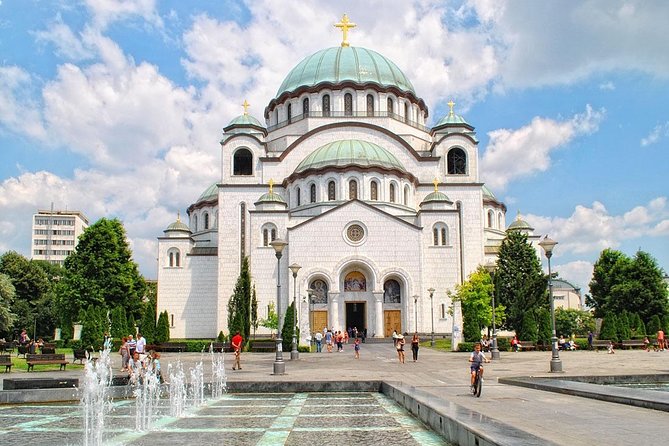
After breakfast, you head to Rila Monastery, described as Bulgaria’s most famous tourist site and a UNESCO World Heritage Site. It was founded in the 10th century by Saint Ivan Rilsky, a hermit canonized by the Orthodox Church.
What makes this stop more than a quick photo stop is the specific way the tour frames the visit. You get a visit to the Church, and it is noted for artistic value, adorned by foremost 19th-century masters from the Samokov, Bansko, and Debar schools of painting and woodcarving.
Even if you are not an art-history person, monasteries like this hit a different part of your brain. The detail gives you something to focus on besides just the scale. Also, this is one of the itinerary days where the “meaning” of the region comes through.
Admission is listed as free for this guided stop, and the time is about 1 hour. That means you will leave with a good overview, not a deep scholar-level experience.
Skopje Orientation: Mother Teresa, Old Bazaar, and the Kale Fortress
In the early evening you arrive in Skopje, capital of North Macedonia, then do orientation and later a bigger walking tour the next day. The day three setup includes a centrally located hotel, which is helpful because it reduces your need for extra transit.
Skopje is presented through landmark storytelling:
- It is internationally known as the birthplace of Mother Teresa
- You will walk the Vardar River quay
- The Old Bazaar, described as the biggest bazaar preserved in the Balkans today
- The Memorial House of Mother Teresa
- Kale Fortress, called about 1500 years old
- Macedonia Square with a statue of Alexander the Great on horseback
This is about 2 hours on the walking tour day, and admission for the stops is listed as free. If you like cities where you can connect the street layout to the past, Skopje is a good fit. The Old Bazaar sections make it easy to imagine how commerce used to shape daily life.
Ohrid: Lake Views and UNESCO Old Town Walking
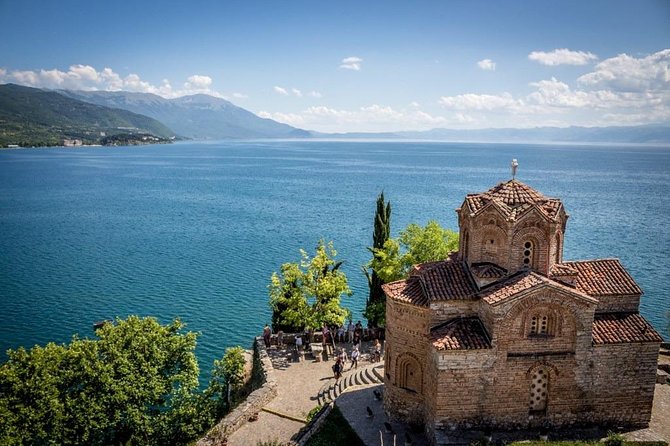
After Skopje, you move to Ohrid, also a UNESCO World Heritage Site. Ohrid is on the banks of Lake Ohrid, described as sitting on the border between Macedonia and Albania. The lake itself is called Europe’s oldest lake, formed over three million years ago.
This is one of the best types of stops for travelers who like scenery and culture at the same time. You are walking old streets and squares, then you get the lake setting in the background, so photos do not feel like you are only shooting buildings.
Your walking tour includes:
- narrow streets and squares
- Ancient Theater
- older churches and monasteries, including Sveti Sofia Church
- Tsar Samuil’s Fortress
- a pedestrian shopping street
The time is about 3 hours, and admission is listed as free. The only practical thought: Ohrid is the kind of place where you might want an extra hour just for lingering. You will still get plenty, but do not be shocked if you later wish the day ran longer.
Tirana, Albania: Skanderbeg Square and a Mosque Stop
Day five takes you across the Macedonian-Albanian border to Tirana, Albania’s capital. The walking tour focuses on core sights in about 3 hours, including:
- Skanderbeg Square
- National History Museum
- Et’hem Bey Mosque
- Skanderbeg’s statue
Again, admission is listed as free for this guided segment. Tirana is a city where the “main square plus monuments” approach works. It gives you orientation quickly, and you are not spending the entire day chasing every corner. If you prefer city travel that is efficient but still gives you an authentic feel, this stop hits the sweet spot.
Kotor Old Town: Fortified Stari Grad UNESCO Evening Feel
On day six, you arrive in Kotor in the evening and discover the fortified old town called Stari Grad, a UNESCO World Heritage Site. The tour lists a 3-hour discovery, and admission is listed as free.
Kotor is a great kind of finish for a travel day. The old town layout gives you a walkable rhythm, and the fortified feel makes the streets feel like a place with boundaries and defense, not just historic buildings.
The practical note is timing. Since it is evening, you will want to be ready for light changing quickly. Bring something for cooler air and use that first hour to get oriented before taking your best photos.
Mostar: The Old Bridge Story and the Traditions Around It
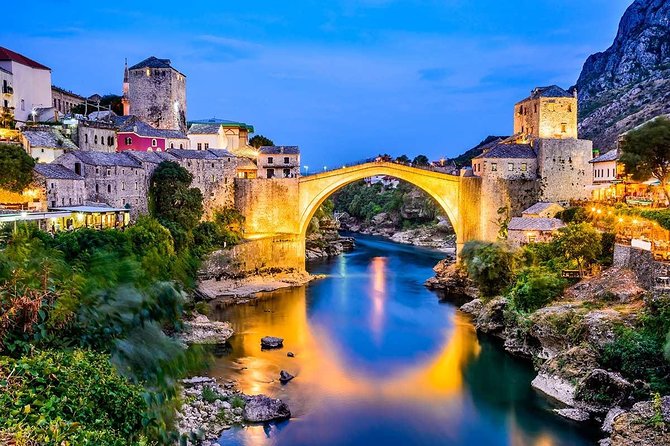
After breakfast, you head to Mostar with the focus on the Old Bridge of Mostar. The tour frames it with history: the bridge was built in 1566 and became a major reason for the city developing. Then, during the Siege of Mostar in November 1993, it was destroyed.
The tour also covers the reasons and judicial facts behind the destruction during the walking tour. That is valuable because it turns a landmark into a context story, not just a postcard image.
You will also learn about the tradition connected to the bridge where young people earn a few euros by performing bridge jumps off it. The tour phrasing is not just about the spectacle. It is about how a city’s identity gets rebuilt around what was lost.
The Mostar walking time is about 3 hours, and admission is listed as free.
Sarajevo: Ottoman and Austria-Hungary Layers Plus WWI at the Latin Bridge
After Mostar, you take a scenic road via Jablanica lake and the Neretva river canyon, arriving in Sarajevo. Then you do a 2.5 hour walking tour of the old part and city center.
Sarajevo is described through layers:
- Ottoman parts with markets, bazaars, mosques, and more
- Austria-Hungary parts with a different mix of churches and synagogues
- the idea of Sarajevo as a place where European identities overlap
You will also visit Latin Bridge and learn the story of how WWI was triggered there. The tour says you will also cover the 1984 Winter Olympics and life during the Siege of Sarajevo.
This is the heaviest “story” day on the itinerary. If you like walking tours that connect architecture to political history, Sarajevo is a major payoff. Just keep your pace steady, because a day like this can feel emotionally intense even when you are just moving through streets.
Belgrade in the Afternoon and Evening: Fortress Views and River Confluence
After breakfast, you head to Belgrade, arriving in the afternoon. The tour includes visits around Republic Square, the National Theater, and the National Museum.
You also cover:
- Skadarlija, described as a bohemian quarter and the oldest part with Ottoman heritage
- the only mosque in the city listed in the tour set
- Kalemegdan Park and Belgrade Fortress
- Victor, called the most famous symbol of Belgrade
- the confluence of the Sava and Danube rivers
This is about 3 hours, and admission is listed as free for the described stops.
Belgrade can feel bigger than it looks. The mix of parks, fortress viewpoints, and river energy gives you a sense of the city’s scale without needing extra transit.
Novi Sad and the Budapest Finish: Danube Promenade to the Train Station
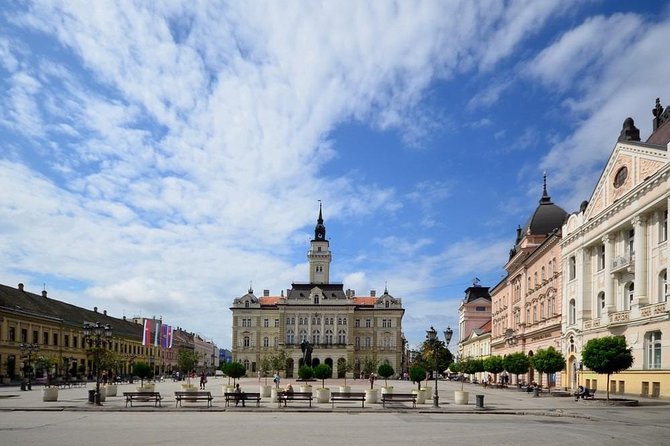
On day nine, you depart to Budapest with a stop in Novi Sad. You visit Zmaj Jovina Street, the promenade of Novi Sad, plus the ornamental Palace of the Orthodox Bishop. You also see Dunavska Street with long lines of 19th-century houses and the Danube embankment with an outside view of Petrovaradin Fortress on the other bank.
This stop is about 1 hour, and admission is listed as free.
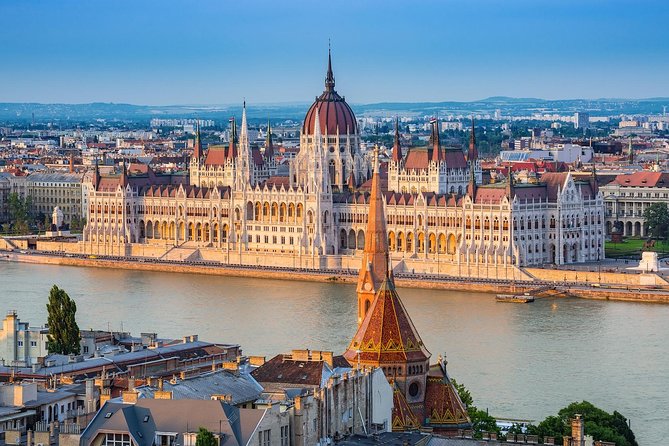
Then you arrive in Budapest in the evening. The tour describes Budapest as the Queen of Danube and includes an about 3-hour city walk. Admission is listed as free for the described segment.
Your end point is Budapest, Kerepesi út 2, 1087 Hungary, near the train station. That is useful if you want a clean transition into your next travel day.
The Comfort and Timing Details You Should Actually Plan Around
This tour is sold as easy walking with moderate effort, plus long travel days handled by an air-conditioned vehicle. That is good, but it depends on how the vehicle fits your personal comfort needs.
One caution from a past guest is real enough to factor into your plan: a report of a small van, uncomfortable seating, and a windshield issue. Even if your group does not experience that exact setup, you should protect yourself by arriving with a better mindset about comfort. Bring a light layer, plan for long stretches sitting, and keep water and a snack handy for days when the schedule feels tight.
Timing matters too. The itinerary structure packs sightseeing, and the negative feedback specifically pointed to starting very late and losing precious hours at destinations. If you know you get impatient with late starts, consider that this route has lots of moving parts: borders, road conditions, and coordinating a multi-country group. Your best strategy is simple, arrive on time, and keep expectations flexible.
Who Should Book This Tour, and Who Might Want to Skip It
This tour fits best if you:
- want a structured route across multiple Balkans countries without arranging transport yourself
- enjoy guided walking tours of historic centers and UNESCO sites
- can handle 2 to 4.5 hour walking blocks at a moderate pace
- like the idea of one-way touring with no backtracking
You might want to skip it if you:
- are very sensitive to vehicle comfort
- need strict clockwork timing and shorter days
- expect every attraction to be free on-site, since some listed admissions are not included
Should You Book This Tour? My Practical Take
I think this is a strong option if you want big-name stops with a guide doing the storytelling, and if you will enjoy moving through the region steadily. The mix of UNESCO sites like Rila Monastery, Ohrid, and Kotor, plus key political and cultural stops like Sarajevo and Mostar, gives your trip an arc.
The price can feel high until you count what you get: 8 nights in 4-star hotels, daily breakfast, and door-to-door transport by air-conditioned vehicle across a long route. That is a real value package for many travelers.
My final advice is to book with eyes open. Bring comfortable walking shoes, plan for paid entries like cave and waterfalls, and be ready for long days where the day’s start time can matter. If you do that, you will likely come away with a lot more than photos, especially from the story-focused stops like Sarajevo and the art-heavy moment at Rila.
FAQ
How long is the tour?
The tour runs for about 9 days.
Where does the tour start and when?
The meeting point is Bulevardul Regina Elisabeta 7, București 030167, and the start time is listed as 8:30 am. The day 1 departure is also described as 08:00 from University Square in front of the statues, so plan for an early start.
What language is the tour offered in?
The tour is offered in English.
How many nights are included in the hotel stay?
You get 8 nights of accommodation in 4-star hotels.
Are breakfast and transport included?
Yes. Breakfast is included for 8 mornings, and transport is included via an air-conditioned vehicle for the entire tour.
Are entrance fees included?
Entrance fees at museums are not included. Also, admission tickets are listed as not included for Devetàshka Cave and Krushunskiye Waterfalls. Many other guided city walks are listed as admission free.
What is the group size?
The tour has a maximum of 46 travelers.
What kind of walking should I expect?
It is described as an easy walking tour with moderate physical fitness required. Expect walking tours from about 2 hours up to 4 to 5 hours depending on the sites, with distances noted up to around 7 km on some days.
Do I need a passport?
Yes. A current valid passport is required on the day of travel.
Are tips included in the price?
No. Tips for the driver and tour guide are not included and are listed as 5 euro per day per person.
What is the cancellation window for a full refund?
You can cancel up to 6 days in advance for a full refund. A 50% refund is available for cancellations made 2 to 6 days before the experience start time, and no refund applies within 2 days of the start time.
Recently added around Bucharest
- Bucharest: Dealu Mare Winery Private Trip with Wine Tasting★ 4.9 · 6 reviews
- Winery touring & private wine tasting – one day private tour★ 5.0 · 3 reviews
- Traditions in Bucharest: Village Museum and Wine Tasting★ 5.0 · 8 reviews
- Village Museum Bucharest Guided Tour★ 5.0 · 6 reviews
- Your rendez-vous with Europe’s past: time-travel to Maramures, Transylvania★ 5.0 · 6 reviews
- Walking Tour of Bucharest City Center – Private Tour★ 5.0 · 4 reviews
- Wine tasting in Bucharest Old town – bonus cheese platter★ 4.5 · 6 reviews
- Private Wine Tasting at Bucharest’s First Wine Bar★ 5.0 · 3 reviews
Tours, compared.
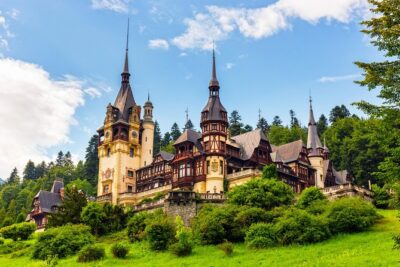
Bucharest to Dracula Castle, Peles Castle and Brasov Guided Tour
Read our review →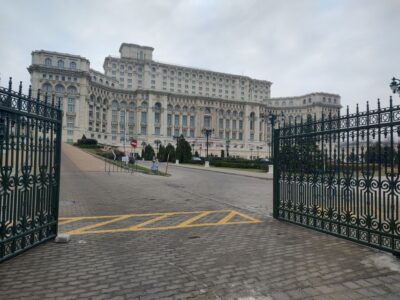
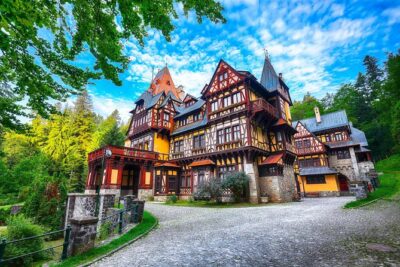
Transylvania and Dracula Castle Full Day Tour from Bucharest
Read our review →
Peles Castle, Bran Castle, & Brasov Old Town Tour
Read our review →
Peles Castle, Bran Castle, & Brasov Full-Day Tour
Read our review →